

How to teach a child sim to ride a bike
To teach a child sim to ride a bike, first choose a bicycle they can comfortably stand over, reach, steer and brake, then practise balance before pedalling.
Measure the rider before choosing the bike
Measure the child’s height without shoes. Also check inseam, but do not turn one measurement into an automatic size choice: the child must try the bicycle. They should be able to stand over it comfortably, reach the handlebars without stretching and operate the brakes with control.
Use age only as a starting point. Do not buy an oversized bicycle for future growth; a bike that is difficult to mount, steer or stop can obstruct learning.
| Wheel size | Starting age | Rider height |
|---|---|---|
| 12 Inch | 3–4 | 34–40 in / 86–102 cm |
| 14 Inch | 3–6 | 37–45 in / 94–114 cm |
| 16 Inch | 4–7 | 40–48 in / 102–122 cm |
| 18 Inch | 5–9 | 43–52 in / 109–132 cm |
| 20 Inch | 7–12 | 48–60 in / 122–152 cm |
| 24 Inch | 10–14 | 54–64 in / 137–163 cm |
| 26 Inch | Youth and adults | Over 60 in / 153 cm |
When ranges overlap, compare actual stand-over clearance, reach, brake control and confidence. The larger listed size is not automatically the right choice.
Prepare a simple learning area
Choose a flat, open space away from traffic, parked vehicles, steep slopes and obstacles. Before every session, fit a bicycle helmet so it sits level and secure its straps according to the helmet manufacturer’s instructions.
Check that the bicycle is assembled and operating as its exact product manual specifies. For uncertain assembly, adjustments, brake setup, compatibility or torque, use a qualified bicycle mechanic rather than guessing.
Teach balance before pedalling
- Start with control. Let the child mount, dismount, hold the handlebars and practise using the brakes while stationary.
- Practise supported movement. Have the child move slowly while you provide light support at the torso. Avoid steering the handlebars for them.
- Work on balance. Encourage looking ahead, relaxed arms and brief, controlled glides. Repeat until the child can keep a line and stop on request.
- Add pedalling. Begin from a stable position, use a short push-off and ask the child to pedal while continuing to look ahead.
- Reduce help gradually. Release support for longer intervals, staying close enough to assist without unexpectedly grabbing or turning the bike.
Keep sessions short enough that technique does not collapse into frustration. End after a controlled stop or another small success, then repeat later.
Decide whether training wheels help
Training wheels can support early pedalling practice, but they do not remove the need to learn independent balance, steering and stopping. If the child relies on them, make balance practice a separate and deliberate step. Follow the bicycle’s manual for installation, adjustment and compatibility.
The supplied catalog options help compare the wheel sizes available for an early learner with larger sizes intended for taller riders. Only one is categorized as a training-wheel bike; the cruiser models are useful only when their listed size passes an individual fit and control check.
 Pink 12/14/16/20" XJD Girls Bike with Training Wheels & Basket
A Training Wheel Bike offered in 12 Inch, 14 Inch, 16 Inch and 20 Inch labels, making it relevant for comparing several early-rider size starting points after an individual fit check.
 26-Inch XJD Beach Cruiser Bike for Girls – Purple, V-Brake
A Beach Cruiser Bike with supplied 20 Inch, 24 Inch and 26 Inch variants. It is relevant only for riders whose measured height, reach, stand-over and brake control suit one of those larger sizes.
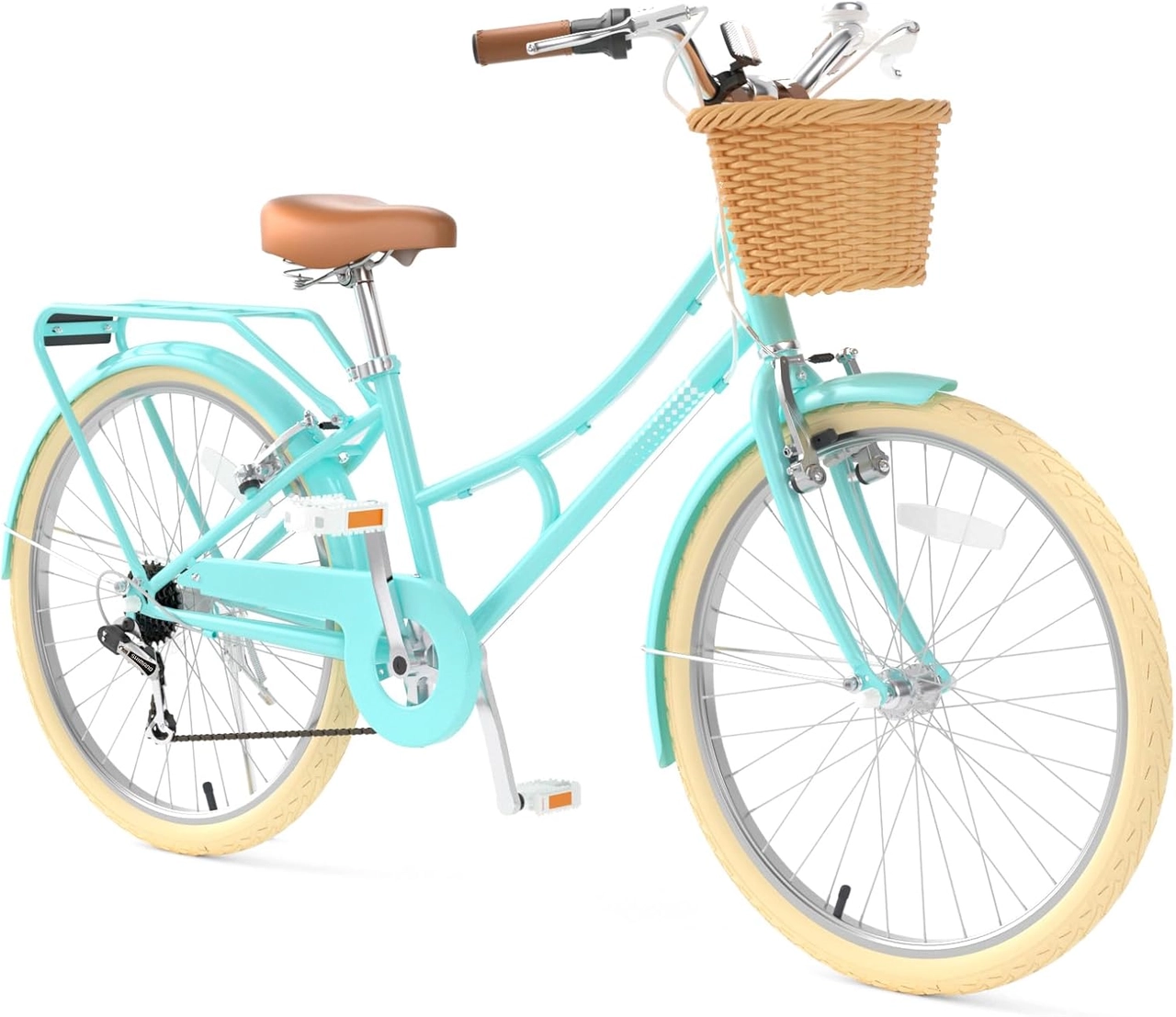 XJD 24-Inch Green Beach Cruiser Bike with U-Brake
A Beach Cruiser Bike offered in supplied 24 Inch and 26 Inch variants. It serves as a larger-rider comparison and is not a substitute when the child requires a smaller wheel size.
Compare the supplied bicycles by fit and purpose
Pink 12/14/16/20" XJD Girls Bike with Training Wheels & Basket is categorized as a Training Wheel Bike and offers 12 Inch, 14 Inch, 16 Inch and 20 Inch labels. Compare those choices against measured height, then have the child test stand-over, reach and brake operation. Its 20 Inch option should not replace a smaller fitting size merely to allow growth.
26-Inch XJD Beach Cruiser Bike for Girls – Purple, V-Brake has 20 Inch, 24 Inch and 26 Inch catalog variants in the supplied labels. The 20 Inch starting range is 48–60 in / 122–152 cm; 24 Inch is 54–64 in / 137–163 cm; and 26 Inch begins above 60 in / 153 cm. These are comparison points for a sufficiently tall rider, not substitutes for a smaller learning bike.
XJD 24-Inch Green Beach Cruiser Bike with U-Brake has supplied 24 Inch and 26 Inch variants. Consider it only when the child reaches the applicable height starting point and can confidently manage stand-over, reach and braking. Its product title and catalog labels do not establish individual fit.
Know when to pause or change course
Stop and reassess if the child cannot stand over the bicycle comfortably, must stretch to steer, cannot operate the brakes reliably, repeatedly tips while stationary or becomes frightened as speed increases. Compare a smaller listed wheel size where available, or seek help from a qualified bicycle mechanic for fit or mechanical concerns.
Your next step is concrete: measure the child’s height, shortlist the matching wheel-size range, conduct an in-person control check, and begin with mounting, braking and balance before asking for independent pedalling.
Bikes for your next adventure
-

Kids Bike Helmet by XJD for Boys & Girls – Black, Blue, Green, Pink, Purple
The XJD Kids Bike Helmet covers a wide 2-to-8-year age range thanks to two head-…$59.99
-

Kids Bike Helmet by XJD for Girls – Pink
The XJD Kids Bike Helmet in Pink is a lightweight multi-sport helmet for girls r…$59.99
$99 -

XJD Kids Bike for Girls – Pink, 12/14/16/20 Inch with Training Wheels
The XJD Kids Bike for Girls in Pink is a training-wheel bike built to carry your…$139
$159