

How to teach a toddler to pedal a bike
Teach a toddler to pedal by fitting the bike first, then practising the pedal motion with the bike supported before adding steering and independent starts.
Measure the rider before practising
Measure your child’s height without shoes and check their inseam. Age is only a starting point: height, stand-over clearance, reach, brake control and current confidence decide whether a bicycle is manageable.
Have the child try the bike. They should be able to stand over it comfortably, reach the handlebar without stretching, turn it while seated and operate its brakes. Do not choose an oversized bicycle simply to allow room for growth. If the child cannot control the bike at walking speed, correct the fit before teaching pedalling.
| Wheel size | XBikes age starting point | Rider-height starting point |
|---|---|---|
| 12 Inch | Ages 3–4 | 34–40 in / 86–102 cm |
| 14 Inch | Ages 3–6 | 37–45 in / 94–114 cm |
| 16 Inch | Ages 4–7 | 40–48 in / 102–122 cm |
These ranges overlap, so wheel size cannot be selected from age alone. Compare the measured rider with the table, then confirm the individual fit on the actual bicycle.
Prepare a simple practice area
Choose a flat, open area away from traffic, slopes and obstacles. Dress the child for comfortable movement and use closed-toe shoes. A bicycle helmet should fit properly, sit level and have its straps adjusted according to the helmet manufacturer’s instructions.
Before each session, check that the bicycle is assembled and functioning as its exact manual describes. For unfamiliar adjustments, maintenance, compatibility or torque requirements, use the product manual or ask a qualified bicycle mechanic.
Teach the pedal motion first
- Explain the circle: show that one foot pushes forward and down while the other pedal rises.
- Position the pedals: place one pedal slightly forward and high enough for the child to press it down to begin.
- Support the bike, not the child: steady the bicycle while the rider looks ahead, holds the handlebar and makes slow pedal circles.
- Reduce help gradually: loosen your support once the child produces several smooth rotations without stopping.
Keep the first sessions short. Stop before frustration turns the movement into a struggle. Several calm attempts are more useful than one long session in which posture and attention deteriorate.
Add steering, stopping and starting
Once the child can rotate the pedals, practise riding toward a visible target while looking ahead rather than down at their feet. Ask for broad, gentle turns before tighter ones.
Teach stopping separately using the controls fitted to the bicycle and the instructions in its manual. The rider must be able to reach and operate those controls reliably. Next, rehearse the start: set the lead pedal, look forward, press down, bring the second foot onto its pedal and continue the circle. If starts repeatedly fail, support the bicycle again and isolate only that sequence.
Decide whether training wheels are helping
Training wheels can let a child concentrate on making pedal circles without also balancing the bicycle. They may be relevant when the rider understands steering and stopping but cannot yet coordinate pedalling with balance.
They do not correct poor fit, excessive reach or weak brake control. If a child already glides and balances confidently, added side support may be unnecessary for learning the pedal stroke. Follow the bicycle manual for installation, adjustment and removal; if the instructions are unclear, use a qualified bicycle mechanic.
Compare the supplied bicycle option
The XJD Girls BMX Bike 12/14/16 Inch with Training Wheels – Pink Blue is relevant because its supplied options include 12 Inch, 14 Inch and 16 Inch wheel labels, and the catalog identifies it as a kids’ BMX bike with training wheels. Those three sizes provide fit comparison points across the height ranges above; none should be treated as interchangeable or selected without a try-on.
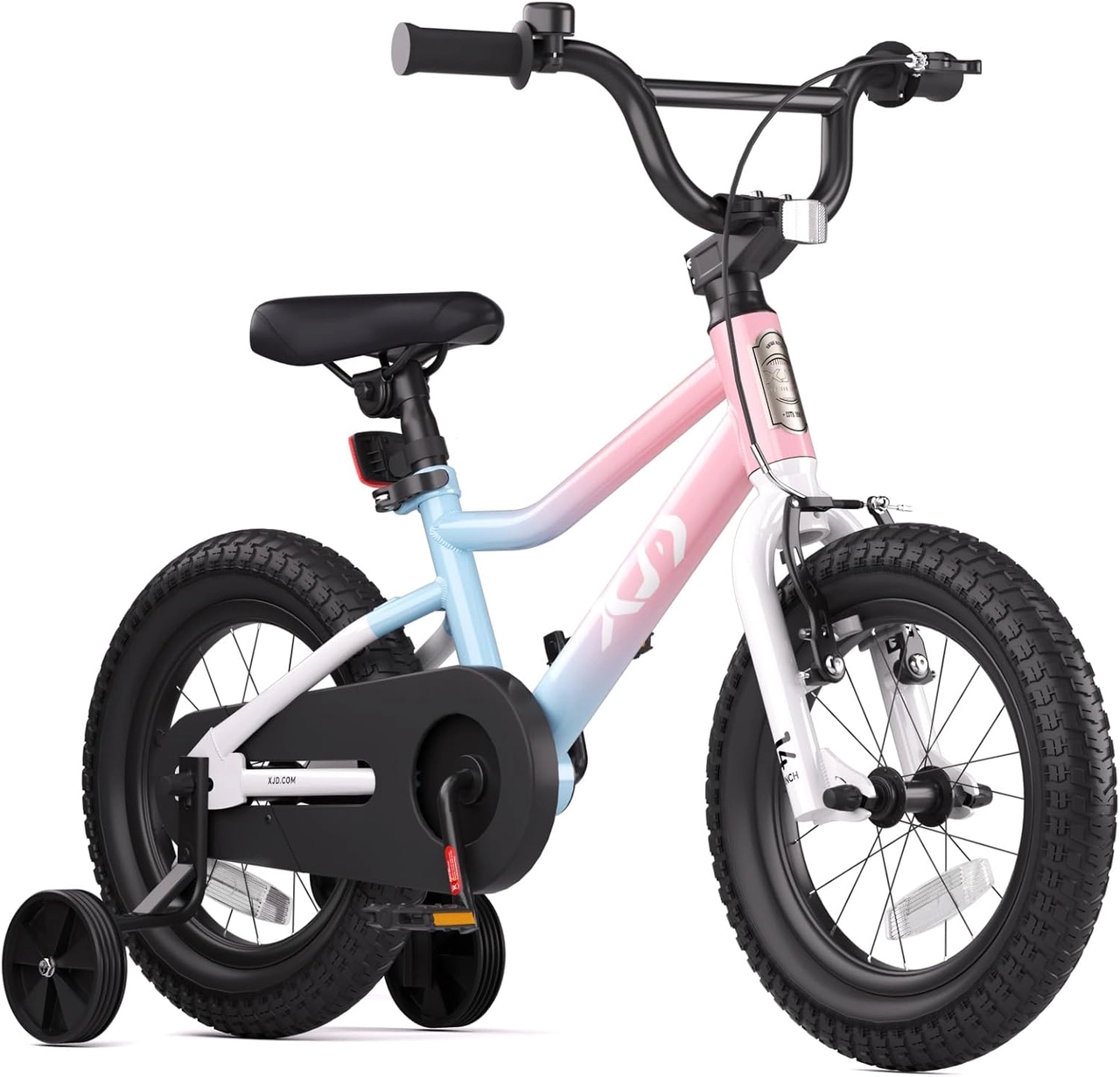
Compare the child’s measured height with the appropriate starting range, then check stand-over position, reach, control access and confidence on the exact size. The title supplies no verified facts about its brakes, weight, materials, load limit, assembly requirements or compatibility, so consult the exact product manual or a qualified bicycle mechanic for those details.
Know what to do next
- If the child cannot stand over, reach or control the bicycle comfortably, pause and change the fit or size.
- If fit is sound but the pedal circle is uneven, return to supported rotations.
- If pedalling is steady but starts fail, practise only the lead-pedal launch.
- If starting works but steering wanders, use a straight visual target and reduce your support gradually.
The next step is not simply more riding: measure the toddler, verify control on the actual bicycle, and practise the first skill that breaks down—pedalling, starting, steering or stopping.
Bikes for your next adventure
-

Kids Bike Helmet by XJD for Boys & Girls – Black, Blue, Green, Pink, Purple
The XJD Kids Bike Helmet covers a wide 2-to-8-year age range thanks to two head-…$59.99
-

Kids Bike Helmet by XJD for Girls – Pink
The XJD Kids Bike Helmet in Pink is a lightweight multi-sport helmet for girls r…$59.99
$99 -

XJD Kids Bike for Girls – Pink, 12/14/16/20 Inch with Training Wheels
The XJD Kids Bike for Girls in Pink is a training-wheel bike built to carry your…$139
$159