

How to teach kid bicycle
Teach a kid to ride a bicycle by checking fit first, then practicing stopping, balancing, steering and pedaling in that order. Use a level, traffic-free area, stay close without pulling the handlebars, and let confidence determine the pace.
Measure the child before choosing the bicycle
Measure the rider’s height without shoes and note the inseam from the floor to the crotch. Age can suggest where to begin, but it cannot confirm fit. Have the child try the actual bicycle rather than buying an oversized model for future growth.
With the child standing over the bicycle, check that the frame does not prevent a comfortable, stable stance. Seated, the rider should reach the handlebars without stretching, turn them without losing balance, and operate the brakes confidently. If the child cannot stand over, steer or reach the brake controls properly, choose a different fit even when the age range appears suitable.
| Wheel size | Starting age | Starting rider height |
|---|---|---|
| 12 Inch | 3–4 | 34–40 in / 86–102 cm |
| 14 Inch | 3–6 | 37–45 in / 94–114 cm |
| 16 Inch | 4–7 | 40–48 in / 102–122 cm |
| 18 Inch | 5–9 | 43–52 in / 109–132 cm |
| 20 Inch | 7–12 | 48–60 in / 122–152 cm |
| 24 Inch | 10–14 | 54–64 in / 137–163 cm |
| 26 Inch | Youth and adults | Over 60 in / 153 cm |
These are starting points, not guarantees. Where ranges overlap, compare stand-over clearance, reach, brake control and current confidence on each candidate.
Prepare the bicycle and riding area
Choose a flat, open place away from vehicles, steep slopes and obstacles. The child should wear closed-toe footwear and a bicycle helmet that fits properly, sits level and has its straps adjusted according to the helmet manufacturer’s instructions.
Before each lesson, confirm that the bicycle is assembled and operating as its exact manual requires. Check the controls with the child before moving. For assembly details, maintenance, load limits, compatibility or torque settings not stated here, follow the product manual or ask a qualified bicycle mechanic.
Teach control before continuous pedaling
- Stopping: While stationary, show the child how the brakes work. Then practice controlled stops at very low speed so stopping becomes a deliberate action rather than a surprise.
- Balance: Let the rider move slowly and experience holding the bicycle upright. Offer light support at the torso if needed; avoid steering for the child or lifting most of the rider’s weight.
- Steering: Ask the child to look toward a clear destination and make gentle direction changes. Looking down at the front wheel often makes control harder.
- Pedaling: Once starting, balancing and stopping are manageable, introduce steady pedal strokes. Keep each attempt short enough that the child can stop while still composed.
Give one instruction at a time. If control deteriorates, return to the previous skill instead of pushing through fear or fatigue.
Decide whether training wheels help
Training wheels can support early practice with pedaling, steering and braking, but they do not remove the need for correct fit or active supervision. They are relevant when the child is not yet ready to balance independently. As confidence develops, reassess whether the setup still supports the next learning goal and follow the bicycle’s manual for any adjustment or removal.
Do not promise removal on a particular date. A useful readiness sign is that the child can start, steer and stop calmly while relying less on lateral support. If the rider repeatedly leans heavily, loses brake control or becomes anxious, continue with simpler practice.
Compare the supplied XBikes options
These catalog choices help by providing wheel-size comparison points across beginning and taller riders. The training-wheel model is directly relevant to supported learning, while the cruiser models show larger-size options for riders whose measurements and controls indicate they have outgrown smaller bicycles.
 Pink 12/14/16/20" XJD Girls Bike with Training Wheels & Basket
Available in 12, 14, 16 and 20 Inch versions, this training-wheel bicycle provides several starting-size comparisons for supported practice. Confirm measured height, stand-over, reach and brake control on the exact selected size.
 26-Inch XJD Beach Cruiser Bike for Girls – Purple, V-Brake
Its 20, 24 and 26 Inch color-size options make this cruiser relevant to taller learners who already fit and control a larger bicycle. The selected rider must be able to reach and operate its V-brake confidently.
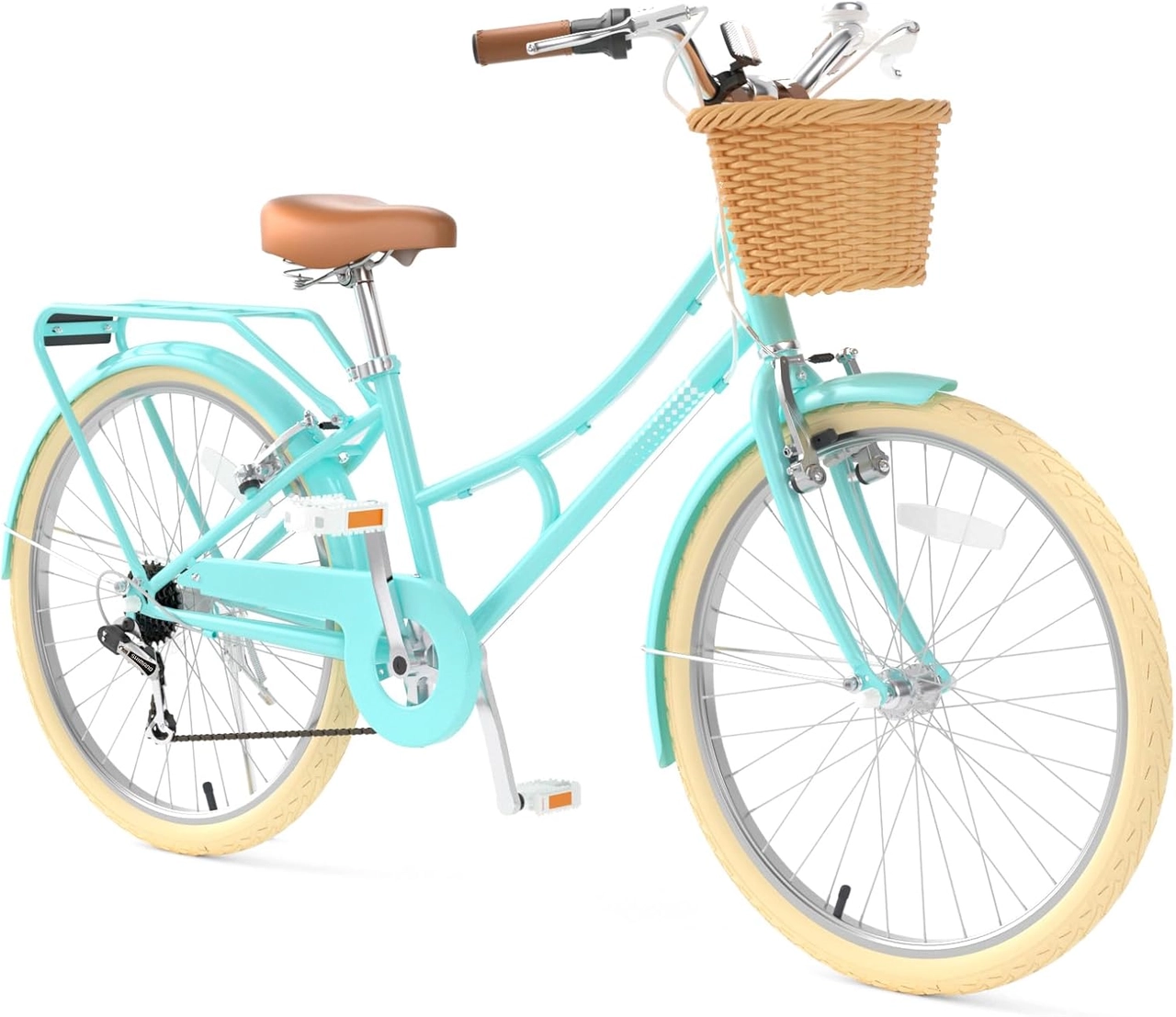 XJD 24-Inch Green Beach Cruiser Bike with U-Brake
This cruiser supplies 24 Inch and 26 Inch comparison options in the listed colors. Consider it only when the rider’s measurement, stand-over position, reach, confidence and ability to operate the U-brake support the selected size.
Pink 12/14/16/20" XJD Girls Bike with Training Wheels & Basket is listed in 12, 14, 16 and 20 Inch options. Compare the child’s measured height with the matching row, then verify stand-over, reach and brake operation on the chosen size. Its training-wheel configuration may suit the supported practice described above.
26-Inch XJD Beach Cruiser Bike for Girls – Purple, V-Brake has Mint Green options in 20, 24 and 26 Inch, Pink options in 20, 24 and 26 Inch, and Purple in 26 Inch. It is relevant only when the rider fits the selected wheel size and can confidently control its reach and V-brake.
XJD 24-Inch Green Beach Cruiser Bike with U-Brake is available as Green / 24 Inch, Pink / 24 Inch and Pink / 26 Inch. Use it as a comparison for riders measuring within the 24 Inch starting range or above the 26 Inch threshold, subject to an individual fit and U-brake reach check.
Make the next lesson decision
Before teaching, record height and inseam, identify the starting wheel-size row, and have the child try that bicycle. Proceed only when the rider can stand over it, reach the bars, operate the brakes and remain calm. Then practice stopping, balance, steering and pedaling; if any control fails, pause and correct fit or repeat the earlier skill before the next attempt.
Bikes for your next adventure
-

Kids Bike Helmet by XJD for Boys & Girls – Black, Blue, Green, Pink, Purple
The XJD Kids Bike Helmet covers a wide 2-to-8-year age range thanks to two head-…$59.99
-

Kids Bike Helmet by XJD for Girls – Pink
The XJD Kids Bike Helmet in Pink is a lightweight multi-sport helmet for girls r…$59.99
$99 -

XJD Kids Bike for Girls – Pink, 12/14/16/20 Inch with Training Wheels
The XJD Kids Bike for Girls in Pink is a training-wheel bike built to carry your…$139
$159