

How to teach kids to ride bicycle
Teach a child to ride by choosing a bike they can control now, fitting a level helmet, and practising balance, braking, steering and starts in a quiet open space.
Measure the rider before choosing the bike
Measure the child’s standing height and inseam while they wear the shoes they will use for riding. Age is only a starting point: height, stand-over clearance, reach, brake control and current confidence decide whether a bicycle actually fits.
Have the child try the bicycle. They should be able to stand over it comfortably, reach the handlebar without stretching, steer without becoming unstable and operate the brakes reliably. Do not buy an oversized bicycle for future growth; a wheel-size range cannot compensate for poor control.
| Wheel size | XBikes starting point |
|---|---|
| 12 Inch | Ages 3–4; 34–40 in / 86–102 cm |
| 14 Inch | Ages 3–6; 37–45 in / 94–114 cm |
| 16 Inch | Ages 4–7; 40–48 in / 102–122 cm |
| 20 Inch | Ages 7–12; 48–60 in / 122–152 cm |
These ranges overlap because children of the same age differ. Compare the measurements with the relevant starting points, then confirm the individual fit on the actual bicycle.
Prepare the child and practice area
Choose a flat, open place away from traffic, parked vehicles, steep slopes and obstacles. Dress the child in close-fitting clothing and secure loose laces. An adult should remain close enough to intervene, especially during the first attempts.
Use a bicycle helmet that fits properly, sits level and has straps adjusted according to its manufacturer’s instructions. Before every session, check that the bicycle is assembled and functioning as its exact product manual describes. If assembly, brake adjustment, fastener torque or another mechanical detail is uncertain, use a qualified bicycle mechanic.
Teach the skills in a useful order
- Walking and stopping: Let the child walk the bicycle while seated or standing beside it. Ask them to stop at a clear marker so braking becomes deliberate rather than a surprise.
- Balance and gliding: In a suitable setup, have them push forward and take progressively longer glides while looking ahead. Make any setup change only as permitted by the bicycle’s manual.
- Steering: Place widely spaced markers and practise gentle turns. Encourage looking toward the intended path instead of down at the front wheel.
- Starting: Practise placing one foot ready to begin, pushing off and bringing the other foot into position. Repeat starts separately before combining them with longer riding.
- Pedalling and controlled stops: Add pedalling only after the child can hold a line and stop on request. End each run with a planned, smooth stop.
Keep sessions short enough that concentration remains high. Repeat one skill at a time, and finish after a small success rather than waiting for frustration.
Decide how training wheels fit the lesson
Training wheels can support early practice with pedalling, steering and stopping, but they do not replace the need to learn two-wheel balance. Watch what the child can do without rushing removal: readiness means they can follow directions, look ahead, steer predictably, brake on request and show confidence rather than panic.
The supplied catalog choices are relevant when a family specifically wants a training-wheel bicycle and one of its listed wheel sizes passes the child’s individual fit check. They help compare size availability; their decorative accessories should not decide fit.
 Girls' Training Wheel Bike by XJD with Basket – Purple
A training-wheel bicycle offered in 14 Inch, 16 Inch and 20 Inch sizes, making it relevant for families comparing those size starting points after measuring the rider and confirming individual fit.
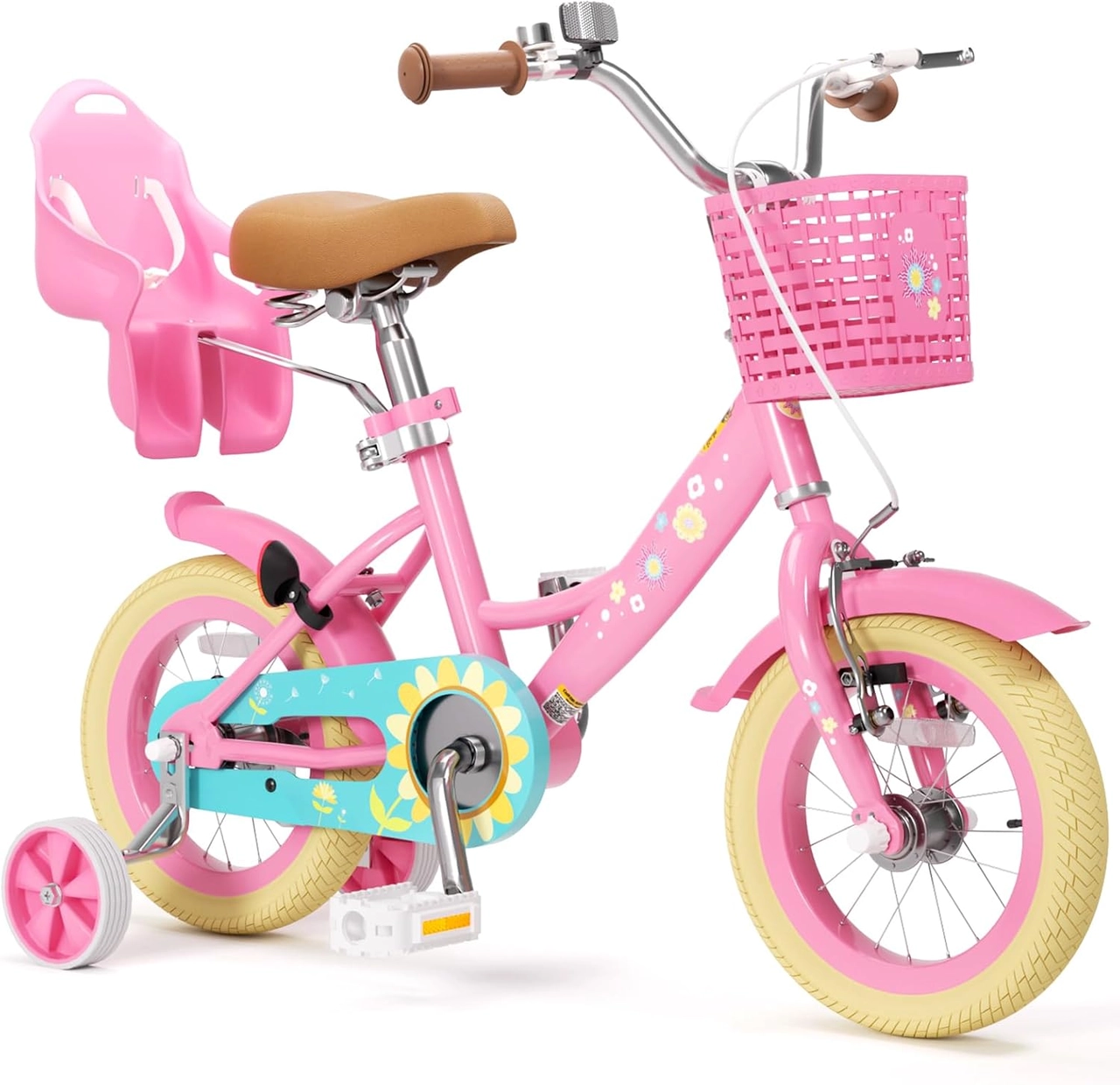 Flower Pink XJD Girls Bike with Doll Seat & Basket
A training-wheel bicycle offered in 12 Inch, 14 Inch and 16 Inch sizes. It is relevant when one of those labels matches the rider’s measurements and an in-person control and fit check succeeds.
Girls' Training Wheel Bike by XJD with Basket – Purple is listed in 14 Inch, 16 Inch and 20 Inch options. Flower Pink XJD Girls Bike with Doll Seat & Basket is listed in 12 Inch, 14 Inch and 16 Inch options. The first extends the comparison to 20 Inch, while the second begins at 12 Inch; both overlap at 14 Inch and 16 Inch.
Those labels identify available sizes, not proof that a particular child fits. Follow the exact product manual for fitting, assembly, training-wheel changes, maintenance and compatibility, or ask a qualified bicycle mechanic.
Know when to progress—or pause
Move to a harder step after the child repeatedly completes the current one while relaxed and in control. Pause if they cannot reach the controls, struggle to stand over the bicycle, veer unpredictably, cannot stop when asked or become frightened. Recheck fit before assuming they simply need more practice.
Once balance support is no longer needed, make training-wheel adjustments or removal only according to the exact manual. Then return to short balance, start and stop exercises in the same traffic-free area. Do not introduce roads until the child can start, steer and stop consistently and is ready to learn local riding rules under close adult supervision.
Your next decision
Measure height and inseam today, compare them with the wheel-size starting points, and arrange an actual fit check. Choose one of the two catalog bikes only if its listed size and training-wheel format match the lesson plan and the child can comfortably stand over, reach, steer and brake on that exact bicycle.
Bikes for your next adventure
-

Kids Bike Helmet by XJD for Boys & Girls – Black, Blue, Green, Pink, Purple
The XJD Kids Bike Helmet covers a wide 2-to-8-year age range thanks to two head-…$59.99
-

Kids Bike Helmet by XJD for Girls – Pink
The XJD Kids Bike Helmet in Pink is a lightweight multi-sport helmet for girls r…$59.99
$99 -

XJD Kids Bike for Girls – Pink, 12/14/16/20 Inch with Training Wheels
The XJD Kids Bike for Girls in Pink is a training-wheel bike built to carry your…$139
$159