

How to teach my kid how to ride bike
Teach your child to ride by choosing a correctly fitted bike, practising balance before pedalling, and adding steering, braking and starts one skill at a time.
Measure the rider before choosing a bike
Measure your child’s height without shoes and check inseam, reach and hand control on the actual bicycle. Age is only a starting point. Your child should be able to stand over the bike, reach the handlebar without stretching, steer comfortably and operate the brakes they will use.
Do not buy an oversized bicycle for future growth. A child who cannot control the bike confidently is not ready for that size, even if an age chart appears to include them. Use these XBikes ranges to narrow the search, then confirm fit in person:
| Wheel size | Starting age | Rider height |
|---|---|---|
| 12 Inch | 3–4 | 34–40 in / 86–102 cm |
| 14 Inch | 3–6 | 37–45 in / 94–114 cm |
| 16 Inch | 4–7 | 40–48 in / 102–122 cm |
| 18 Inch | 5–9 | 43–52 in / 109–132 cm |
| 20 Inch | 7–12 | 48–60 in / 122–152 cm |
| 24 Inch | 10–14 | 54–64 in / 137–163 cm |
| 26 Inch | Youth and adults | Over 60 in / 153 cm |
Prepare a simple, low-pressure practice area
Choose a flat, open space away from traffic, parked vehicles, steep slopes and obstacles. Fit a bicycle helmet so it sits level and secure, with its straps positioned according to the helmet manufacturer’s instructions. Check the bicycle before every session and follow its exact manual for assembly, adjustments and maintenance; ask a qualified bicycle mechanic when anything is uncertain.
Keep each session short enough that your child remains attentive. Explain that stopping is always allowed. The goal is controlled repetition, not completing every stage on the first attempt.
Teach balance before pedalling
- Walking: Have the child walk the bike while seated or standing over it, learning its weight and steering response.
- Gliding: In a setup that permits secure foot contact with the ground, ask the child to push forward and briefly lift both feet. Follow the bicycle manual for any seat adjustment.
- Looking ahead: Place a visible target in front of the rider. Looking toward the destination usually produces steadier steering than watching the front wheel.
- Stopping: Practise slowing and stopping from walking speed. Confirm beforehand that the child can reach and operate the bike’s braking controls.
Stay beside the child without pulling the handlebar. If support is needed, steady the rider gently and release gradually once balance develops. Tell the child before changing how much support you provide.
Add pedalling, starts and turns separately
Once the child can glide and stop with control, introduce pedalling. Help position one pedal for a strong first push, then have the rider look ahead, push off and begin pedalling. Practise straight starts before combining them with turns.
Next, set two widely spaced markers and ask the child to make broad turns around them. Narrow turns, faster riding and uneven surfaces can wait. Finish each attempt with a planned stop so braking becomes part of the sequence rather than an emergency reaction.
When training wheels are relevant
Training wheels can help a child practise pedalling and steering while receiving lateral support, but they do not replace balance practice. If used, treat them as a temporary learning setup and follow the exact product manual for installation, adjustment and compatibility. A mechanic should handle uncertain setup.
The catalog options below are useful because they show a training-wheel model across several smaller wheel sizes and cruiser models at larger sizes, letting you compare the measured rider with the appropriate stage rather than choosing by age alone.
 Pink 12/14/16/20" XJD Girls Bike with Training Wheels & Basket
A training-wheel bicycle offered in 12-, 14-, 16- and 20-inch labels. Compare the rider’s measured height with the matching XBikes range, then verify individual fit and control.
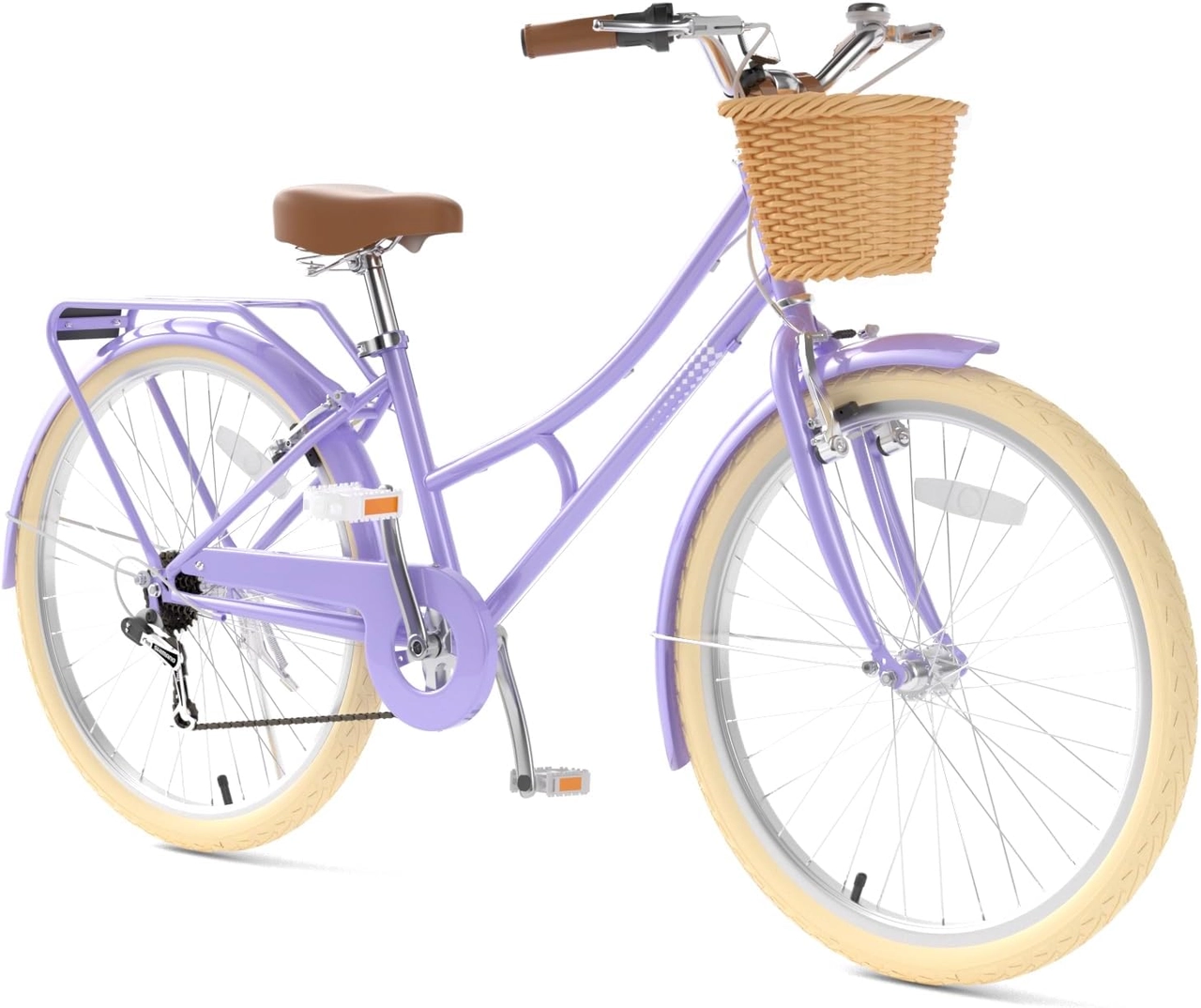 26-Inch XJD Beach Cruiser Bike for Girls – Purple, V-Brake
A beach cruiser with supplied 20-, 24- and 26-inch variant labels. It is relevant to larger riders only after height, inseam, reach, brake control and confidence are checked.
 XJD 24-Inch Green Beach Cruiser Bike with U-Brake
A beach cruiser offered with supplied 24- and 26-inch labels. Use it as a comparison for riders whose measurements and demonstrated control support these larger wheel sizes.
The Pink 12/14/16/20" XJD Girls Bike with Training Wheels & Basket is the directly relevant training-wheel option. Its available labels are 12 Inch, 14 Inch, 16 Inch and 20 Inch, so compare the child’s measured height with the corresponding XBikes range and then verify stand-over, reach, brake control and confidence on the selected size.
The 26-Inch XJD Beach Cruiser Bike for Girls – Purple, V-Brake has available 20-, 24- and 26-inch labels in the supplied color combinations. The XJD 24-Inch Green Beach Cruiser Bike with U-Brake has available 24- and 26-inch labels. These larger cruiser options are relevant only when the rider’s measurements, control and current confidence support those wheel sizes; they are not substitutes for a smaller learning bike.
Know when to move forward—or step back
Advance only when your child can start, look ahead, steer a predictable line and stop on request. If the rider repeatedly reaches for the ground, cannot reach the brakes, stretches to steer or appears frightened by the bike’s size, pause and recheck fit. A smaller suitable size or more balance practice may be the right next step.
Measure your child now, shortlist the matching wheel size, verify control on the actual bike, and begin with walking and gliding before asking for a complete pedalled ride.
Bikes for your next adventure
-

Kids Bike Helmet by XJD for Boys & Girls – Black, Blue, Green, Pink, Purple
The XJD Kids Bike Helmet covers a wide 2-to-8-year age range thanks to two head-…$59.99
-

Kids Bike Helmet by XJD for Girls – Pink
The XJD Kids Bike Helmet in Pink is a lightweight multi-sport helmet for girls r…$59.99
$99 -

XJD Kids Bike for Girls – Pink, 12/14/16/20 Inch with Training Wheels
The XJD Kids Bike for Girls in Pink is a training-wheel bike built to carry your…$139
$159