

How to teach toddler to pedal bicycle
Teach a toddler to pedal by fitting a correctly sized bicycle, practising the pedal motion off the bike, then using short, calm sessions in a flat, traffic-free area.
Check fit before teaching the motion
Measure the child’s standing height and inseam without shoes. Then have the child try the bicycle while wearing the shoes they will ride in. Check that they can stand over it comfortably, reach the handlebar without stretching, turn it while remaining balanced, and operate the brakes confidently. Do not choose an oversized bicycle for future growth.
Age is only a starting point. Compare the measured height with the XBikes ranges below, then confirm inseam clearance, reach, brake control and confidence on the actual bicycle.
| Wheel size | Starting age | Rider height |
|---|---|---|
| 12 Inch | 3–4 | 34–40 in / 86–102 cm |
| 14 Inch | 3–6 | 37–45 in / 94–114 cm |
| 16 Inch | 4–7 | 40–48 in / 102–122 cm |
If the child falls between ranges, do not decide from wheel size alone. Compare how easily they mount, stand over, steer and reach the controls. A smaller option that permits relaxed control can be more suitable than a larger one the child struggles to manage.
Teach pedalling as a simple sequence
First show the circular action away from the bicycle. With the child seated securely on a stable chair, let them place their feet on your hands and practise pushing one foot forward and down as the other rises. Keep the explanation short: push, around, push.
On the bicycle, position one pedal slightly forward and high enough for a strong first push. Ask the child to press that pedal forward and down, place the other foot on the rising pedal, and keep looking toward where they want to go. Walk beside them and steady the bicycle or child gently without pulling the handlebar.
- Practise setting the starting pedal.
- Make one strong push and stop.
- Add the second foot and complete several turns.
- Practise stopping on request.
- Repeat starting, riding a short line and stopping.
Choose a place that makes learning easier
Use a broad, level, traffic-free surface with plenty of clear space. Avoid steep slopes, crowds, parked vehicles and nearby obstacles. Dress the child for free movement and use closed-toe shoes. A bicycle helmet should fit properly, sit level, and have its straps adjusted according to the helmet manufacturer’s instructions.
Keep each session brief enough that coordination does not turn into frustration. End after a successful start, a few pedal turns or a controlled stop rather than insisting on continuous riding. If the child becomes tense, return to the chair exercise or let them practise steering and stopping before trying the pedals again.
Should you use training wheels?
Training wheels can let a child focus on making the cranks turn while the bicycle receives added side support. They are relevant when the main obstacle is coordinating alternate pedal pushes. They do not replace fit checks, steering practice, brake control or close adult supervision, and a child may later need separate practice balancing without them.
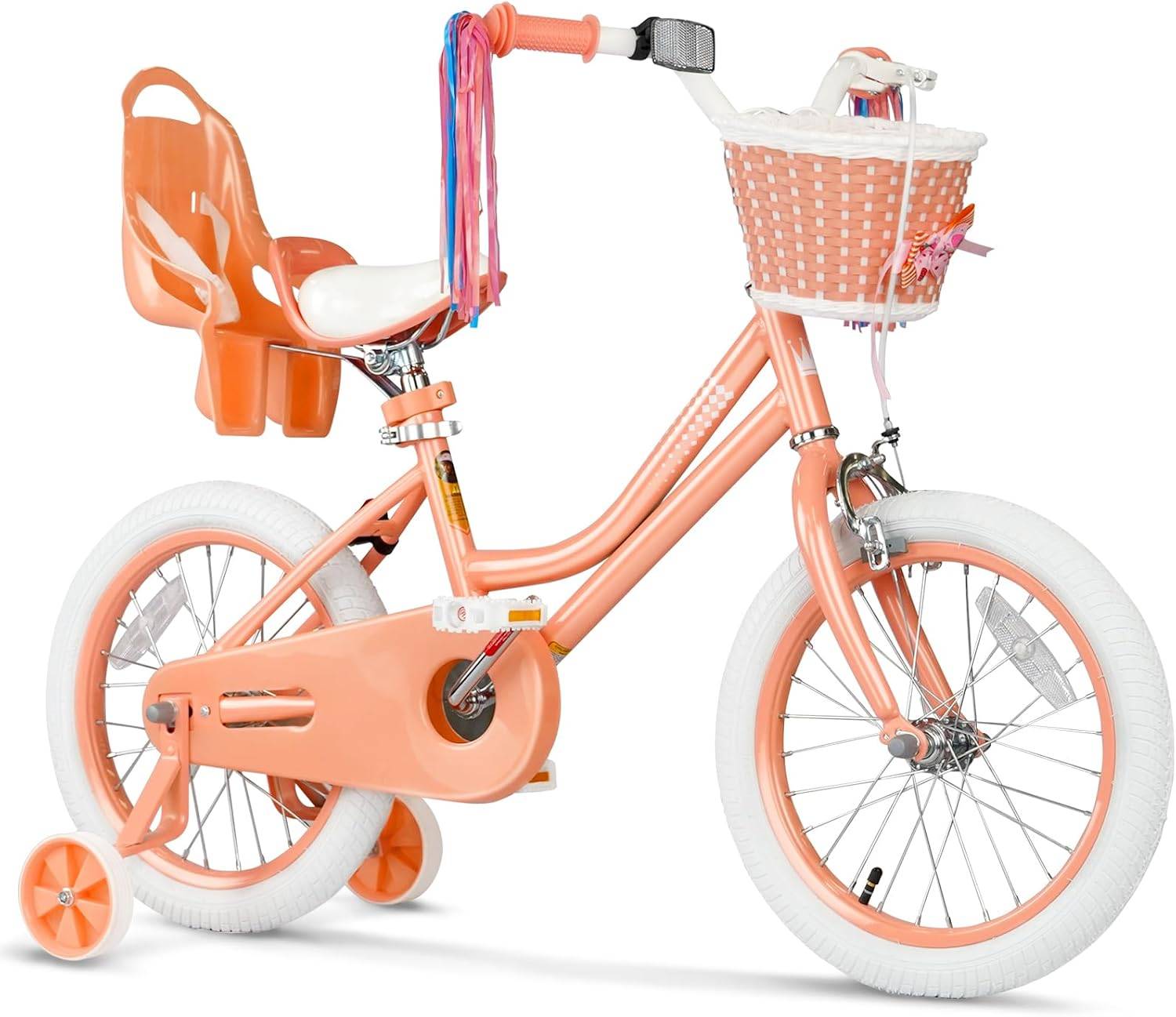
The supplied catalog option, Girls 12/14/16 Inch Kids Bike by XJD with Training Wheels – Peach, is relevant because it is a training-wheel bicycle offered with 12 Inch, 14 Inch and 16 Inch SKU labels. Those choices allow comparison against the child’s measured height and current control; the title itself is not evidence that any version fits a particular child.
Diagnose what is stopping progress
- Feet slip off: slow down and rehearse placing the second foot before attempting several rotations.
- The child pedals backward: repeat the forward-and-down cue and guide the circular motion gently while stationary.
- They watch their feet: choose a visible target straight ahead and remind them to look toward it.
- Starting is difficult: reset the lead pedal to the forward, raised position and practise only the first push.
- Steering becomes erratic: pause pedalling work and practise holding a line, turning and stopping at low speed.
- Controls are hard to reach: stop and reassess bicycle fit rather than teaching around the problem.
Know what to do next
Before the next session, record the child’s height and inseam, compare the relevant 12, 14 or 16 Inch starting range, and arrange an actual fit check. Confirm comfortable stand-over, natural reach and reliable brake operation. Inspect and prepare the bicycle according to its exact product manual; for uncertain assembly, adjustment, compatibility or maintenance, use a qualified bicycle mechanic.
Then practise one skill at a time: starting-pedal position, two or three smooth rotations, looking ahead, and stopping on cue. Choose the supplied training-wheel bicycle only if one of its listed sizes fits the individual child and added side support matches the present learning need.
Bikes for your next adventure
-

Kids Bike Helmet by XJD for Boys & Girls – Black, Blue, Green, Pink, Purple
The XJD Kids Bike Helmet covers a wide 2-to-8-year age range thanks to two head-…$59.99
-

Kids Bike Helmet by XJD for Girls – Pink
The XJD Kids Bike Helmet in Pink is a lightweight multi-sport helmet for girls r…$59.99
$99 -

XJD Kids Bike for Girls – Pink, 12/14/16/20 Inch with Training Wheels
The XJD Kids Bike for Girls in Pink is a training-wheel bike built to carry your…$139
$159