

Is 26 bike too big for 12 year old
A 26-inch bike is usually too big for a 12-year-old under 60 in (153 cm). Age alone cannot decide: measure the child and check control on the actual bike.
Start with height, not the 12-year-old label
Under the XBikes starting points, a 24-inch bike generally corresponds to rider heights of 54–64 in (137–163 cm) and ages 10–14. A 26-inch bike is a starting point for youth and adults over 60 in (153 cm). These ranges overlap in real riders because proportions, skill and bicycle geometry vary.
Therefore, a 12-year-old who is over 60 in may be ready to try a 26-inch bike, while a shorter child will usually need to compare a 24-inch or possibly a 20-inch bike. The 20-inch starting point is 48–60 in (122–152 cm) and ages 7–12. Never choose 26 inches merely because the child will grow into it.
Measure before visiting or ordering
- Measure standing height: Have the child stand without shoes, straight against a wall. Compare the result with the XBikes starting points above.
- Measure inseam: With feet slightly apart, measure from the floor to the crotch. Use this measurement when checking the actual bike’s stand-over clearance; wheel size alone does not provide that clearance.
- Check reach: On the bike, the child should reach the handlebar without stretching, locking the elbows or sliding forward unnaturally.
- Check brake control: The child must be able to reach and operate the brake controls confidently while maintaining a secure grip.
Do not infer fit from wheel diameter alone. Frame shape, saddle adjustment and handlebar position can make two 26-inch bicycles fit differently.
Use this on-bike fit check
Have the child try the fully and correctly assembled bicycle in a controlled area. The American Academy of Pediatrics advises trying the bike rather than buying an oversized model for growth, with attention to stand-over, overall control and brake reach.
- With the child straddling the bike, confirm there is usable clearance rather than contact with the frame.
- Confirm the child can mount, start, steer, stop and dismount without the bike feeling unwieldy.
- Watch for a strained reach, difficulty turning the handlebar, or hesitation when applying the brakes.
- Ask whether the child feels in control now—not whether the bicycle might fit months later.
If any check fails, the 26-inch bike is too big for that child at present, even if height is slightly over 60 in. Compare a smaller wheel option and repeat the same checks. If fit or adjustment remains uncertain, use a qualified bicycle mechanic and follow the exact product manual.
How the supplied bikes help with the comparison
The catalog includes both 24-inch and 26-inch options, so these particular models help a family compare adjacent starting points without treating them as equivalent sizes. The 26-Inch XJD Beach Cruiser Bike for Girls – Purple, V-Brake is listed in Purple / 26 Inch, while the XJD 24-Inch Green Beach Cruiser Bike with U-Brake is listed in Green / 24 Inch. Their supplied labels establish size and color options, but not individual fit.
 26-Inch XJD Beach Cruiser Bike for Girls – Purple, V-Brake
A Purple / 26 Inch catalog option relevant for a child over 60 in, provided the rider also passes individual stand-over, reach, brake-control and confidence checks.
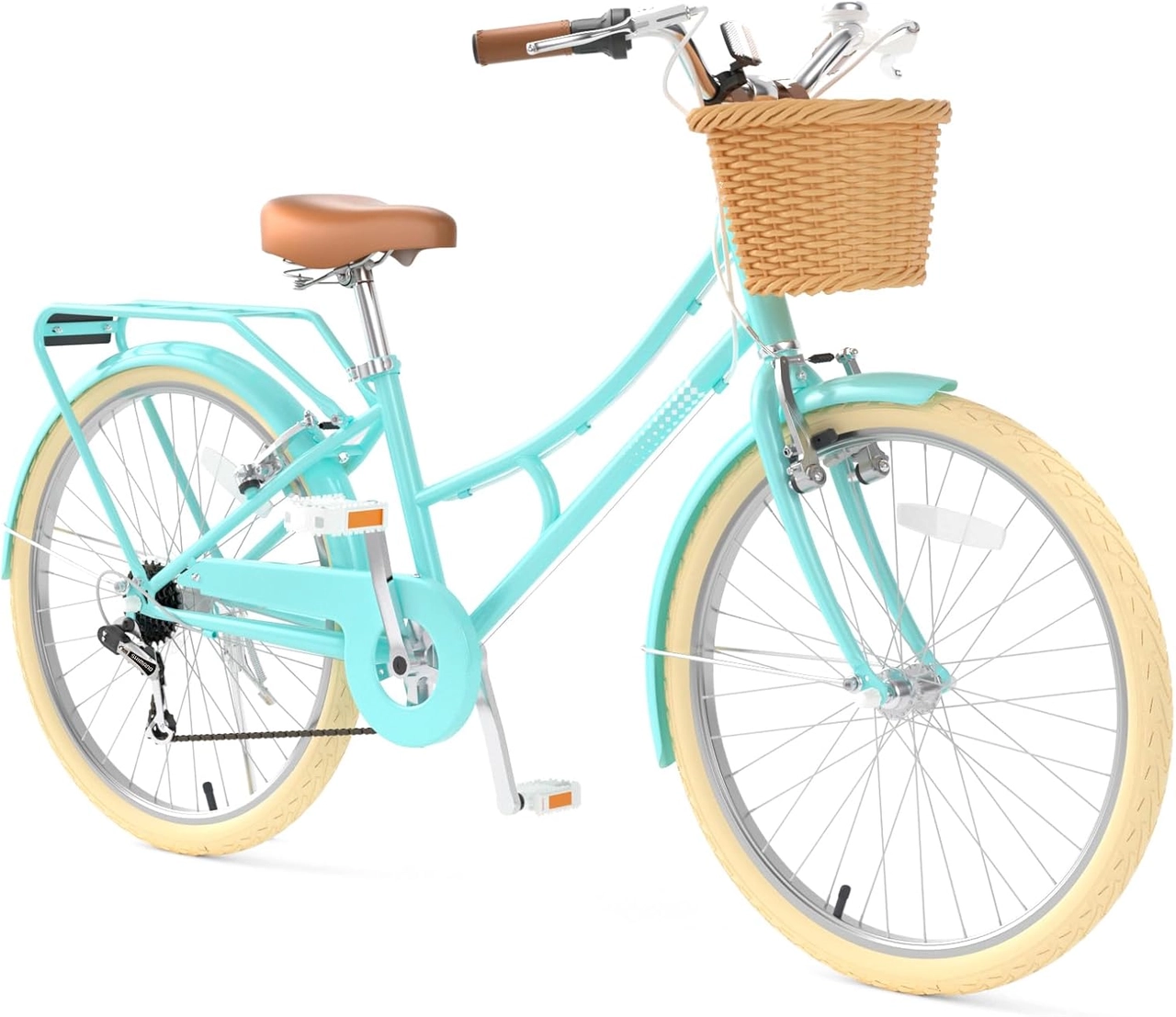 XJD 24-Inch Green Beach Cruiser Bike with U-Brake
Its Green / 24 Inch option provides a neighboring-size comparison for riders in the 54–64 in starting range; actual fit and control still need to be checked.
The first model also has Mint Green and Pink labels in 20-, 24- and 26-inch sizes, plus Purple / 26 Inch. That range may help when the same rider needs an in-person comparison across wheel sizes. The second model has Green / 24 Inch, Pink / 24 Inch and Pink / 26 Inch labels. Do not assume matching color labels or neighboring wheel sizes produce the same reach, stand-over or handling.
The brake descriptions in the exact titles identify different catalog configurations; they do not prove which child can comfortably reach or operate the controls. Test the actual controls. For assembly, maintenance, load limits, compatibility and torque, follow the exact product manual or ask a qualified bicycle mechanic.
Make the decision
Choose a 26-inch bike only if the 12-year-old measures over 60 in (153 cm) and passes every stand-over, reach, brake-control and confidence check on that bicycle. If the child is 54–64 in (137–163 cm), compare a 24-inch bike as the relevant starting point; if the child is 48–60 in (122–152 cm), include a 20-inch bike in the comparison. Where ranges meet, the successful on-bike check decides—not age or room for growth.
Before riding, provide a bicycle helmet that fits properly, sits level and has its straps adjusted according to the helmet manufacturer’s instructions. The practical answer is simple: measure today, try the exact bike, and reject the 26-inch option if the child cannot control it comfortably right now.
Bikes for your next adventure
-
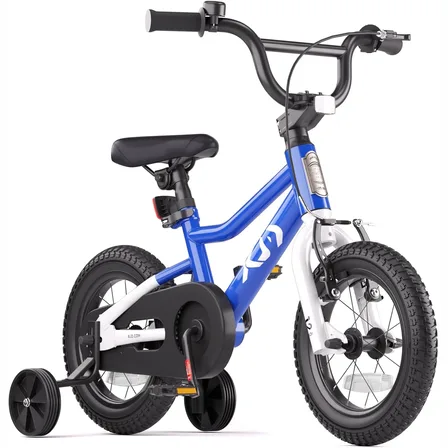
XJD Boys & Girls BMX Bike with Training Wheels, 12/14/16" – Blue
The XJD Boys & Girls BMX Bike in Blue is a first pedal bike for kids roughly age…$99.99
$119.99 -
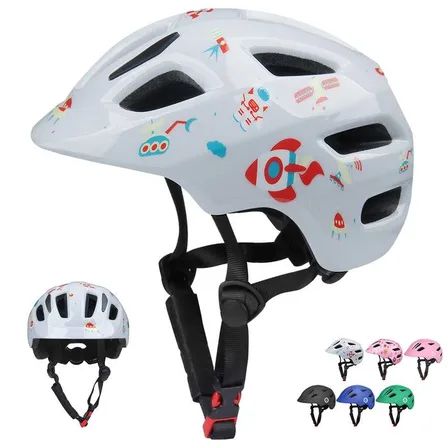
White Astronaut Bike Helmet for Kids by XJD – Toddler to Youth Sizes
4 reviews
The XJD White Astronaut kids' bike helmet is made for toddlers through younger e…$59.99
-

XJD Girls BMX Bike 12/14/16 Inch with Training Wheels – Pink Blue
The XJD Girls BMX Bike in Pink/Blue is built as a first pedal bike for kids roug…$99.99
$119.99