

Is it safe to bike with kids seat
It can be safe to bike with a kids seat only when the seat, bicycle and child are compatible, correctly fitted and used exactly as their manuals require.
Check compatibility before riding
A child seat is not automatically suitable for every bicycle. Confirm that the seat manufacturer permits installation on your bicycle type and at the intended mounting location. Check both manuals for attachment requirements, child and cargo limits, bicycle limits, and any restrictions involving frames, racks, steering, brakes or other components.
Do not guess about compatibility, substitute hardware or invent a tightening method. If the documentation is missing, unclear or conflicting, ask the manufacturer or a qualified bicycle mechanic to inspect the exact bicycle-and-seat combination. The supplied XBikes catalog facts do not include child-seat compatibility, load limits, assembly instructions or torque values.
Measure the child and inspect the setup
Before each ride, compare the child’s current measurements with every limit printed in the seat manual. Relevant checks may include the measurements and developmental requirements specified by that manufacturer. A child must meet all stated conditions, not merely look small enough to fit.
Then inspect the installed seat. Follow the manual to confirm that its mount, restraints, foot supports and any guards are positioned and secured correctly. Make sure clothing, feet and straps cannot reach moving parts. Check that the bicycle’s steering and braking operate normally and that the seat does not shift. A mechanic should resolve movement, interference, damaged parts or installation uncertainty before the child rides.
Compare control with and without the passenger
A child passenger changes the bicycle’s balance, starting, stopping and low-speed handling. Before carrying the child, practice mounting, starting, turning, braking and stopping in a traffic-free area with an appropriate non-living test load only if the seat manufacturer’s instructions permit it. Never improvise a load that could come loose.
For the first occupied ride, choose a short, quiet route with a predictable surface. Avoid situations that exceed your demonstrated control. If you cannot start smoothly, steer steadily, operate both brakes confidently or stop while keeping the bicycle supported, do not continue with the child aboard. Recheck the installation and seek qualified help.
Use helmets and a repeatable ride routine
The U.S. Consumer Product Safety Commission advises that a bicycle helmet fit properly, sit level and use its straps according to the manufacturer’s instructions. Apply that guidance to each rider using a helmet appropriate to them. A helmet that tilts, shifts or has incorrectly adjusted straps needs correction before departure.
Use the same sequence every time:
- Inspect the bicycle, seat, mount and restraints as directed by their manuals.
- Put on and correctly adjust helmets before loading the child.
- Stabilize the bicycle while placing the child in the seat; do not rely on an unsupported bicycle to remain upright.
- Secure every required restraint and foot support according to the seat instructions.
- Ride only when the adult can maintain full steering and brake control.
After the ride, investigate any looseness, unusual noise, rubbing or handling change instead of assuming it is harmless.
When a child’s own bicycle becomes relevant
A passenger seat and a child’s own bicycle solve different needs. The supplied catalog option is not evidence that your adult bicycle accepts a kids seat, and it is not a passenger-carrying product. It becomes relevant only when you are separately deciding whether the child is ready to ride an appropriately fitted training-wheel bicycle.
The Black XJD Kids Bike for Boys – 12, 14 & 16 Inch Sizes is listed under Training Wheel Bikes with 12 Inch, 14 Inch and 16 Inch options. Those sizes help compare the child’s measured height with XBikes starting points, while still requiring an in-person control check.

| Option | XBikes starting point |
|---|---|
| 12 Inch | Ages 3–4; height 34–40 in / 86–102 cm |
| 14 Inch | Ages 3–6; height 37–45 in / 94–114 cm |
| 16 Inch | Ages 4–7; height 40–48 in / 102–122 cm |
Age is only a starting point. Measure the rider’s height and inseam, then have the child try the bicycle. Prioritize stand-over clearance, comfortable reach, brake control and current confidence. Consistent with American Academy of Pediatrics guidance, do not buy an oversized bicycle just for growth. If the child cannot control the bicycle or comfortably reach its controls, that size is not an acceptable fit.
Make the safe decision today
Use the kids seat only after confirming manual-based compatibility, child eligibility, secure installation, proper helmet fit and your ability to control the loaded bicycle. If any one of those checks fails or cannot be verified, postpone the ride and consult the exact manuals, manufacturer or a qualified bicycle mechanic. Consider the listed 12, 14 and 16 Inch training-wheel options only for a separate, measured decision about the child riding independently—not as proof that carrying the child in a seat is safe.
Bikes for your next adventure
-
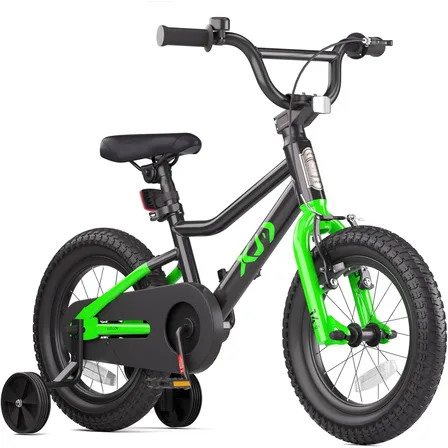
Black XJD Kids' BMX Bicycle with Training Wheels
The XJD Kids' BMX Bicycle with Training Wheels is built for children roughly 3 t…$99.99
$119.99 -
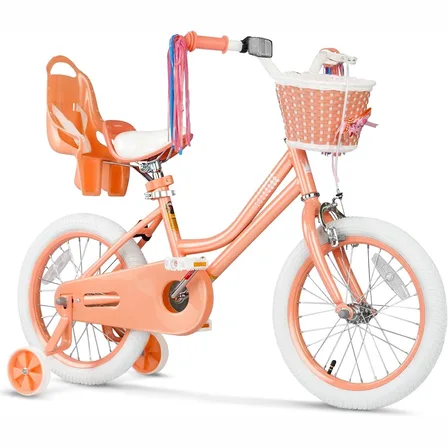
Girls 12/14/16 Inch Kids Bike by XJD with Training Wheels – Peach
The XJD Girls Bike in Peach is a training-wheel bike built for girls roughly 3 t…$149
$169 -
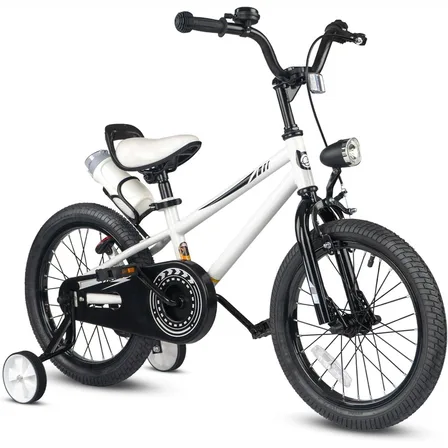
XJD Kids' Training Wheel Bike for Boys & Girls, 12/14/16 Inch – White
The XJD kids' training wheel bike in White is made for riders ages 3–8 (roughly …$169
$199