

Is a Smaller Bike Easier for Kids to Learn On?
Is a smaller bike easier for kids to learn on? A correctly fitted, manageable bicycle often feels easier than an oversized one, but smaller is not automatically better. A bike can also be too small, crowding the child's knees and changing steering. The goal is a complete bicycle the rider can mount, hold, steer and stop confidently today.
Why oversized bikes feel difficult
A child may have to tip a large frame sharply to mount, stretch for the handlebar or slide forward to reach a brake. That reduces the attention available for balance and looking ahead. Buying a size for future growth can therefore make the first lessons harder even when the child can touch the pedals.

How a bike becomes too small
On an undersized bicycle, knees may crowd the handlebar, the rider may exceed saddle limits or pedaling may feel compressed. A tiny wheel does not create skill by itself. Check the full fit and all adjustment marks rather than moving down repeatedly whenever a child feels nervous.

Use height and inseam as a shortlist
Measure the child in riding shoes and consult the exact model chart. XJD ranges overlap intentionally: 12 inches around 34–40 inches tall, 14 inches around 37–45 inches and 16 inches around 40–48 inches. The overlap gives families room to compare control on adjacent sizes.
Run a power-off fit test
Have an adult support the bicycle while the child stands over it, sits, reaches the grips and places feet down. Hands should remain secure while operating the controls. Training wheels can support the bicycle laterally, but they cannot shorten an overlong reach or make a heavy frame manageable.
Practice simple repeatable skills
Choose a flat, traffic-free area and work on one start, a straight line, wide turns and a stop marker. If the child repeatedly fights the bicycle's weight or cannot recover from a lean, reassess fit. Confidence should come from control, not from being told to grow into the bike.
How current product examples clarify the choice
The blue XJD girls and boys models both offer 12-, 14- and 16-inch choices with training-wheel configurations. They illustrate useful adjacent sizes for a learner, but the smaller option should be chosen only when measurements and the control test support it—not as a universal shortcut.
Practical checklist
- Measure height and inseam.
- Compare adjacent model sizes.
- Check stand-over, handlebar and brake reach.
- Choose present control over future growth room.
Frequently asked questions
Should I always size down for a beginner?
No. Choose the correct fit; a bicycle that is too small creates different control and adjustment problems.
Do training wheels fix an oversized bike?
No. They do not correct reach, stand-over height, weight or brake fit.
Before making the final choice, revisit the exact route or driving area at the time it will normally be used. A setup that works during a quiet test may need more room, visibility or adult support when other people and everyday obstacles are present.
Bottom line
Use the answer to is a smaller bike easier for kids to learn on as a decision process, not a shortcut. Confirm the live product data and manual, match the rider to the controls and setting, and favor repeatable control over a larger size or higher performance label.
Bikes for your next adventure
-

Black XJD Kids Bike for Boys – 12, 14 & 16 Inch Sizes
For a son between roughly 3 and 8 years old, the XJD Kids Bike in Black covers t…$169
$199 -

XJD Boys & Girls BMX Bike with Training Wheels, 12/14/16" – Blue
The XJD Boys & Girls BMX Bike in Blue is a first pedal bike for kids roughly age…$99.99
$119.99 -
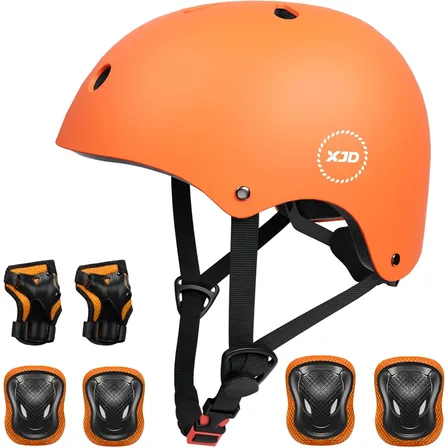
Orange Kids Helmet & Pad Set by XJD – Sizes S & M
The Orange XJD Kids Helmet & Pad Set is built for children around 3 to 8 years o…$24.64