

What age can a kid learn to ride a bike
A practical starting point is around age 3, but there is no single correct age for learning to ride a bike. Start when your child fits a suitable bicycle, can follow simple directions, and feels willing to practise. Measured fit and control matter more than a birthday.
Age is a starting point, not the decision
The XBikes sizing ranges begin with a 12-inch bicycle for ages 3–4 and a 14-inch bicycle for ages 3–6. That makes age 3 a reasonable point to check readiness, not a deadline or guarantee. A hesitant five-year-old may need more time, while a confident three-year-old may be ready to begin under close adult supervision.
Do not move a child onto an oversized bicycle simply because it will last longer. The child should try the bicycle and demonstrate that they can stand over it, reach the controls, steer, stop, and remain balanced without stretching or losing confidence.
Measure before choosing a wheel size
Measure your child’s height without shoes, standing straight against a wall. Check inseam as well because two children of equal height can have different leg lengths. Then compare those measurements with the bicycle’s stand-over clearance, saddle adjustment, reach, and brake access during an individual fit check.
| Wheel size | Starting age | Rider height |
|---|---|---|
| 12 Inch | 3–4 | 34–40 in / 86–102 cm |
| 14 Inch | 3–6 | 37–45 in / 94–114 cm |
| 16 Inch | 4–7 | 40–48 in / 102–122 cm |
| 18 Inch | 5–9 | 43–52 in / 109–132 cm |
| 20 Inch | 7–12 | 48–60 in / 122–152 cm |
| 24 Inch | 10–14 | 54–64 in / 137–163 cm |
| 26 Inch | Youth and adults | Over 60 in / 153 cm |
These are starting points, not a substitute for trying the bicycle. Where ranges overlap, choose according to the child’s actual height, inseam, reach, brake control, and confidence rather than automatically selecting the larger wheel.
Check whether your child is ready
A child is more likely to learn successfully when the bicycle fits and the task feels manageable. Before beginning, look for these practical signs:
- The child wants to try and can listen to short instructions.
- They can get on and off without being lifted into position.
- They can hold the handlebar without locking their arms or leaning far forward.
- They can place their feet securely for support and bring the bicycle to a controlled stop.
- They can reach and operate the brakes fitted to the bicycle without shifting into an unstable position.
If any of these checks fail, adjust the bicycle only as permitted by its manual, try an appropriate smaller size, or pause and try again later. Ask a qualified bicycle mechanic for help when correct setup or compatibility is uncertain.
How to begin the first sessions
Choose a flat, open area away from traffic, parked vehicles, steep slopes, and other obstacles. Keep the first sessions short. Let the child practise mounting, looking ahead, steering, and stopping before expecting continuous pedalling.
- Confirm the bicycle fits and all controls are within comfortable reach.
- Fit a bicycle helmet so it sits level and snug, with its straps used according to the helmet manufacturer’s instructions.
- Practise a predictable stop and safe dismount.
- Work on balance and steering at a pace that keeps the child relaxed.
- Add pedalling only when the child can maintain direction and stop with control.
Training wheels can provide support while a child becomes familiar with pedalling and steering, but their presence does not correct poor bicycle fit. Follow the exact product manual for assembly, adjustment, maintenance, load limits, compatibility, and any torque requirements.
Where the supplied bicycle fits this decision
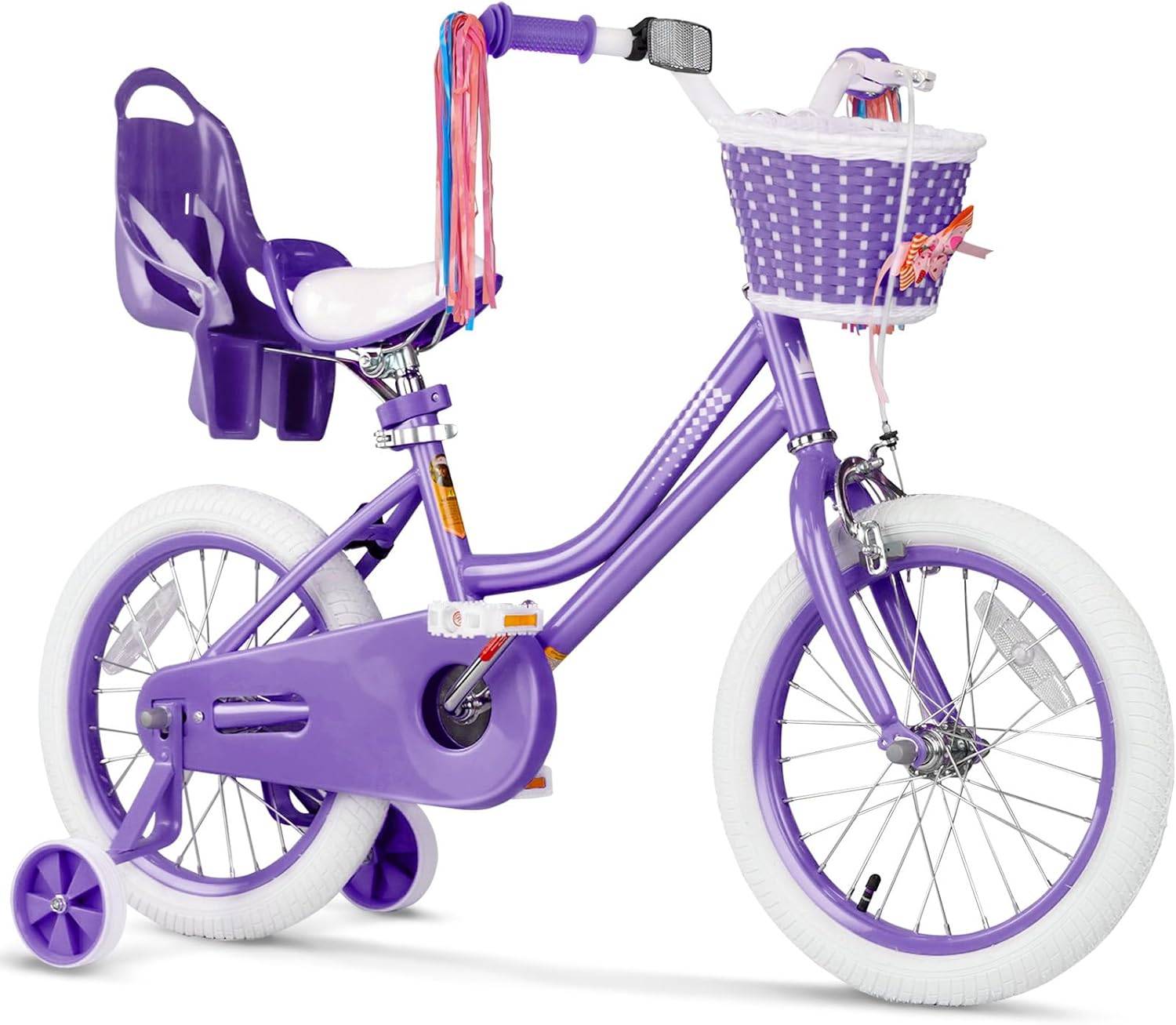
The XJD Girls Bike for Kids Ages 3-8, 12/14/16 Inch with Training Wheels – Purple offers 12 Inch, 14 Inch, and 16 Inch catalog options in the Training Wheel Bikes category. Those sizes let families compare three relevant starting points for children within the supplied height ranges. The “Ages 3-8” wording is part of the exact catalog title, not evidence that every child in that span will fit any version.
These particular options are relevant when the child measures within the 12-, 14-, or 16-inch starting ranges and training wheels suit the current learning stage. They are not substitutes for an 18-inch or larger bicycle when the fit check indicates one of those sizes.
Make the decision today
If your child is around age 3 or older, measure height and inseam now, compare the result with the table, and arrange an individual fit check. Begin only when the child can mount, reach, steer, brake, and stop comfortably. If fit or confidence is missing, choose a more suitable size or wait; learning well matters more than learning by a particular birthday.
Bikes for your next adventure
-

XJD Kids Bike for Girls – Pink, 12/14/16/20 Inch with Training Wheels
The XJD Kids Bike for Girls in Pink is a training-wheel bike built to carry your…$139
$159 -

Blue XJD Girls Bike with Training Wheels – 12/14/16 Inch
If you're shopping for a first pedal bike for a daughter roughly 3 to 8 years ol…$149
$169 -

Kids Bike Helmet by XJD for Girls – Pink
The XJD Kids Bike Helmet in Pink is a lightweight multi-sport helmet for girls r…$59.99
$99