

What age can baby go in bike trailer
A baby can go in a bike trailer only when they can sit steadily and support their head while wearing a properly fitted helmet—and the trailer manual permits it. Age alone is not enough.
Use readiness, not a birthday, as the deciding test
There is no universal age that makes every baby ready for every bike trailer. Before riding, confirm that the child has reliable head and neck control, can remain upright without collapsing to the side, and can tolerate the helmet and harness in the trailer’s normal seating position.
Do not use a car seat, loose cushion or improvised support unless the trailer manufacturer explicitly approves that exact setup. If your baby was premature, has delayed motor development, or has a head, neck or breathing concern, ask the child’s pediatrician about riding readiness.
What to measure and compare
Check the child and the trailer together rather than relying on an age recommendation from another family or product.
- Seated stability: The baby should remain upright with the harness secured, without slumping forward or sideways.
- Headroom: Compare the child’s seated height while helmeted with the usable interior space specified by the trailer manufacturer.
- Harness fit: Use the harness exactly as the manual directs. It should hold the child in the intended position rather than riding across the neck or face.
- Published limits: Confirm the manufacturer’s minimum passenger requirements and maximum load. Do not estimate limits that are missing from a label or manual.
- Helmet fit: The helmet should be the correct size, sit level, and have its straps adjusted according to its manufacturer’s instructions.
If the baby passes a general sitting test but does not meet every requirement in the exact trailer manual, wait. A stroller-mode approval also does not automatically mean the product is approved for towing behind a bicycle.
Check the towing bicycle and connection
The adult rider must be able to start, steer, brake and stop confidently with the trailer attached. Before carrying a child, inspect the hitch, retaining device, wheels, tires and harness as directed by the trailer manual. Practice first with the trailer empty or with a permitted non-living test load specified by the manufacturer.
Trailer hitches are not universally compatible with every bicycle, axle, rack or frame. Follow the manuals for both the bicycle and trailer. If compatibility, assembly, torque or load information is unclear, use a qualified bicycle mechanic rather than improvising a connection.
Where the supplied XBikes option fits
The supplied catalog item is not a baby bike trailer. The XJD Pink Beach Cruiser for Girls – Rear Rack & V-Brake is a Beach Cruiser Bike offered with 20 Inch, 24 Inch and 26 Inch SKU labels. It can help families compare later independent-riding sizes, but those sizes do not establish infant trailer readiness or prove trailer compatibility.
This catalog option is therefore a future bicycle-fit comparison point, not a substitute for a trailer, a trailer manual or a developmental readiness check.

Do not use its wheel sizes as baby-age guidance
XBikes lists 20 Inch as a starting point for ages 7–12 and heights 48–60 in / 122–152 cm; 24 Inch for ages 10–14 and heights 54–64 in / 137–163 cm; and 26 Inch for youth and adults over 60 in / 153 cm. These are starting points for the person riding that bicycle, not for a baby sitting in a trailer.
For any future rider considering the cruiser, measure standing height and inseam, then check stand-over clearance, reach, brake control and confidence on the actual bicycle. Have the rider try it, and do not choose an oversized bicycle merely to allow room for growth.
Make the go-or-wait decision
- Find the exact trailer manual and read its passenger, helmet, harness and towing requirements.
- Test whether the baby can sit steadily and maintain head position while helmeted and correctly harnessed.
- Confirm the child fits within every stated requirement and load limit.
- Verify the hitch and bicycle are compatible; ask a qualified mechanic if the documentation is incomplete.
- Make the first permitted rides short and smooth, then stop immediately if the child slumps, appears uncomfortable or cannot maintain head position.
If any check fails—or the manual does not clearly allow the child’s present stage—do not tow yet. Wait, reassess development and fit, and use the manufacturer or pediatrician for the specific uncertainty before the baby’s first trailer ride.
Bikes for your next adventure
-

Kids Bike Helmet by XJD for Girls – Pink
The XJD Kids Bike Helmet in Pink is a lightweight multi-sport helmet for girls r…$59.99
$99 -

Blue XJD Kids Bike Helmet for Boys & Girls
The Blue XJD Kids Bike Helmet is a lightweight, adjustable multi-sport helmet fo…$59.99
$99 -
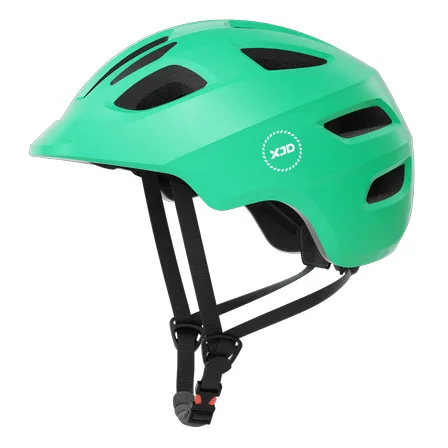
Green XJD Kids Bike Helmet for Boys & Girls
The Green XJD Kids Bike Helmet is a lightweight multi-sport helmet for toddlers …$59.99
$99