

What age do kids learn to ride a bike
Most children learn to ride a bike between ages 3 and 8, but there is no single correct age. Readiness, confidence and proper fit matter more than birthdays.
When is a child ready to learn?
A child may be ready when they want to try, can follow simple directions and can coordinate steering, pedalling and stopping. Some children begin at three or four; others learn several years later. Waiting is appropriate if the child is frightened, cannot control the bicycle or has difficulty reaching the controls.
Age helps narrow the search, but it cannot confirm fit. Measure the child's standing height and inseam, then have them try the bicycle. Check that they can stand over it, reach the handlebars comfortably, operate the brakes and remain in control. Do not choose an oversized bicycle merely to leave room for growth.
Use height to find a starting wheel size
The following XBikes ranges are starting points, not guarantees. Where ranges overlap, compare the child's inseam, reach, brake control and confidence on each candidate rather than automatically choosing the larger wheel.
| Wheel size | Starting age | Rider height |
|---|---|---|
| 12 Inch | 3–4 | 34–40 in / 86–102 cm |
| 14 Inch | 3–6 | 37–45 in / 94–114 cm |
| 16 Inch | 4–7 | 40–48 in / 102–122 cm |
| 18 Inch | 5–9 | 43–52 in / 109–132 cm |
| 20 Inch | 7–12 | 48–60 in / 122–152 cm |
| 24 Inch | 10–14 | 54–64 in / 137–163 cm |
| 26 Inch | Youth and adults | Over 60 in / 153 cm |
For example, a five-year-old could fall within several age bands. Their measured height may reduce the options, but the final choice still depends on whether they can mount, balance, steer and brake without stretching or losing control.
How to check the fit before teaching
- Measure first: record standing height and inseam without relying on clothing size or age.
- Compare the wheel-size range: use the table to identify likely candidates.
- Try the bicycle: check stand-over clearance and whether mounting and dismounting feel manageable.
- Check the riding position: the child should reach the handlebars without an uncomfortable stretch.
- Test the controls: confirm that the child can operate the brakes and steer while staying composed.
- Watch confidence: choose the size the child can control now, not one they may grow into later.
If assembly, adjustment or maintenance instructions are unclear, follow the exact product manual or ask a qualified bicycle mechanic. Do not improvise torque settings or procedures.
Where the supplied 12, 14 and 16 Inch bikes fit
The two supplied catalog options help because each is offered in 12 Inch, 14 Inch and 16 Inch wheel-size labels, covering XBikes starting ranges from ages 3–4 through 4–7 and heights from 34–48 in / 86–122 cm. They are relevant comparison points only when the child's measurements and control support one of those sizes.
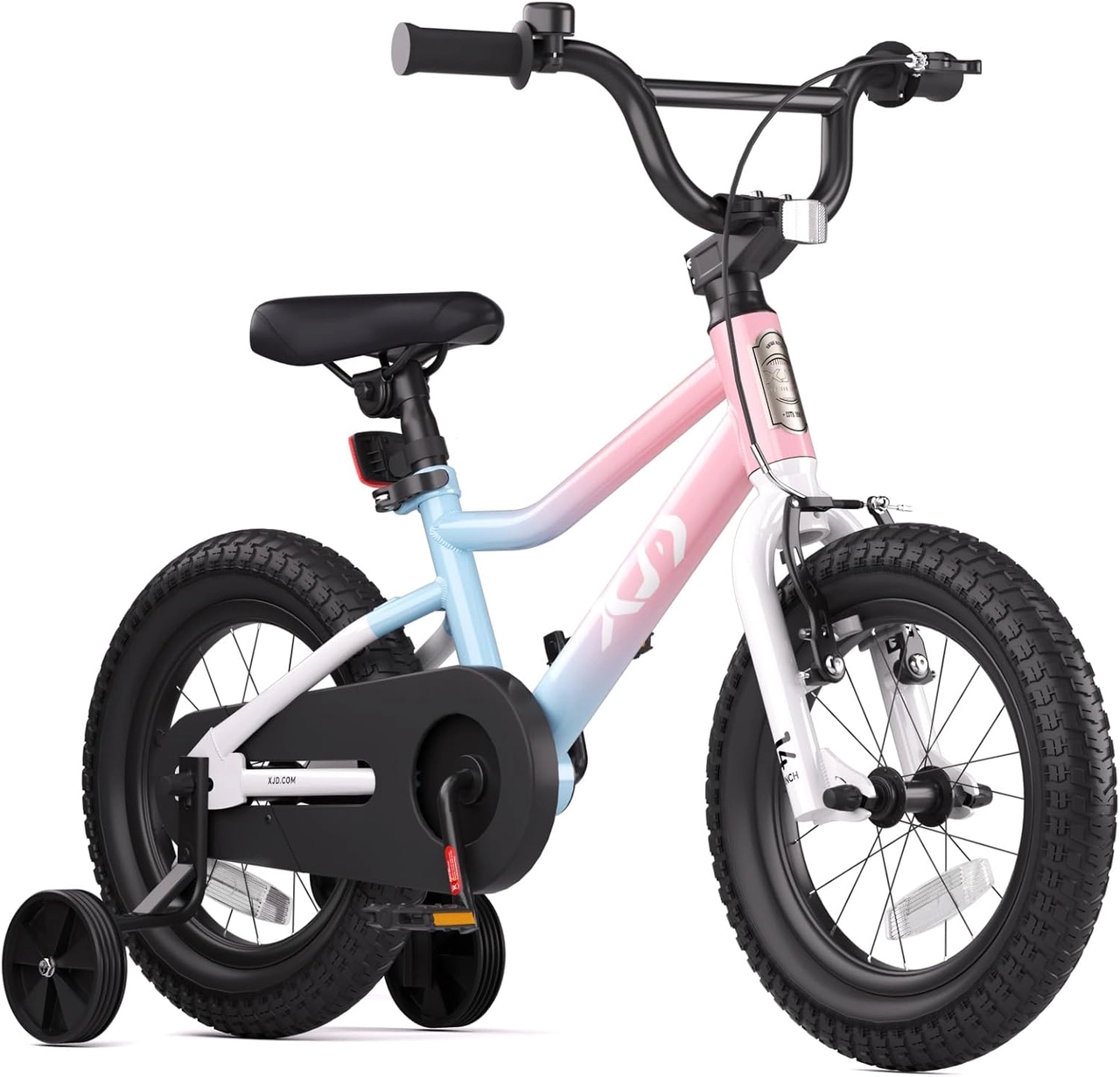 XJD Girls BMX Bike 12/14/16 Inch with Training Wheels – Pink Blue
Available in 12, 14 and 16 Inch labels with training wheels. Relevant for measured riders whose fit falls within those XBikes starting ranges; title colours distinguish it from the other supplied option.
 XJD Boys & Girls BMX Bike with Training Wheels, 12/14/16" – Blue
A blue Kids' BMX Bikes option offered in 12, 14 and 16 Inch labels with training wheels. Consider it only after checking the child's height, inseam, reach, brake control and confidence.
XJD Girls BMX Bike 12/14/16 Inch with Training Wheels – Pink Blue is a Kids' BMX Bikes option available in 12 Inch, 14 Inch and 16 Inch labels. XJD Boys & Girls BMX Bike with Training Wheels, 12/14/16" – Blue is also a Kids' BMX Bikes option in the same three size labels. Based on the supplied facts, their practical comparison is colour/title presentation rather than fit range: either still requires an individual fit check.
Both titles specify training wheels. That makes them relevant to families considering supported early practice, but training wheels do not prove that a child is ready or that a size fits. The supplied facts do not establish brake type, weight, materials, load limits or compatibility. Consult the exact manual or a qualified bicycle mechanic for those details.
If the measured child needs 18 Inch, 20 Inch, 24 Inch or 26 Inch according to the starting ranges, neither supplied product provides that exact size. The 16 Inch versions are nearest-size comparison points, not equal substitutes for a larger required wheel.
A simple first-riding plan
- Choose a level area away from traffic and obstacles.
- Fit a bicycle helmet so it sits level, fits properly and uses its straps according to the manufacturer's instructions.
- Begin with short sessions focused on looking ahead, steering and stopping on request.
- Stay close enough to assist without forcing the pace.
- Stop if fear or fatigue begins to reduce control.
Progress is more useful than a deadline. A child who can start but cannot reliably steer or stop still needs supervised practice. Recheck fit after growth spurts and whenever reaching the controls or standing over the bicycle becomes awkward.
What to do next
Measure height and inseam today, locate the matching starting range, and arrange a real fit check. Choose a 12, 14 or 16 Inch supplied option only if the child can stand over it, reach and operate its controls, and ride with current confidence; otherwise select the correctly fitting wheel size and postpone unsupported riding until those checks are satisfied.
Bikes for your next adventure
-

Blue XJD Girls Bike with Training Wheels – 12/14/16 Inch
If you're shopping for a first pedal bike for a daughter roughly 3 to 8 years ol…$149
$169 -

XJD Girls BMX Bike 12/14/16 Inch with Training Wheels – Pink Blue
The XJD Girls BMX Bike in Pink/Blue is built as a first pedal bike for kids roug…$99.99
$119.99 -

26-Inch XJD Beach Cruiser Bike for Girls – Purple, V-Brake
This XJD 26-inch purple beach cruiser is sized for big kids and teens — suggeste…$218.49
$229.99