

What age do kids start learning to ride a bike
Most children can start learning to ride around ages 3–6, but there is no single correct age. Measure the child and check control and confidence before choosing a bike.
Use age as a starting point, not the decision
XBikes’ starting points place a 12-inch bike at ages 3–4 and a 14-inch bike at ages 3–6. That makes the preschool years a practical time to introduce riding. A child may be ready earlier or later depending on balance, coordination, willingness to practise and ability to follow simple directions.
Do not move to a larger bicycle merely because a birthday suggests it. The American Academy of Pediatrics recommends having the child try the bicycle and warns against buying an oversized model for future growth. A correctly sized bike should let the rider start, stop, steer and use the brakes without stretching or losing control.
Measure before comparing wheel sizes
Measure height without shoes, with the child standing straight against a wall. Then measure inseam from the floor to the crotch. Height narrows the likely wheel-size range; inseam helps you assess stand-over clearance when the child tries the actual bicycle.
| Wheel size | Starting age | Rider height |
|---|---|---|
| 12 Inch | 3–4 | 34–40 in / 86–102 cm |
| 14 Inch | 3–6 | 37–45 in / 94–114 cm |
| 16 Inch | 4–7 | 40–48 in / 102–122 cm |
| 18 Inch | 5–9 | 43–52 in / 109–132 cm |
| 20 Inch | 7–12 | 48–60 in / 122–152 cm |
| 24 Inch | 10–14 | 54–64 in / 137–163 cm |
| 26 Inch | Youth and adults | Over 60 in / 153 cm |
Where ranges overlap, do not assume either size will fit equally well. Compare the actual bicycles using inseam, reach, brake access and the child’s current confidence.
Check readiness on the actual bike
A child is ready to learn when they are interested, can stay attentive and can operate the bicycle without being overwhelmed. During a supervised fit check, look for four things:
- Stand-over: the child can straddle the bicycle securely rather than being forced onto tiptoes by an oversized frame.
- Reach: the handlebars are accessible without locking the elbows or leaning excessively forward.
- Braking: the rider can reach and operate the provided controls reliably. Check the exact product manual for its operating instructions.
- Confidence: the child can mount, look ahead, steer and stop without panic. If not, reduce the challenge rather than moving up a size.
How to begin the first sessions
Choose a flat, open area away from traffic and obstacles. Keep sessions short enough that fatigue does not replace useful practice. Let the child rehearse mounting, looking forward, steering and stopping before expecting continuous riding.
Progress one skill at a time. Support the child only as much as needed, then reduce that support as balance improves. Training wheels can provide one learning route, but their presence does not make an ill-fitting bicycle appropriate. Whatever setup you use, follow its exact manual for assembly, adjustment and maintenance, or ask a qualified bicycle mechanic.
A bicycle helmet is essential for every practice session. The U.S. Consumer Product Safety Commission advises that it fit properly, sit level and have its straps used according to the helmet manufacturer’s instructions.
Where the supplied bikes fit the decision
The two catalog options are useful comparison points for families considering training-wheel bikes across the early size ranges. Girls' Training Wheel Bike by XJD with Basket – Purple is offered in 14 Inch, 16 Inch and 20 Inch labels. Flower Pink XJD Girls Bike with Doll Seat & Basket is offered in 12 Inch, 14 Inch and 16 Inch labels. These labels help identify candidates to try; they do not establish an individual child’s fit.
 Girls' Training Wheel Bike by XJD with Basket – Purple
A training-wheel bike offered in 14 Inch, 16 Inch and 20 Inch labels. It is relevant for comparing those starting size ranges, subject to an individual height, inseam, reach, brake-control and confidence check.
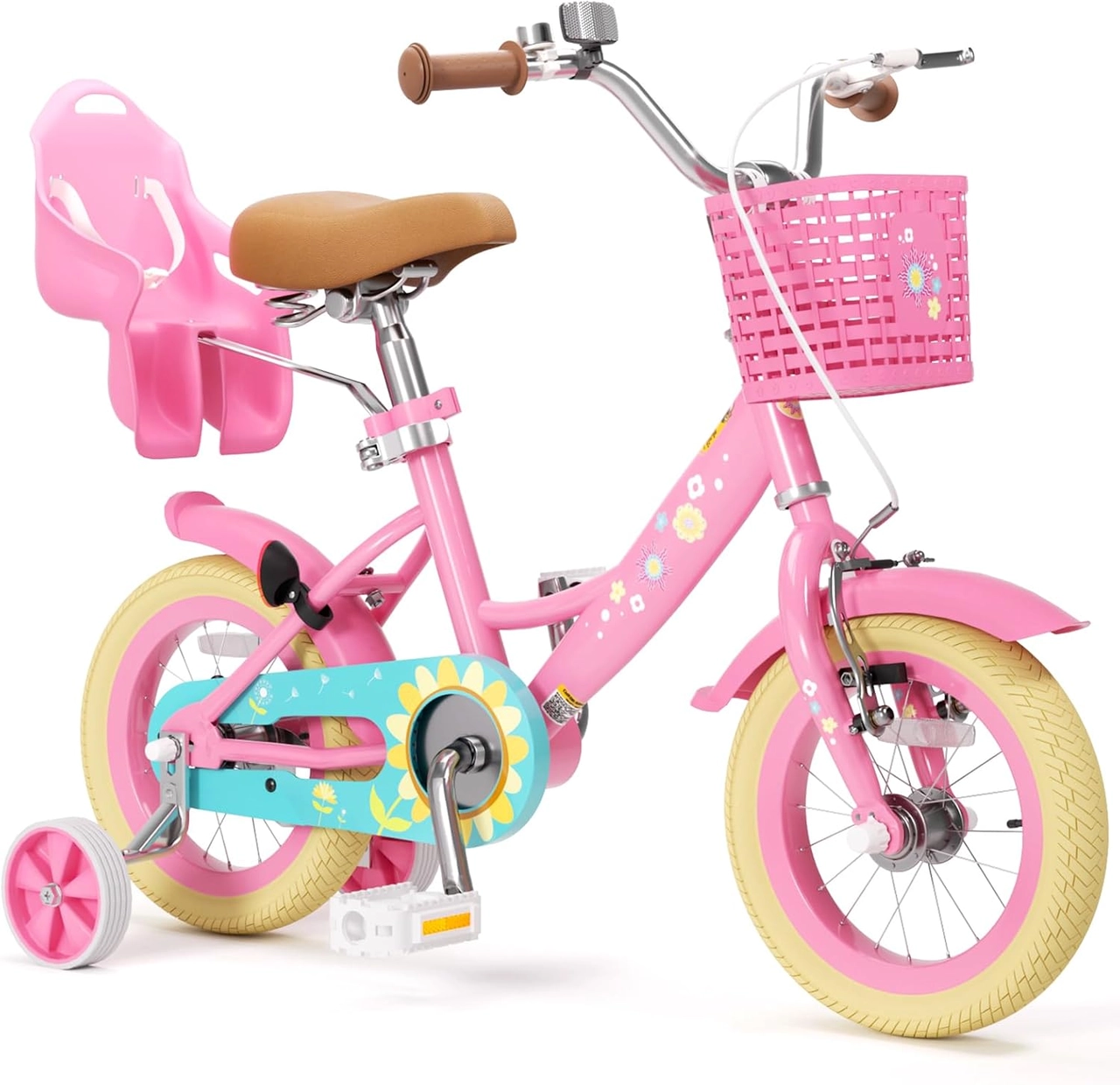 Flower Pink XJD Girls Bike with Doll Seat & Basket
A training-wheel bike offered in 12 Inch, 14 Inch and 16 Inch labels. Its 12-inch option covers the earliest supplied starting range, but age alone does not establish fit.
The Flower Pink model includes the 12-inch starting point associated with ages 3–4 and heights of 34–40 in / 86–102 cm. Both models offer 14- and 16-inch labels, so they can be compared when the child’s measured height falls in those overlapping ranges. The Purple model also reaches 20 inches, whose starting range is ages 7–12 and 48–60 in / 122–152 cm.
Neither product is relevant simply because its color, basket or doll seat appeals to the child. It is relevant only if an available wheel-size label leads to a successful individual fit check and the child can control that exact bicycle. Product facts supplied here do not establish brake type, weight, assembly details or compatibility; consult the exact manual or a qualified bicycle mechanic for those points.
Make the age decision today
If your child is around ages 3–6, measure height and inseam now, use the 12- or 14-inch starting ranges to select candidates, and arrange an actual fit check. Start lessons only when stand-over, reach, braking and confidence all work together; otherwise wait, practise simpler skills or compare a more suitable size.
Bikes for your next adventure
-
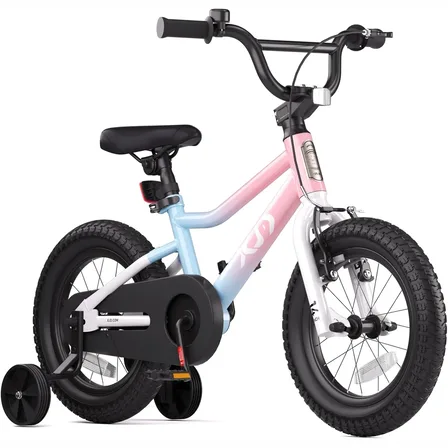
XJD Girls BMX Bike 12/14/16 Inch with Training Wheels – Pink Blue
The XJD Girls BMX Bike in Pink/Blue is built as a first pedal bike for kids roug…$99.99
$119.99 -

26-Inch XJD Beach Cruiser Bike for Girls – Purple, V-Brake
This XJD 26-inch purple beach cruiser is sized for big kids and teens — suggeste…$218.49
$229.99 -
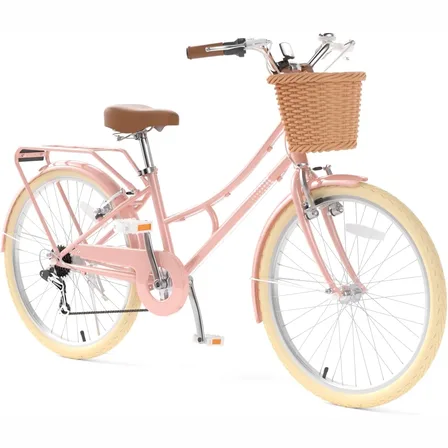
XJD Pink Beach Cruiser for Girls – Rear Rack & V-Brake
The XJD Pink Beach Cruiser for girls is the step-up bike for riders who've outgr…$179.99
$209.99