

What age do most kids learn to ride a bike
Most kids learn to ride a bike between ages 4 and 7, but readiness, confidence and correct fit matter more than reaching a particular birthday.
Age gives only a rough starting point
Children develop balance, coordination and judgment at different rates. One child may be eager to practise at four, while another may become comfortable later. A useful readiness check is whether the child can follow simple directions, steer deliberately, stop when asked and keep trying without becoming overwhelmed.
Do not choose a bicycle from age alone. Measure the rider and have them try the actual bike. A correctly sized bicycle that the child can control is more useful for learning than an oversized model bought for future growth.
Measure height, inseam and control
Measure the child’s standing height without shoes. For inseam, have them stand straight with their feet slightly apart, then measure from the floor to the crotch. Compare those measurements with the bicycle maker’s fit information and the XBikes starting points below.
During an in-person fit check, confirm that the child can stand over the bicycle, reach the handlebar without stretching, turn it comfortably and operate the brakes with their hands in a natural position. Check both sides and watch for leaning, twisting or strained fingers. Confidence counts too: a technically plausible size is not suitable if the rider feels unable to control it.
Compare wheel-size starting points
| Wheel size | Age starting point | Rider height |
|---|---|---|
| 12 Inch | 3–4 | 34–40 in / 86–102 cm |
| 14 Inch | 3–6 | 37–45 in / 94–114 cm |
| 16 Inch | 4–7 | 40–48 in / 102–122 cm |
| 18 Inch | 5–9 | 43–52 in / 109–132 cm |
| 20 Inch | 7–12 | 48–60 in / 122–152 cm |
| 24 Inch | 10–14 | 54–64 in / 137–163 cm |
| 26 Inch | Youth and adults | Over 60 in / 153 cm |
These ranges are starting points, not promises of fit. Where ranges overlap, use the child’s measured height, inseam, reach, brake control and current confidence to decide which bicycle to try. Never move up merely because the child is near a birthday or because a larger bike may last longer.
What to do during the first practice
Choose a quiet, open area away from traffic and obstacles. Begin with short sessions and let the child build comfort with getting on, looking ahead, steering and stopping. Keep the goal small enough that the child finishes feeling capable rather than exhausted.
- Check that the bicycle is assembled and adjusted according to its exact manual.
- Have the child demonstrate that they can reach and use the brakes before gaining speed.
- Practise starting, controlled stopping and gentle turns before combining them.
- Stop and reassess the fit if the child cannot control the bike without stretching or struggling.
A properly fitting bicycle helmet is essential. It should sit level and be secured with its straps according to the helmet manufacturer’s instructions. For bicycle assembly, adjustment, maintenance, compatibility or torque information not stated in the product facts, follow the exact product manual or consult a qualified bicycle mechanic.
When the supplied catalog option is relevant
The 26-Inch XJD Beach Cruiser Bike for Girls – Purple, V-Brake is a useful comparison only for a rider who is considering the larger end of the supplied range. Its available SKU labels include 20 Inch, 24 Inch and 26 Inch options in listed colors, while the exact titled configuration is Purple / 26 Inch. Those sizes correspond to very different XBikes height starting points, so they are not interchangeable.
These catalog options help answer the age question by showing why a wheel-size label must be compared with the rider’s measurements: 20 Inch begins at 48 inches in height, 24 Inch at 54 inches, and 26 Inch is for youth and adults over 60 inches. They are relevant only when the child’s measurements and hands-on control support that size.

For many first-time riders in the common learning years, these 20-, 24- and 26-inch options may be too large. In that situation, treat them as larger-size comparison points, not substitutes for the smaller size indicated by the chart and an individual fit check.
Make the decision from the child, not the birthday
Measure height and inseam first, shortlist the matching starting size, and then have the child try the bicycle. Choose only when they can stand over it, reach the controls, steer and brake confidently. If those checks fail, move to a more suitable size or wait and practise readiness skills rather than expecting age alone to make the bike fit.
Bikes for your next adventure
-

Black XJD Kids Bike for Boys – 12, 14 & 16 Inch Sizes
For a son between roughly 3 and 8 years old, the XJD Kids Bike in Black covers t…$169
$199 -
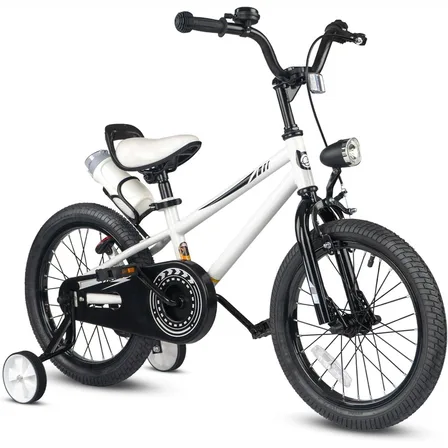
XJD Kids' Training Wheel Bike for Boys & Girls, 12/14/16 Inch – White
The XJD kids' training wheel bike in White is made for riders ages 3–8 (roughly …$169
$199 -

Blue XJD Girls Bike with Training Wheels – 12/14/16 Inch
If you're shopping for a first pedal bike for a daughter roughly 3 to 8 years ol…$149
$169