

What age for a 14 inch bike
A 14 inch bike is an XBikes starting point for children ages 3–6 who are 37–45 in (94–114 cm) tall. Height and an individual fit check matter more than age.
Who usually fits a 14 inch bike?
The age range answers the title, but it should be treated as an initial filter rather than proof of fit. Two children of the same age can have different leg length, reach, coordination and confidence. Measure your child now, compare that measurement with the 14 inch height range, and then have them try the bicycle.
Do not move a child onto a 14 inch bike merely because they have reached age three. Likewise, a child older than six may still need a smaller wheel size if that is what allows comfortable control. The correct next step always depends on the individual rider, not a birthday alone.
Measure height and inseam before choosing
Measure height with the child standing straight against a wall without shoes. Mark the top of the head, then measure from the floor to the mark. A result within 37–45 in (94–114 cm) makes a 14 inch bike a reasonable size to try.
Also measure inseam. Have the child stand without shoes, feet slightly apart, and measure from the floor to the crotch. Do not convert that result into a universal bike size: frame shapes and stand-over clearances differ. Instead, take the measurement to the product’s own sizing information and confirm it during a real fit check.
Compare the nearby wheel-size starting points
| Wheel size | Starting age | Rider height | What the comparison means |
|---|---|---|---|
| 12 Inch | 3–4 | 34–40 in / 86–102 cm | Worth trying when the child is below or near the lower edge of the 14 inch range. |
| 14 Inch | 3–6 | 37–45 in / 94–114 cm | The requested size and the main option to fit-check within its height range. |
| 16 Inch | 4–7 | 40–48 in / 102–122 cm | Worth comparing near the upper overlap, but only if the child controls it comfortably. |
The overlapping ranges are intentional starting points, not permission to size up automatically. The American Academy of Pediatrics’ HealthyChildren guidance recommends having the child try the bike and avoiding an oversized bicycle bought for future growth.
What a successful fit check looks like
During the tryout, judge the whole riding position. The child should be able to stand over the bicycle with appropriate clearance, settle onto the seat without appearing stretched, and reach the handlebar naturally. Their hands must reach and operate the bicycle’s brakes with control. Confirm the exact adjustment and fit instructions in the product manual.
Watch the child start, steer, slow and stop in a controlled practice area. Hesitation alone does not always mean the wheel size is wrong, but repeated difficulty reaching controls, managing the bike or stopping confidently is a reason to compare another size. Never accept poor control simply because the height chart includes the child.
How the supplied bicycle helps with the comparison
The XJD Pink Girls' Bike – Kids 12/14/16 Inch Training Wheel Bicycle is cataloged under Training Wheel Bikes and has 12 Inch, 14 Inch and 16 Inch SKU labels. Those three labeled options make it relevant for comparing the requested 14 inch size with the immediately adjacent XBikes starting points. The labels identify wheel-size options; they do not replace measurement or an individual tryout.
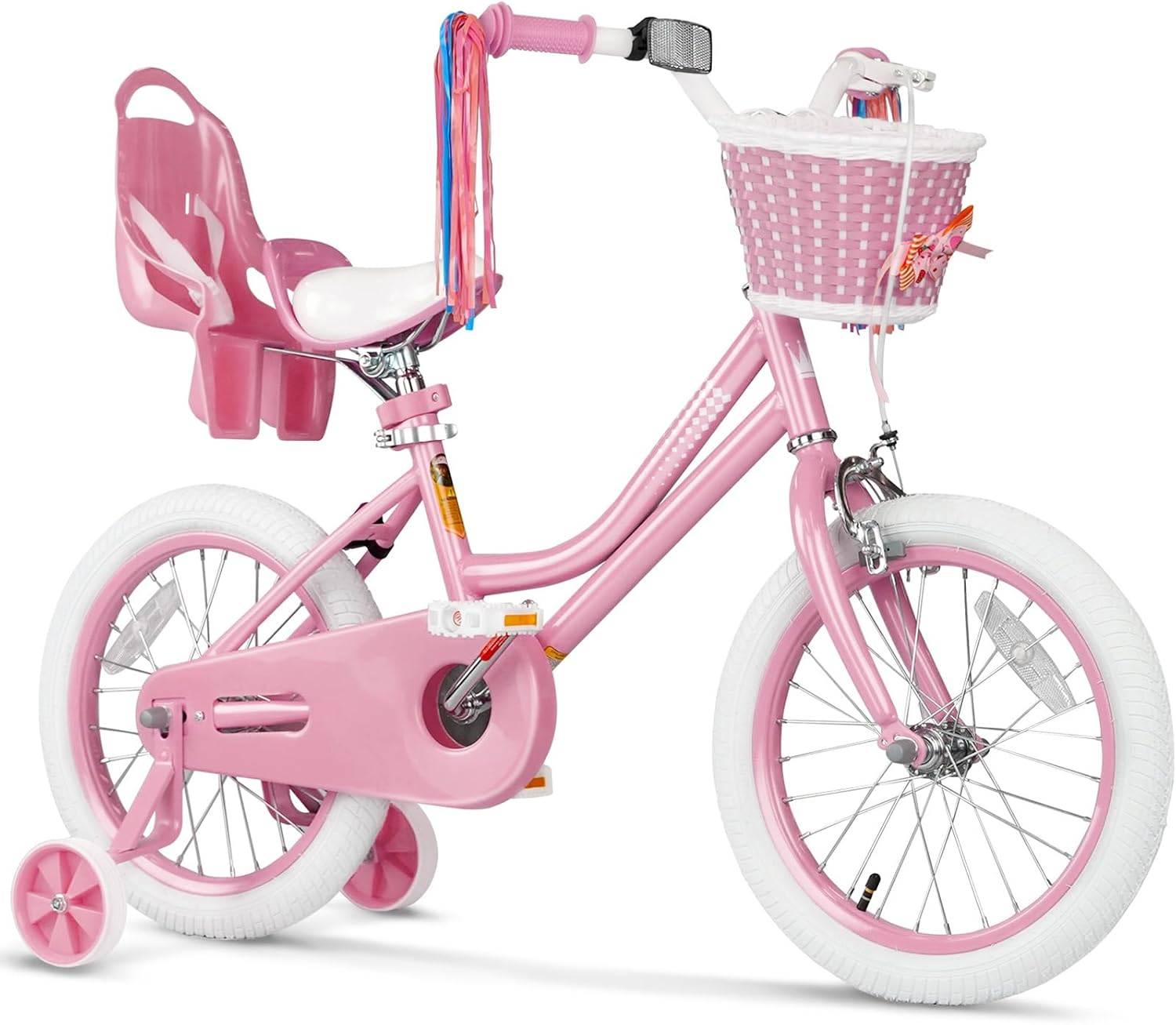
The 14 Inch SKU is the relevant one when the child measures 37–45 in (94–114 cm) and passes the fit check. The 12 Inch and 16 Inch SKUs are comparison choices where the height ranges overlap. Do not assume the larger option will last longer in a useful way: an oversized bicycle can make starting, steering and stopping harder.
No additional product facts about brakes, frame dimensions, adjustment range, assembly, load limits or component compatibility are supplied here. Check the exact product manual for those details. If setup or fit remains uncertain, use a qualified bicycle mechanic rather than guessing at an adjustment or procedure.
Helmet and final decision
A properly fitting bicycle helmet is part of every ride. U.S. Consumer Product Safety Commission guidance says the helmet should fit properly, sit level on the head, and use its straps according to the helmet manufacturer’s instructions. A helmet cannot correct a bicycle that is too large or difficult for the child to control.
Choose a 14 inch bike when your child is within the 37–45 in (94–114 cm) starting range and can stand over, reach, steer and operate the brakes confidently during a tryout. If any of those checks fail, compare the adjacent size indicated by the child’s measured height instead of buying the 14 inch bike by age alone.
Bikes for your next adventure
-
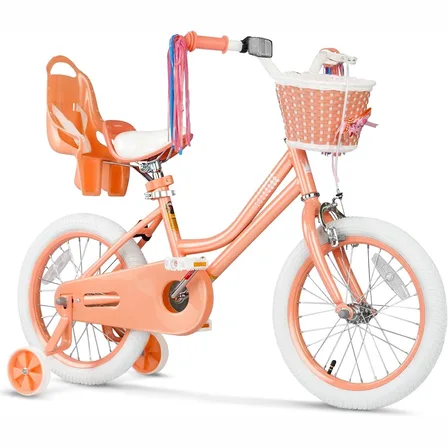
Girls 12/14/16 Inch Kids Bike by XJD with Training Wheels – Peach
The XJD Girls Bike in Peach is a training-wheel bike built for girls roughly 3 t…$149
$169 -
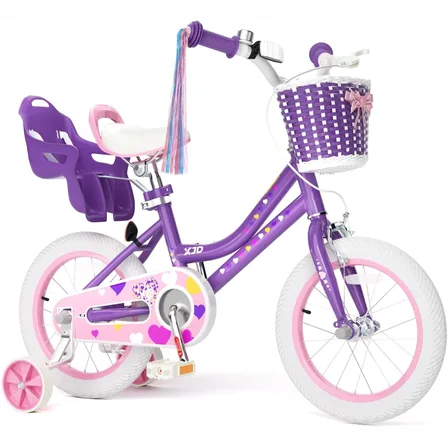
XJD Light Purple Girls Bike with Basket, Training Wheels, 12/14/16/20 Inch
The XJD Girls Bike with Basket in Light Purple is a single-speed training-wheel …$99.99
$119.99 -

Pink Girls' 12/14/16" Bike by XJD – Basket & Doll Seat
The XJD Pink Girls' Bike with Basket & Doll Seat is made for riders 71–122 cm ta…$75.99
$99.99