

What age group is a 20 inch bike
A 20 inch bike is usually for children ages 7–12 who are 48–60 in (122–152 cm) tall. Height and an individual fit check matter more than age.
Start with height, not the birthday
The XBikes starting point for a 20 inch bicycle is ages 7–12 and a rider height of 48–60 in (122–152 cm). That range answers the age question, but it does not guarantee that every child within it will fit every 20 inch frame.
Measure the child’s height without shoes, standing straight against a wall. Record the result and compare it with the 48–60 in range. If the rider is below or above that range, do not assume a 20 inch model will work simply because the child’s age matches.
Nearby XBikes starting points help identify borderline cases: 18 inch bikes cover ages 5–9 and heights of 43–52 in (109–132 cm), while 24 inch bikes cover ages 10–14 and heights of 54–64 in (137–163 cm). The ranges overlap because children with the same height can differ in leg length, reach and confidence.
Measure inseam and check stand-over clearance
Height narrows the choice; inseam helps determine whether the frame itself is manageable. Have the child stand against a wall with feet slightly apart. Place a straight-edged book between the legs, raise it gently to simulate a bicycle saddle, and measure from the floor to the top edge of the book.
Compare that measurement with the stand-over height stated for the exact bicycle or confirm the fit in person. With the child standing over the top tube, there should be usable clearance rather than contact or a forced tiptoe position. Because no model-specific stand-over measurements are supplied here, consult the exact product information or manual instead of estimating.
Do not buy an oversized bike solely to leave room for growth. A bicycle the child cannot comfortably stand over, steer or stop is not made suitable by an age label.
Perform the control check
Have the child try the bicycle before deciding whenever possible. The rider should be able to mount and dismount without struggling, sit in a stable position, turn the handlebar without overreaching and look ahead while maintaining control.
- Reach: The child should hold the grips without locking the elbows or stretching the torso excessively.
- Brake access: The child must be able to reach and operate the bicycle’s provided braking controls confidently.
- Balance: Starting, steering and stopping should look controlled rather than hesitant or unstable.
- Confidence: A child new to riding may need a more manageable setup than another child of the same age and height.
If any of these checks fail, compare another frame or wheel size. Wheel diameter alone cannot establish fit.
How the supplied 20 inch options are relevant
Both supplied catalog bicycles include a 20 Inch SKU label, so they are directly relevant comparison options when the rider falls near the 20 inch starting range and passes the fit checks. The Light Pink XJD Girls' Bicycle with Basket & Training Wheels and the Girls' Training Wheel Bike by XJD, 12–20 Inch Wheels – Blue are both categorized as Training Wheel Bikes. Each also has 12 Inch, 14 Inch and 16 Inch SKU labels, but those sizes are separate choices and are not equivalent to the 20 Inch version.
 Light Pink XJD Girls' Bicycle with Basket & Training Wheels
Includes a 20 Inch SKU and is categorized as a Training Wheel Bike. Its exact catalog title also identifies a basket; confirm the selected size and the child’s individual fit.
 Girls' Training Wheel Bike by XJD, 12–20 Inch Wheels – Blue
Includes a 20 Inch SKU and is categorized as a Training Wheel Bike, making it relevant for comparison when the rider meets the height and hands-on fit checks.
These products are most relevant when the family specifically wants to compare catalog options in the Training Wheel Bikes category and the child fits the 20 Inch version. The basket is supported only for the light pink model because it appears in that exact catalog title. No other differences in frame dimensions, brakes, materials, weight or included equipment should be inferred from the supplied facts.
They are not suitable recommendations merely because the child is 7–12. They may be irrelevant if the measured height is outside 48–60 in, if stand-over or reach is poor, if the child cannot operate the controls, or if the family does not want a training-wheel bicycle. Check the exact selected SKU before ordering; the shared product pages cover several wheel sizes.
Check setup and helmet fit
Use the exact product manual for assembly, adjustment, maintenance, compatibility, load limits and torque requirements. If any instruction is missing or the setup is uncertain, use a qualified bicycle mechanic. Do not guess at adjustments or fastener settings.
A bicycle helmet must fit properly, sit level on the child’s head and use its straps according to the helmet manufacturer’s instructions. A helmet does not correct a bicycle that is too large or difficult to control, so complete the bike fit and helmet fit as separate checks.
Make the 20 inch decision
Choose a 20 inch bike only when the child is around the 48–60 in (122–152 cm) starting range and the actual bicycle passes the stand-over, reach, brake-control and confidence checks. If those checks do not pass, compare the adjacent size indicated by measured height and repeat the hands-on fit check rather than buying for age or future growth.
Bikes for your next adventure
-
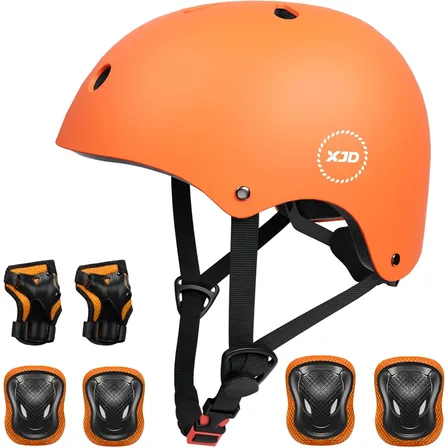
Orange Kids Helmet & Pad Set by XJD – Sizes S & M
The Orange XJD Kids Helmet & Pad Set is built for children around 3 to 8 years o…$24.64
-

Kids Bike Helmet by XJD for Boys & Girls – Black, Blue, Green, Pink, Purple
The XJD Kids Bike Helmet covers a wide 2-to-8-year age range thanks to two head-…$59.99
-

Kids Bike Helmet by XJD for Girls – Pink
The XJD Kids Bike Helmet in Pink is a lightweight multi-sport helmet for girls r…$59.99
$99