

What age is 12 inch bike for
A 12-inch bike is usually for ages 3–4 and riders 34–40 inches (86–102 cm) tall. Measure the child and confirm the fit before buying.
Start with height, not age
The age range is only a starting point. Children of the same age can differ in height, proportions, coordination and confidence, so a birthday alone cannot determine the right bicycle.
Measure the child’s standing height without shoes, with their back straight against a wall. Compare that measurement with the XBikes 12-inch starting range of 34–40 inches (86–102 cm). If the child falls outside that range, compare the neighboring wheel-size ranges rather than assuming a 12-inch bike will work.
| Wheel size | Starting age | Rider height |
|---|---|---|
| 12 Inch | Ages 3–4 | 34–40 in / 86–102 cm |
| 14 Inch | Ages 3–6 | 37–45 in / 94–114 cm |
| 16 Inch | Ages 4–7 | 40–48 in / 102–122 cm |
The overlapping ranges are intentional starting points, not proof that two sizes fit equally well. A child near a boundary should try the relevant sizes and choose according to actual control.
Measure inseam and check stand-over clearance
Height narrows the choice, but inseam helps reveal whether the frame is manageable. Have the child stand in socks with feet slightly apart, then measure from the floor to the top of the inside leg. Compare that measurement with the bicycle’s stand-over height as described by the exact model’s sizing information or manual.
When the child stands over the bike, they should not be forced onto tiptoe or pressed uncomfortably against the frame. Have them get on and off several times. Do not buy an oversized bicycle merely to leave room for growth; a bike that is too large can make starting, stopping and steering harder.
Use a hands-on fit check
A suitable 12-inch bike should let the child assume a stable riding position without stretching. During a supervised try-on, check whether the child can:
- Mount and dismount without struggling.
- Reach the handlebar while keeping comfortable control of steering.
- Operate the fitted brakes with their hands in a natural position.
- Start, turn and stop without the bicycle feeling too tall or unwieldy.
- Remain composed rather than becoming tense because of the bike’s size.
Reach, brake control and current confidence can rule out a nominally age-appropriate bike. If fit remains uncertain, use a qualified bicycle mechanic or experienced bicycle fitter and follow the exact product manual for setup.
How the supplied XBikes options relate
Both supplied catalog options include a 12 Inch SKU, so they are relevant to this question. They also offer 14 Inch, 16 Inch and 20 Inch labels, which can help families compare listed size options when the rider is near or beyond the 12-inch height range. The labels do not replace an individual fit check.
Pink 12/14/16/20" XJD Girls Bike with Training Wheels & Basket is categorized as a Training Wheel Bike and is offered in 12 Inch, 14 Inch, 16 Inch and 20 Inch SKU labels. Light Pink XJD Girls' Bicycle with Basket & Training Wheels is also categorized as a Training Wheel Bike with the same four supplied size labels. Those are the only catalog differences and similarities that can be established here; compare the exact product pages and manuals for any additional specifications.
These particular options help answer the title because each includes the requested 12 Inch label while also providing adjacent catalog sizes for comparison.
 Pink 12/14/16/20" XJD Girls Bike with Training Wheels & Basket
This Training Wheel Bike includes a 12 Inch SKU, making it directly relevant, plus 14 Inch, 16 Inch and 20 Inch labels for size comparison after measuring the rider.
 Light Pink XJD Girls' Bicycle with Basket & Training Wheels
This Training Wheel Bike is available with a 12 Inch SKU and also lists 14 Inch, 16 Inch and 20 Inch options; the correct choice still requires an individual fit check.
When a 12-inch bike is not the right choice
Do not choose 12 Inch solely because the child is three or four. It may be unsuitable if the rider is outside the 34–40 inch starting range, cannot stand over the bicycle comfortably, must stretch to steer, cannot reach or control the brakes, or lacks the confidence to start and stop predictably.
A child measuring 37–40 inches overlaps the supplied 12-inch and 14-inch starting ranges. That overlap calls for trying both sizes, not automatically sizing up. At 40 inches, the 16-inch starting range also begins, but this still does not make a 16-inch bike interchangeable with a 12-inch model. Actual stand-over, reach and control decide.
Complete the decision safely
- Measure standing height and inseam.
- Use 34–40 inches (86–102 cm) as the 12-inch height starting point.
- Have the child try the exact bicycle and check stand-over, reach, braking and confidence.
- Reject an oversized choice even if it promises more growing room.
- Follow the product manual or ask a qualified bicycle mechanic about assembly, adjustments, compatibility, maintenance, load limits and torque.
Before riding, provide a properly fitting bicycle helmet. It should sit level and its straps should be used according to the helmet manufacturer’s instructions.
The practical answer is simple: consider a 12-inch bike for a 3–4-year-old measuring 34–40 inches, but buy it only after the child demonstrates comfortable stand-over, reach, brake control and confidence on that exact bike.
Bikes for your next adventure
-

XJD Boys & Girls BMX Bike with Training Wheels, 12/14/16" – Blue
The XJD Boys & Girls BMX Bike in Blue is a first pedal bike for kids roughly age…$99.99
$119.99 -
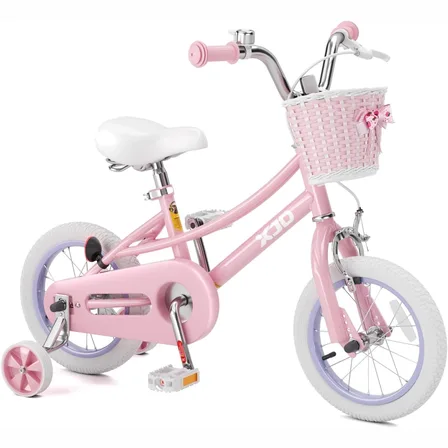
Pink 12/14/16/20" XJD Girls Bike with Training Wheels & Basket
The Pink XJD Girls Bike with Training Wheels & Basket is a first-bike pick f…$65.99
$75.99 -
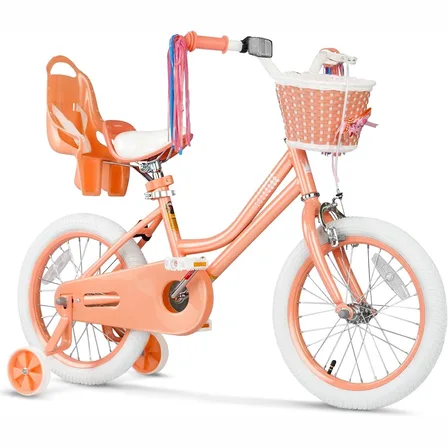
Girls 12/14/16 Inch Kids Bike by XJD with Training Wheels – Peach
The XJD Girls Bike in Peach is a training-wheel bike built for girls roughly 3 t…$149
$169