

What age to.buy kid bike
Buy a child’s bike by fit, not birthday: measure the rider’s height and inseam, then confirm stand-over clearance, comfortable reach, brake control and confidence on the actual bike.
What age should you buy a kid a bike?
Age can suggest where to start, but it cannot tell you whether a bicycle fits. Children of the same age can differ considerably in height, leg length, arm reach and riding ability. Measure first, compare the result with the XBikes starting points below, and have the child try the bike before you decide.
Do not choose an oversized bicycle simply because the child may grow into it. A rider who struggles to stand over the bike, reach the controls or handle its size does not have an appropriate current fit.
Measure before comparing sizes
- Measure height: Have the child stand without shoes against a wall, looking straight ahead. Measure from the floor to the top of the head.
- Measure inseam: With feet slightly apart, measure from the floor to the crotch. This helps you assess whether the child can stand over the bicycle comfortably.
- Note current ability: Record whether the child is a new, hesitant or confident rider. Confidence affects how manageable a borderline size may feel.
Keep both inches and centimetres if possible. Wheel size is only a starting category; it does not replace checking the complete bicycle with the rider.
Use age and height as starting points
| Wheel size | Starting age | Rider height |
|---|---|---|
| 12 Inch | 3–4 | 34–40 in / 86–102 cm |
| 14 Inch | 3–6 | 37–45 in / 94–114 cm |
| 16 Inch | 4–7 | 40–48 in / 102–122 cm |
| 18 Inch | 5–9 | 43–52 in / 109–132 cm |
| 20 Inch | 7–12 | 48–60 in / 122–152 cm |
| 24 Inch | 10–14 | 54–64 in / 137–163 cm |
| 26 Inch | Youth and adults | Over 60 in / 153 cm |
Where ranges overlap, do not automatically choose the larger wheel. Use the measured height to identify plausible options, then let stand-over clearance, reach, brake operation and present confidence settle the decision. If neither nearby size lets the child control the bike comfortably, keep looking rather than forcing the fit.
Perform an individual fit check
Have the child try the bicycle while wearing the shoes normally used for riding. Check that the rider can stand over it with practical clearance and can get on and off without struggling. Seated in a normal riding position, the child should not need to stretch excessively to hold the handlebar.
Ask the child to demonstrate that each brake control can be reached and operated while maintaining a secure grip. Then assess whether the rider can start, stop, steer and place a foot down with confidence in a controlled, traffic-free setting. Adult judgment matters, but visible control matters more than an age printed on a chart or product label.
If assembly, adjustment, compatibility, load limits, maintenance or torque requirements are unclear, follow the exact product manual or ask a qualified bicycle mechanic. Do not improvise specifications.
When the supplied bikes are relevant
The three supplied catalog choices are relevant only when an individual fit check points toward a 12 Inch, 14 Inch or 16 Inch bicycle. Each provides all three of those SKU labels, making them useful options to compare within the overlapping starting ranges above. They do not cover riders whose measurements and control indicate an 18 Inch or larger bike.
The Flower Pink XJD Girls Bike with Doll Seat & Basket and Purple XJD Girls' Bike with Doll Seat & Basket are categorized as Training Wheel Bikes. The Black XJD Kids' BMX Bicycle with Training Wheels is categorized as a Kids' BMX Bike. Those category and title differences can help narrow the preferred type, but they do not prove fit or replace an in-person control check.
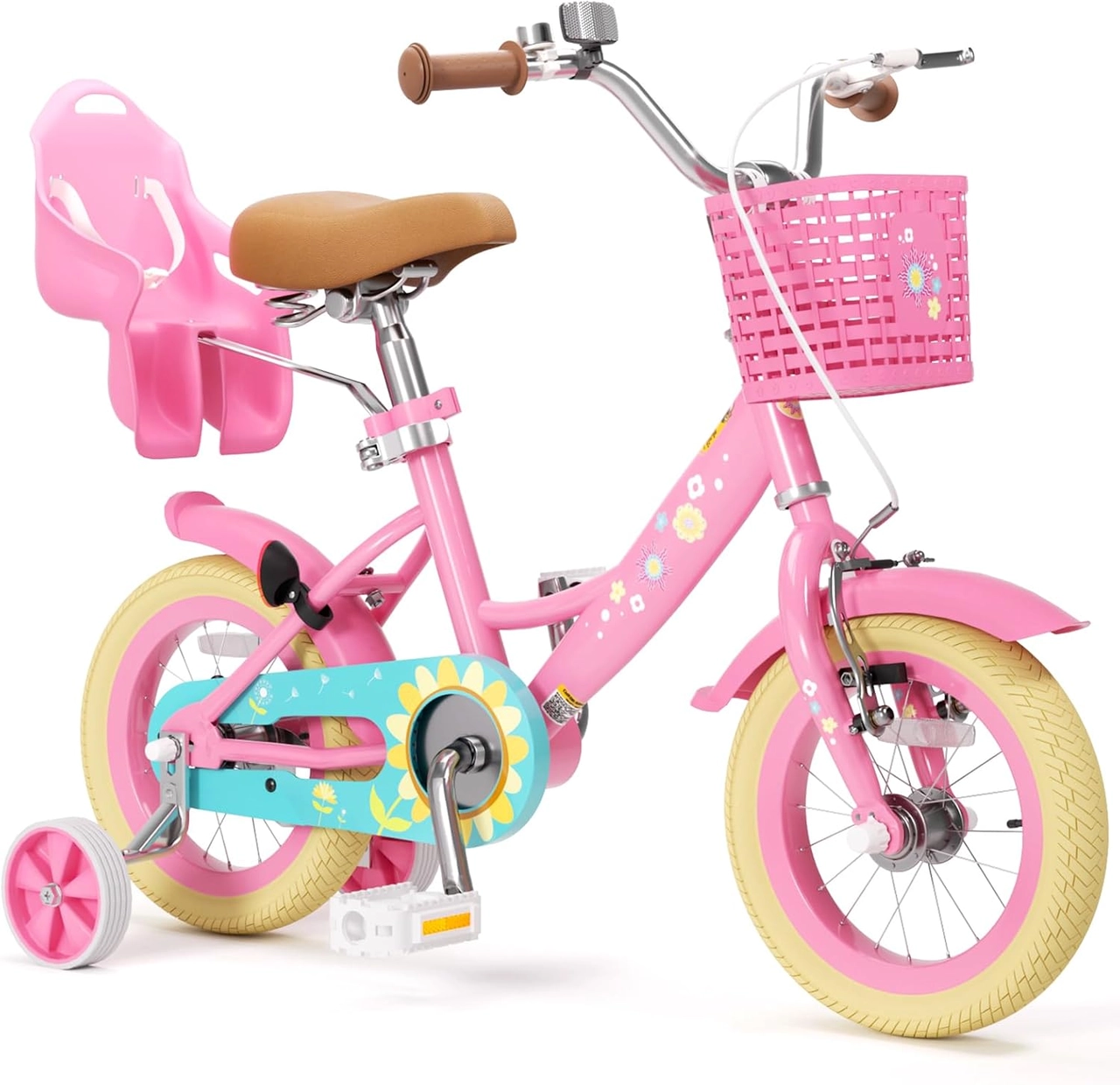 Flower Pink XJD Girls Bike with Doll Seat & Basket
A Training Wheel Bike offered in 12 Inch, 14 Inch and 16 Inch labels; relevant only when the rider’s measurements and individual fit check support one of those sizes.
 Purple XJD Girls' Bike with Doll Seat & Basket
A Training Wheel Bike with 12 Inch, 14 Inch and 16 Inch SKU labels. Compare it only after height, inseam, reach, brake control and confidence indicate a suitable fit.
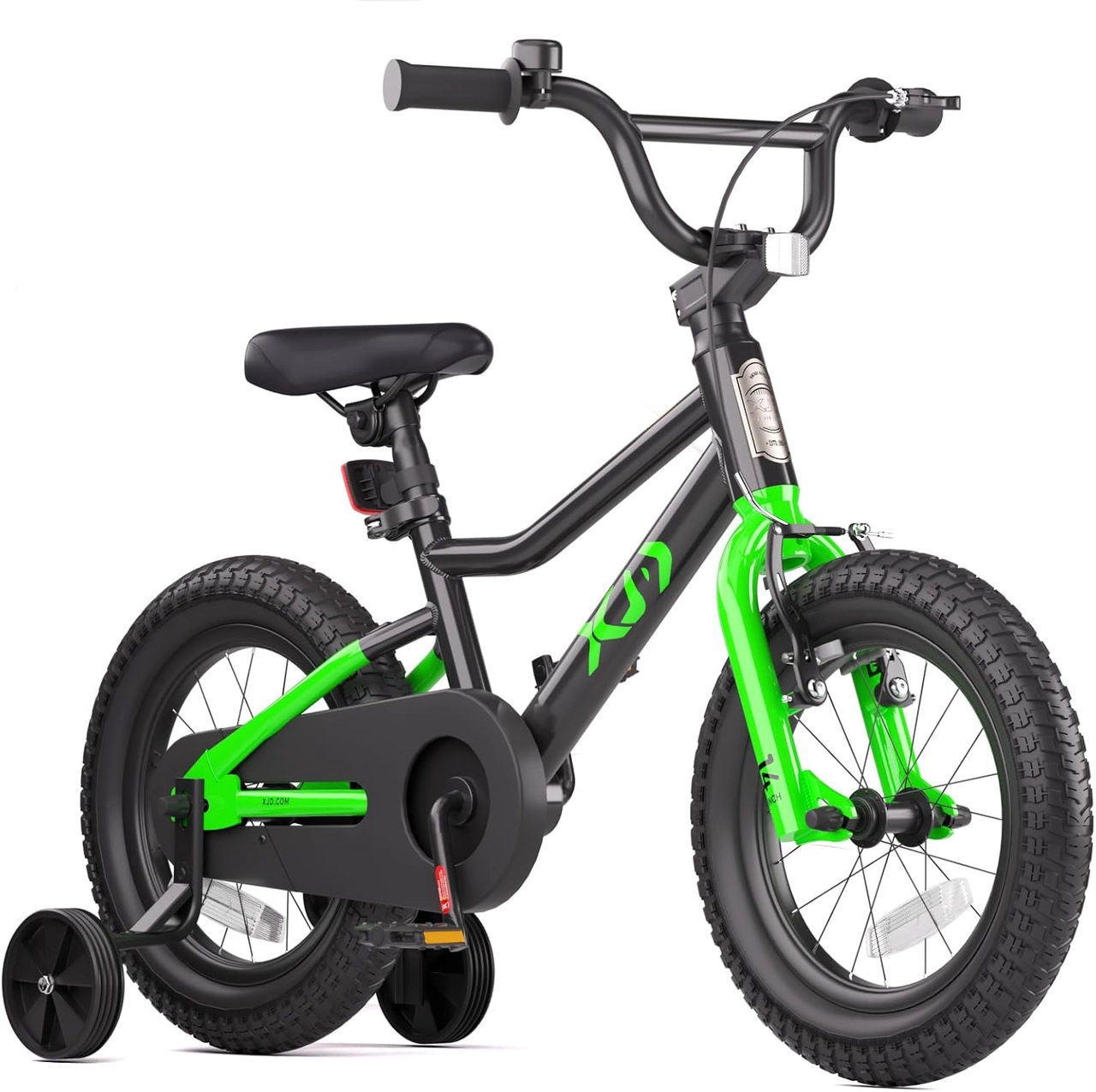 Black XJD Kids' BMX Bicycle with Training Wheels
A Kids' BMX Bike offered with 12 Inch, 14 Inch and 16 Inch labels. It is relevant when those starting sizes match the rider and the exact bicycle passes a fit check.
Make the decision and prepare to ride
- Choose a candidate wheel size from measured height, using age only as a secondary starting point.
- Reject any bike the child cannot stand over, reach, brake or control comfortably now.
- Compare the three supplied products only if 12, 14 or 16 Inch remains appropriate after that check.
- Use the manual or a qualified bicycle mechanic for product-specific setup and adjustment.
Before riding, provide a properly fitting bicycle helmet. It should sit level and its straps should be used according to the helmet manufacturer’s instructions. The practical answer to “what age to buy a kid bike” is therefore: buy when the child is ready to ride, but choose the size only after measuring and confirming safe, confident control of that exact bicycle.
Bikes for your next adventure
-

Blue XJD Kids Bike Helmet for Boys & Girls
The Blue XJD Kids Bike Helmet is a lightweight, adjustable multi-sport helmet fo…$59.99
$99 -
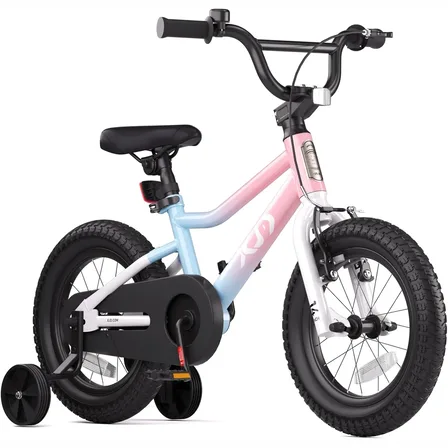
XJD Girls BMX Bike 12/14/16 Inch with Training Wheels – Pink Blue
The XJD Girls BMX Bike in Pink/Blue is built as a first pedal bike for kids roug…$99.99
$119.99 -

Kids Bike Helmet by XJD for Boys & Girls – Black, Blue, Green, Pink, Purple
The XJD Kids Bike Helmet covers a wide 2-to-8-year age range thanks to two head-…$59.99