

What are the best bikes for kids
The best bikes for kids fit the rider now: choose by measured height first, then confirm stand-over clearance, comfortable reach, easy brake control and confidence.
Measure before comparing bikes
Measure the child’s height without shoes. Also measure inseam from the floor to the crotch while the child stands naturally. Use height to identify a likely wheel size, then have the child try the actual bicycle. Inseam, frame shape and saddle position affect whether the rider can stand over and control it comfortably.
Do not select an oversized bicycle merely to leave room for growth. A child should be able to mount and dismount without struggling, reach the handlebar without stretching, steer while looking ahead and operate the brakes comfortably. Age is only a starting point because children of the same age can differ greatly in height, proportions and confidence.
Use wheel size as a starting point
| Wheel size | Starting age | Rider height |
|---|---|---|
| 12 Inch | 3–4 | 34–40 in / 86–102 cm |
| 14 Inch | 3–6 | 37–45 in / 94–114 cm |
| 16 Inch | 4–7 | 40–48 in / 102–122 cm |
| 18 Inch | 5–9 | 43–52 in / 109–132 cm |
| 20 Inch | 7–12 | 48–60 in / 122–152 cm |
| 24 Inch | 10–14 | 54–64 in / 137–163 cm |
| 26 Inch | Youth and adults | Over 60 in / 153 cm |
Where ranges overlap, do not decide from the chart alone. Compare the actual bicycles and choose the one on which the child has better control. Current confidence, inseam, reach and brake operation take priority over the age band or a size printed in a product name.
What makes one bike the better choice?
The better bike is the one the child can control throughout a ride, not the one with the largest wheels. During an in-person fit check, look for four things:
- Stand-over: the child can straddle the bicycle without the frame interfering.
- Reach: hands meet the handlebar naturally, without a deep lean or locked arms.
- Brake control: the rider can comfortably reach and operate the bicycle’s brakes.
- Confidence: starting, steering, stopping and getting off do not cause avoidable hesitation.
If any of these checks fail, compare another size or model even when the child falls inside the chart’s age range. The American Academy of Pediatrics advises having the child try the bicycle and avoiding an oversized purchase made only for future growth.
When the supplied training-wheel bikes are relevant
The three supplied XBikes options are relevant when you are specifically comparing training-wheel bikes in 12-, 14- or 16-inch sizes; one also offers a 20-inch label. They help narrow the catalog after measurement, but their labels cannot replace an individual fit check.
 Light Pink XJD Girls' Bicycle with Basket & Training Wheels
A training-wheel bike offered in 12, 14, 16 and 20 Inch SKU labels. Its catalog title also identifies a light pink finish and basket; select only after an individual fit check.
 Blue XJD Girls Bike with Training Wheels – 12/14/16 Inch
A blue training-wheel bike offered in 12, 14 and 16 Inch SKU labels. It is relevant when the rider’s measurements and hands-on control check point to one of those sizes.
 XJD Boys 12/14/16" Training Wheel Bike – Blue
A blue training-wheel bike offered in 12, 14 and 16 Inch SKU labels. The “Boys” wording is a catalog label, not fit evidence; base selection on measurements and control.
Light Pink XJD Girls' Bicycle with Basket & Training Wheels is listed in 12 Inch, 14 Inch, 16 Inch and 20 Inch options. It is the only supplied option with a 20 Inch SKU label, and its exact catalog title identifies a basket and training wheels.
Blue XJD Girls Bike with Training Wheels – 12/14/16 Inch is listed in 12 Inch, 14 Inch and 16 Inch options. XJD Boys 12/14/16" Training Wheel Bike – Blue has the same three supplied size labels. Compare them by the size that fits, rather than treating “girls” or “boys” in the catalog titles as fit evidence.
These products are not relevant if the fit check points to 18, 24 or 26 Inch, because none of those sizes appears in the supplied SKU labels. They may also be unsuitable when the rider does not need or want a training-wheel bike. The catalog facts do not establish weight, materials, brake type, load limits or component compatibility, so consult the exact product manual or a qualified bicycle mechanic for those details.
Complete the check before riding
- Measure height and inseam, then shortlist the corresponding wheel sizes.
- Have the child try each candidate and check stand-over, reach, brake control and confidence.
- Follow the exact product manual for assembly, adjustments, maintenance, load limits and torque; use a qualified bicycle mechanic when needed.
- Fit a bicycle helmet properly. It should sit level, with its straps used according to the helmet manufacturer’s instructions, consistent with U.S. Consumer Product Safety Commission guidance.
The best bike for your child is therefore the correctly sized candidate they can confidently control today. Measure first, test the fit, and consider the supplied XBikes models only if their available wheel size and training-wheel format match that result.
Bikes for your next adventure
-

Flower Pink XJD Girls Bike with Doll Seat & Basket
The XJD Flower Pink girls' bike is made for riders 71–122 cm tall (roughly ages …$69.99
-
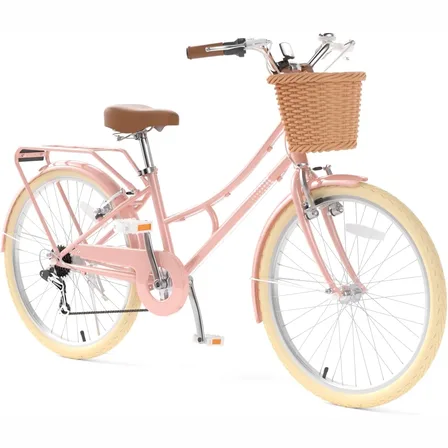
XJD Pink Beach Cruiser for Girls – Rear Rack & V-Brake
The XJD Pink Beach Cruiser for girls is the step-up bike for riders who've outgr…$179.99
$209.99 -
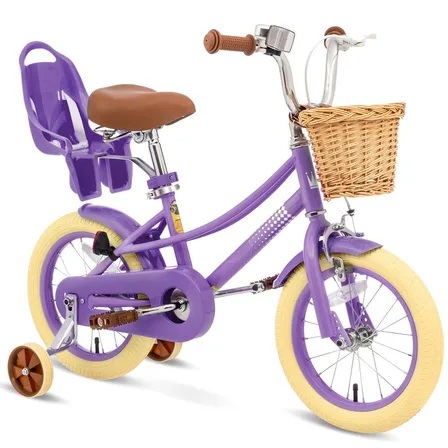
XJD Girls' Bike with Training Wheels, 12/14/16/20 Inch – Purple
The XJD girls' bike with training wheels in Purple is built to grow with your ri…$139
$159