

What bike for a 7 year old
For most 7-year-olds, start by comparing an 18 Inch and 20 Inch bike, then choose by measured height and actual control—not age alone.
Start with height, not the birthday
Measure the child’s height without shoes, standing straight against a wall. Under the XBikes starting points, an 18 Inch bike covers rider heights of 43–52 in / 109–132 cm and ages 5–9. A 20 Inch bike covers 48–60 in / 122–152 cm and ages 7–12.
That overlap matters. A 7-year-old measuring 48–52 in / 122–132 cm may need to compare both sizes in person. Below 48 in / 122 cm, begin with 18 Inch. At or above 48 in / 122 cm, include 20 Inch in the comparison. These are starting points, not proof of fit.
| Measured height | Size to investigate first | What to do next |
|---|---|---|
| 43–47 in / 109–121 cm | 18 Inch | Perform the full fit and control check |
| 48–52 in / 122–132 cm | 18 Inch and 20 Inch | Compare both; choose the easier bike to control |
| 53–60 in / 133–152 cm | 20 Inch | Perform the full fit and control check |
If the child falls outside these bands, do not force the choice by age. Recheck the measurement and compare the appropriate adjacent size from the XBikes standard.
Measure inseam and check stand-over clearance
Height narrows the search, but inseam helps reveal whether the frame is manageable. Measure from the floor to the crotch while the child stands in socks with feet slightly apart. Record the result and compare it with the actual bicycle during a supervised fitting.
With the child straddling the bike, check that they can stand over it comfortably rather than being pressed against the frame. The American Academy of Pediatrics advises having the child try the bicycle and checking stand-over instead of buying an oversized bike for future growth. Exact frame geometry is not supplied here, so wheel size alone cannot confirm clearance.
Test reach, steering and brake control
Seat the child in a normal riding position while an adult stabilizes the bicycle. They should reach the handlebar without stretching, leaning excessively or locking their arms. Ask them to turn the handlebar both ways and confirm that they remain balanced and comfortable.
Next, check whether the child can operate the bike’s brakes confidently from the intended hand position. Brake type and adjustment vary, so follow the exact product manual. If reach, setup or operation is uncertain, use a qualified bicycle mechanic.
- Reject a bike the child can only manage by overreaching.
- Reject a size that makes starting, stopping or steering noticeably harder.
- Prefer confident control over extra room for growth.
Factor in current riding confidence
A confident rider and a hesitant beginner of the same height may not make the same choice in the 18 Inch–20 Inch overlap. Compare how easily the child mounts, starts, rides a controlled line, stops and puts a foot down. Use a quiet, level area with close adult supervision.
Do not interpret “they will grow into it” as a successful fit. If the larger option reduces control, return to the smaller suitable size. If both feel awkward, pause the purchase and arrange a better fitting rather than guessing.
Are the supplied 12, 14 and 16 Inch bikes relevant?
The supplied catalog choices are training-wheel bicycles offered in 12 Inch, 14 Inch and 16 Inch labels. Under the XBikes standard, 16 Inch is a starting point for ages 4–7 and heights 40–48 in / 102–122 cm; 14 Inch covers 37–45 in / 94–114 cm, and 12 Inch covers 34–40 in / 86–102 cm.
They may therefore be relevant only when the 7-year-old is small enough for the listed height band and passes the individual fit check. The three options help answer the title by showing available smaller training-wheel choices when an 18 Inch or 20 Inch starting point would be too large.
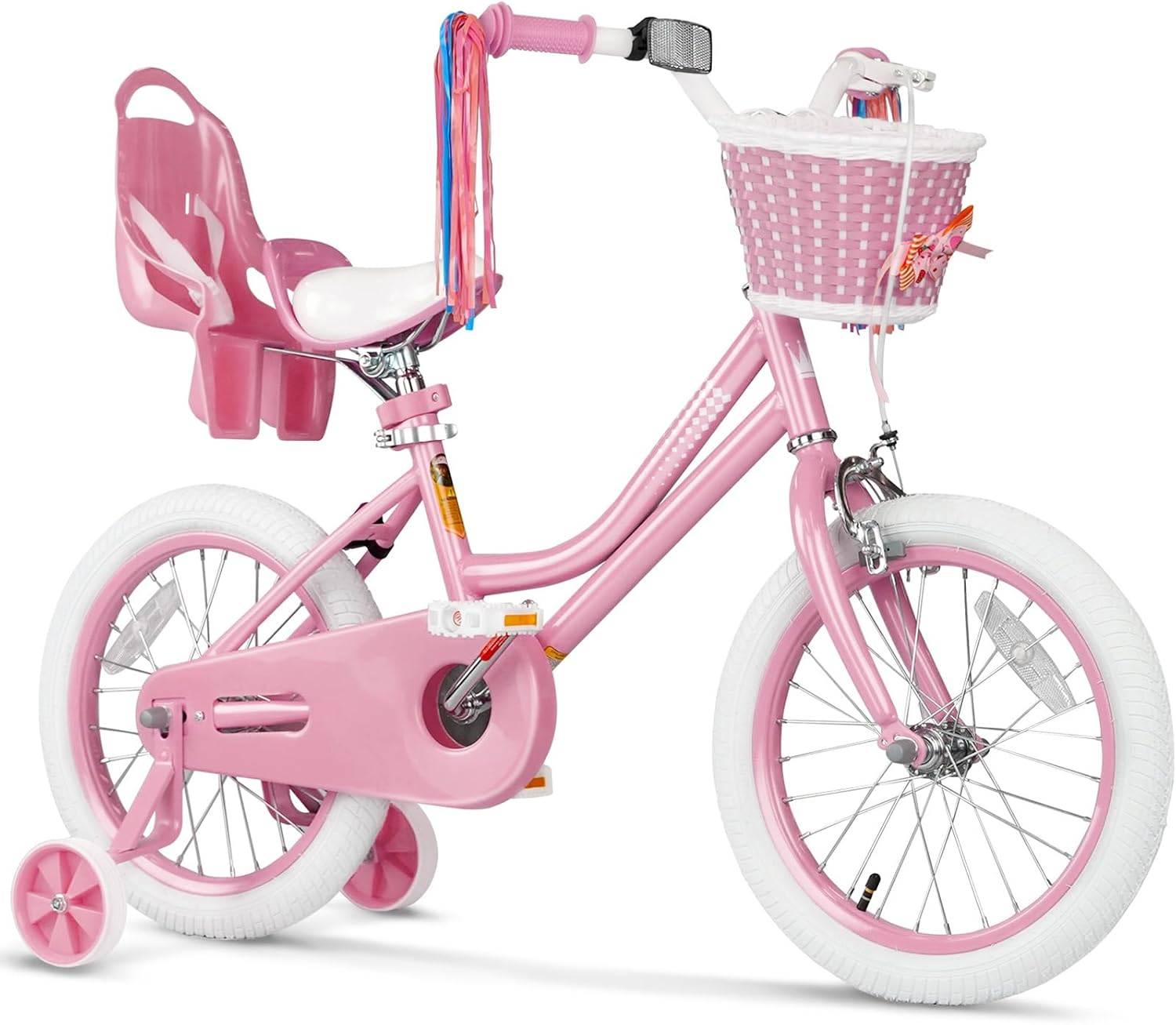 XJD Pink Girls' Bike – Kids 12/14/16 Inch Training Wheel Bicycle
A Training Wheel Bike offered in 12 Inch, 14 Inch and 16 Inch labels; relevant only if the child’s measured height and individual fit support one of these smaller sizes.
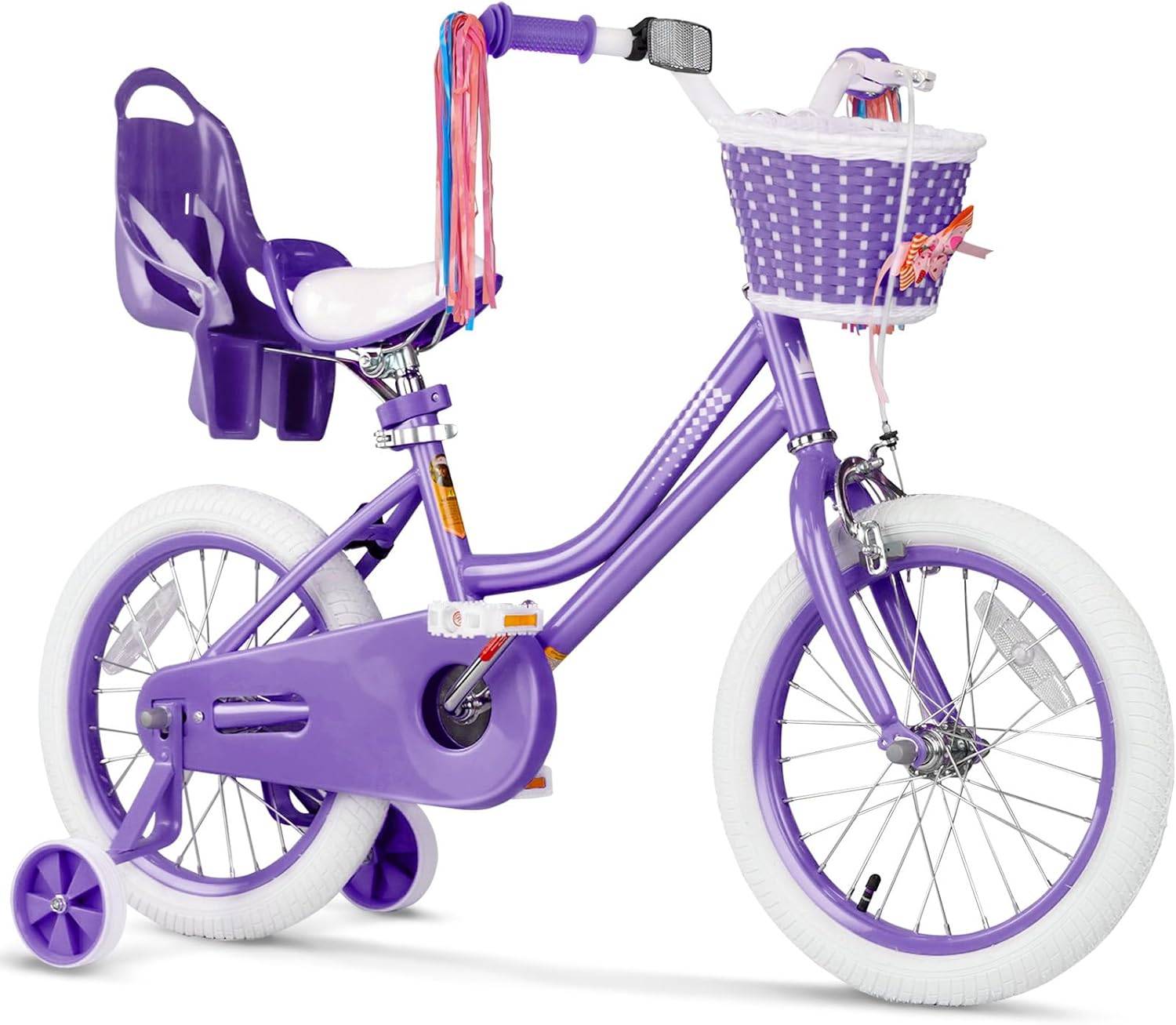 XJD Girls Bike for Kids Ages 3-8, 12/14/16 Inch with Training Wheels – Purple
This purple Training Wheel Bike has 12 Inch, 14 Inch and 16 Inch labels. Treat the age wording in its title as a catalog label, not evidence that it fits a particular 7-year-old.
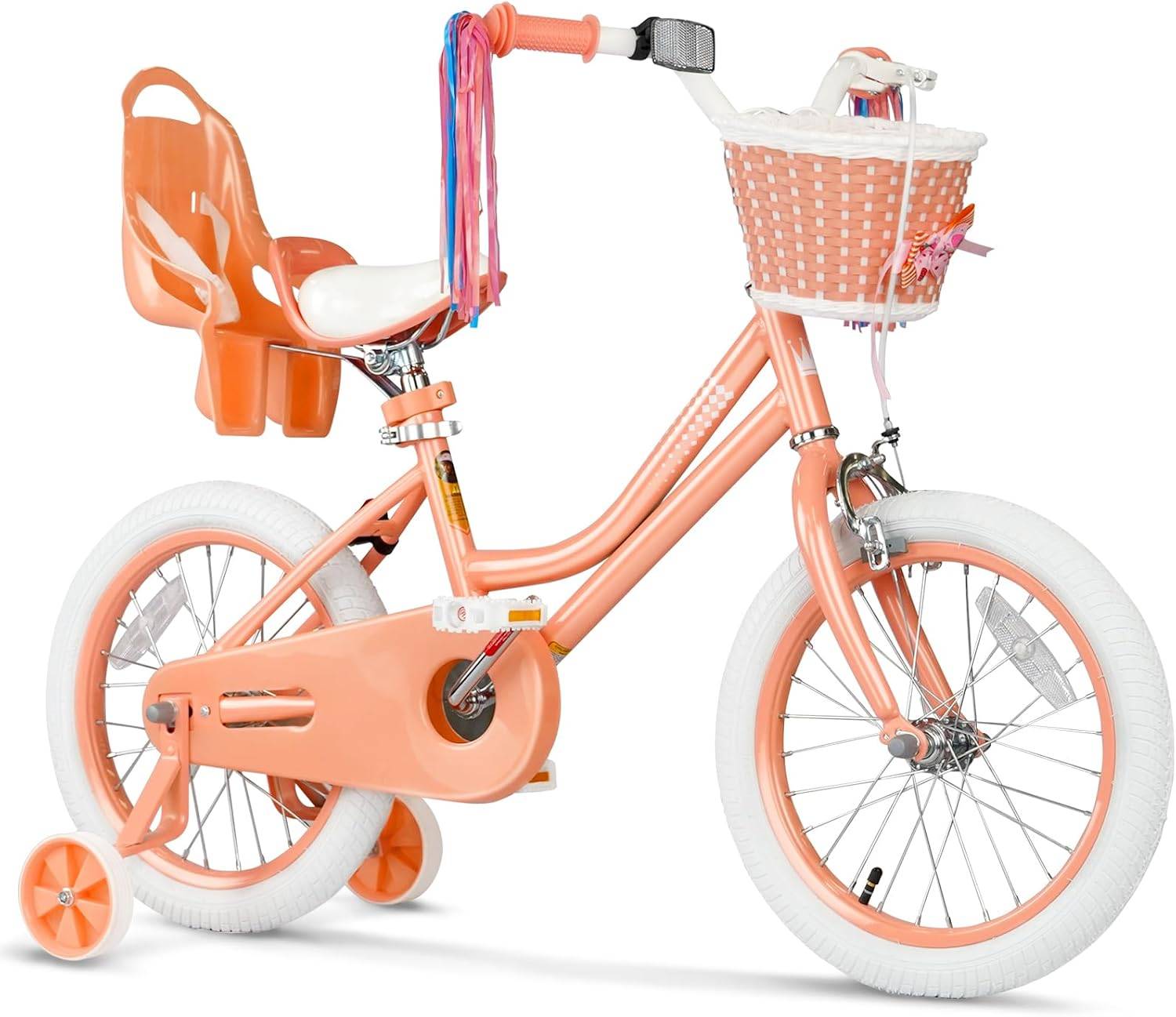 Girls 12/14/16 Inch Kids Bike by XJD with Training Wheels – Peach
A peach Training Wheel Bike available with 12 Inch, 14 Inch and 16 Inch labels. Consider it only for a smaller 7-year-old who fits the relevant XBikes height band and passes a hands-on fit check.
The catalog options are XJD Pink Girls' Bike – Kids 12/14/16 Inch Training Wheel Bicycle, XJD Girls Bike for Kids Ages 3-8, 12/14/16 Inch with Training Wheels – Purple, and Girls 12/14/16 Inch Kids Bike by XJD with Training Wheels – Peach. Each is categorized as a Training Wheel Bike and has 12 Inch, 14 Inch and 16 Inch SKU labels.
The age wording in the purple bicycle’s exact title is only a catalog label; it does not establish fit. None of these supplied products has an 18 Inch or 20 Inch SKU label, so they are not the relevant catalog choices for a child whose measurements and control point to either of those sizes.
Make the final choice safely
- Measure height and inseam.
- Use height to shortlist 18 Inch, 20 Inch or, for a smaller rider, a supplied 16 Inch option.
- Have the child try the bicycle and compare stand-over, reach, steering, braking and confidence.
- Follow the exact manual for assembly and maintenance, or consult a qualified bicycle mechanic.
- Fit a bicycle helmet so it sits level, fits properly and uses its straps according to the helmet manufacturer’s instructions.
For a 7-year-old, choose the smallest shortlisted size that provides a proper individual fit and confident control today; never move up solely to allow for growth.
Bikes for your next adventure
-

Pink Girls' 12/14/16" Bike by XJD – Basket & Doll Seat
The XJD Pink Girls' Bike with Basket & Doll Seat is made for riders 71–122 cm ta…$75.99
$99.99 -

XJD Girls Bike for Kids Ages 3-8, 12/14/16 Inch with Training Wheels – Purple
The XJD Girls Bike in Purple is a training-wheel bicycle for kids ages 3 to 8, f…$149
$169 -

Light Purple XJD Toddler Bike Helmet, Adjustable, Size XS (46–51 cm)
This Light Purple XJD toddler bike helmet is made for the smallest riders — the …$20.39