

What bike to buy for teens
For most teens, start by comparing a 24-inch bike with a 26-inch bike: measure the rider first, then confirm stand-over clearance, reach and brake control in person.
Choose the starting wheel size from height
Age is only a rough screening tool. Use the teen’s current height to narrow the choice, then require an individual fit check before buying.
| Wheel size | XBikes starting point | What it means for a teen |
|---|---|---|
| 24 Inch | Ages 10–14; 54–64 in / 137–163 cm | A starting point for teens within this height range. |
| 26 Inch | Youth and adults over 60 in / 153 cm | A starting point for taller teens, subject to fit and control. |
A rider between 60 and 64 inches falls within the stated starting points for both sizes. That overlap does not make the sizes equivalent. Compare the complete bicycles in person because frame shape, saddle position and handlebar position can change how each one feels.
Measure before comparing bikes
Measure height without shoes, standing upright against a wall. Also measure inseam from the floor to the crotch using a book held level to represent the saddle area. The supplied size standard uses height, not inseam, so do not convert inseam into an unsupported wheel-size rule. Instead, take both measurements to the fitting session.
Write down the rider’s height and inseam, and note whether the teen is a new, returning or confident rider. Current confidence matters because a bicycle that feels difficult to steady, start or stop is not a good choice merely because an age chart appears to permit it.
Check the fit with the teen on the bicycle
The American Academy of Pediatrics advises having the child try the bicycle and avoiding an oversized bike bought only for future growth. During the tryout, check these points:
- Stand-over: the rider should be able to straddle the bicycle with usable clearance rather than being pressed against the frame.
- Reach: the teen should reach the handlebar without being uncomfortably stretched, cramped or forced into an unstable posture.
- Brake control: the rider must be able to reach and operate the brake controls securely from the normal riding position.
- Basic control: ask the teen to mount, start, steer, stop and dismount in a controlled setting.
- Confidence: compare how readily the rider controls each candidate, especially when choosing between 24- and 26-inch starting points.
Do not choose a larger bicycle solely because the teen may grow. If neither candidate permits comfortable control now, keep looking for a different fit.
How the supplied XBikes products relate
The two catalog options shown here help illustrate smaller wheel sizes, but they are not typical teen-size substitutes under the supplied XBikes standard. Both are Kids’ BMX Bikes offered only in 12-, 14- and 16-inch labels. Those sizes have starting ranges of ages 3–4 and 34–40 inches, ages 3–6 and 37–45 inches, and ages 4–7 and 40–48 inches, respectively.
XJD Girls BMX Bike 12/14/16 Inch with Training Wheels – Pink Blue offers 12 Inch, 14 Inch and 16 Inch options. XJD Boys & Girls BMX Bike with Training Wheels, 12/14/16" – Blue offers the same three size labels. They are useful comparison points when a household is also shopping for a younger, shorter child, but they do not provide the 24- or 26-inch starting points relevant to most teen decisions.
These particular catalog options clarify the lower end of the size scale and help prevent selecting a 12-, 14- or 16-inch listing merely because it appears in a family-bike search.
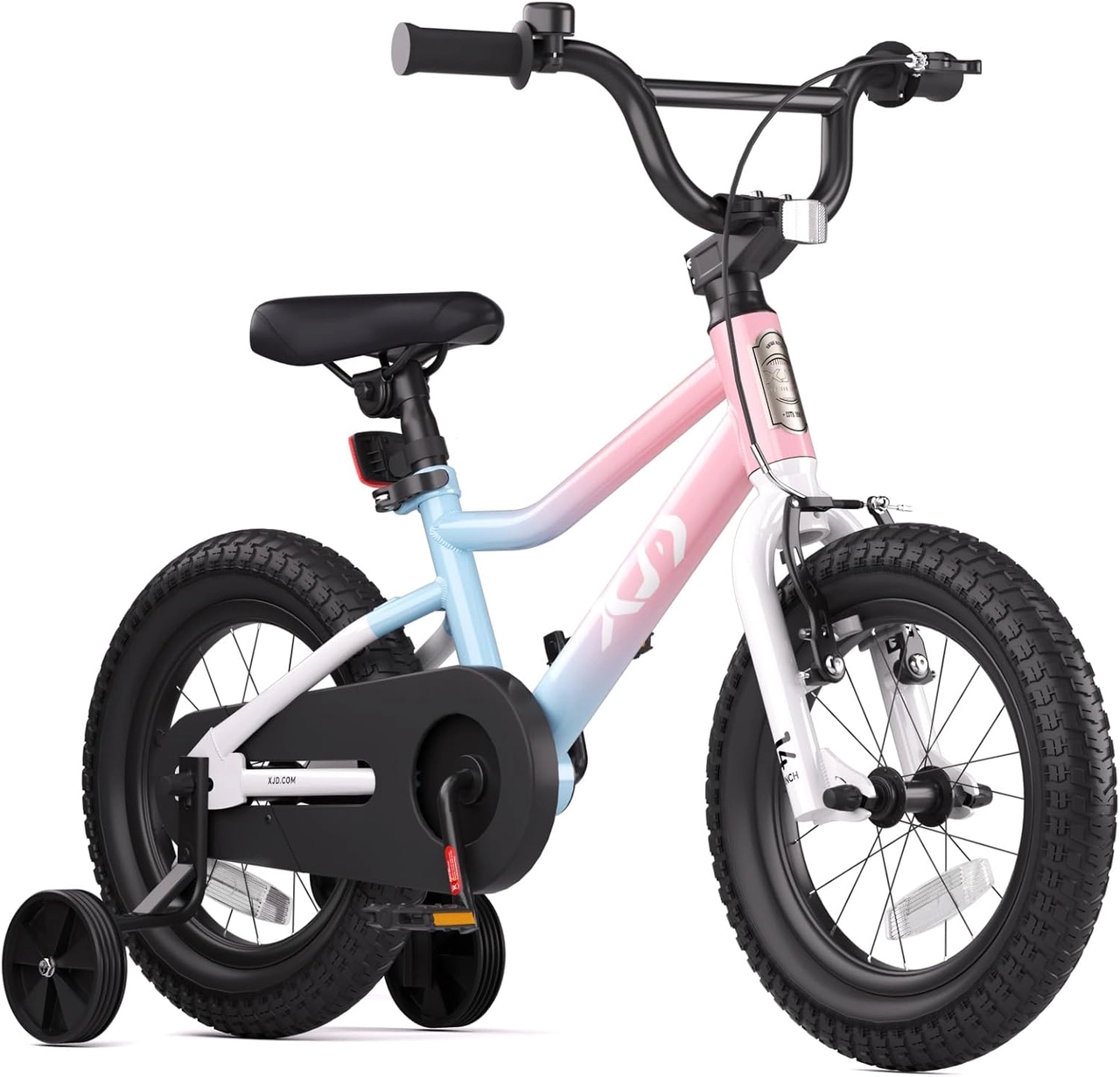 XJD Girls BMX Bike 12/14/16 Inch with Training Wheels – Pink Blue
This Kids’ BMX Bike is available in 12-, 14- and 16-inch labels. Those supplied size ranges are below typical teen starting points, so it is relevant mainly as a comparison or for a younger, shorter child.
 XJD Boys & Girls BMX Bike with Training Wheels, 12/14/16" – Blue
This Kids’ BMX Bike offers 12 Inch, 14 Inch and 16 Inch options. It does not supply a 24- or 26-inch teen starting point, but may help families comparing bikes for a younger child.
Compare features without guessing
After fit, compare the teen’s intended use, riding surface, ability to handle the controls and confidence during a supervised tryout. Do not infer brake type, frame material, weight, load limit or other specifications from the product names. Confirm all such details on the exact listing and in the exact product manual.
For assembly, adjustment, maintenance, compatibility and torque instructions, follow the manual for the specific bicycle. If anything is unclear or the bike cannot be adjusted to give the rider reliable control, use a qualified bicycle mechanic.
Include the helmet in the fit check
The U.S. Consumer Product Safety Commission advises that a bicycle helmet must fit properly, sit level and have its straps used according to the manufacturer’s instructions. Check the helmet on the actual rider rather than relying only on its labeled size.
Make the final teen-bike decision
If the teen is 54–60 inches tall, begin with a 24-inch candidate. From 60–64 inches, try both 24- and 26-inch candidates and choose by stand-over, reach, brake operation and control. Over 64 inches, begin with 26-inch options, while still checking the individual bicycle. Measure today, arrange a supervised tryout, and buy only the size the teen can confidently control now.
Bikes for your next adventure
-

Blue XJD Kids Bike Helmet for Boys & Girls
The Blue XJD Kids Bike Helmet is a lightweight, adjustable multi-sport helmet fo…$59.99
$99 -
XJD Girls BMX Bike 12/14/16 Inch with Training Wheels – Pink Blue
The XJD Girls BMX Bike in Pink/Blue is built as a first pedal bike for kids roug…$99.99
$119.99 -

Kids Bike Helmet by XJD for Boys & Girls – Black, Blue, Green, Pink, Purple
The XJD Kids Bike Helmet covers a wide 2-to-8-year age range thanks to two head-…$59.99