

What height for a 20 inch bike
A 20-inch bike is a starting point for a child 48–60 in (122–152 cm) tall, usually ages 7–12, but it must pass an individual fit check.
Start with the rider’s measured height
Measure the child without shoes, standing straight against a wall with feet flat and together. Mark the top of the head, then measure vertically from the floor. Compare that result with the XBikes 20-inch starting range of 48–60 in (122–152 cm).
Height is more useful than age because children of the same age can have very different proportions and skill levels. The age range of 7–12 is only an initial reference. A child within the height range may still need another size if stand-over clearance, reach, brake control or confidence is unsuitable.
Measure inseam and check stand-over clearance
For inseam, have the child stand in socks with feet slightly apart. Place a firm book between the legs, level with the floor and raised gently to simulate the saddle area. Measure from the floor to the top edge of the book.
Do not turn that measurement into a wheel-size answer by itself. Frame shapes and dimensions vary even when two bicycles use the same wheel size. Instead, use the inseam during an actual stand-over check: the child should be able to straddle the bicycle comfortably and remain balanced without the frame interfering. Follow the exact bicycle manual for adjustment limits, or ask a qualified bicycle mechanic if the fit is uncertain.
Have the child try the complete bike
A 20-inch label does not confirm fit. With an adult steadying the bicycle, check whether the child can mount and dismount without struggling, sit in a controlled position, hold the handlebar without stretching, and turn it without losing balance. The child should also be able to reach and operate the brakes reliably with the controls adjusted only as the product manual permits.
Ask the rider to start, stop and steer in a quiet, traffic-free area under close adult supervision. Hesitation matters: a child who technically reaches the controls but cannot use them confidently is not ready for that setup. HealthyChildren guidance likewise emphasizes trying the bicycle, checking stand-over and control, and avoiding an oversized bike bought merely for future growth.
Compare the neighboring wheel-size ranges
| Wheel size | XBikes rider-height starting point | Age reference |
|---|---|---|
| 18 Inch | 43–52 in / 109–132 cm | 5–9 |
| 20 Inch | 48–60 in / 122–152 cm | 7–12 |
| 24 Inch | 54–64 in / 137–163 cm | 10–14 |
The overlaps are intentional starting points, not proof that adjacent sizes are interchangeable. If a child is 50 inches tall, for example, both the 18-inch and 20-inch height bands contain that measurement. The decision then depends on the actual bicycle’s stand-over clearance, reach, brake access and the child’s current control. Near 54–60 inches, a 24-inch model may also enter the comparison, but it should not replace a 20-inch bike unless the larger bicycle fits better in person.
How the supplied catalog option helps
The XJD Pink Beach Cruiser for Girls – Rear Rack & V-Brake is listed in 20 Inch, 24 Inch and 26 Inch SKU labels. Its 20 Inch option matches the wheel size in this question, while its larger listed options can help families recognize that wheel size is a specific choice rather than a general model label. Select the exact SKU deliberately and perform the same individual fit check; the 24-inch and 26-inch options are not equivalent substitutes for the 20-inch version.
This particular catalog option is relevant because it includes the requested 20 Inch label and also exposes nearby larger-size choices that must be distinguished during selection.
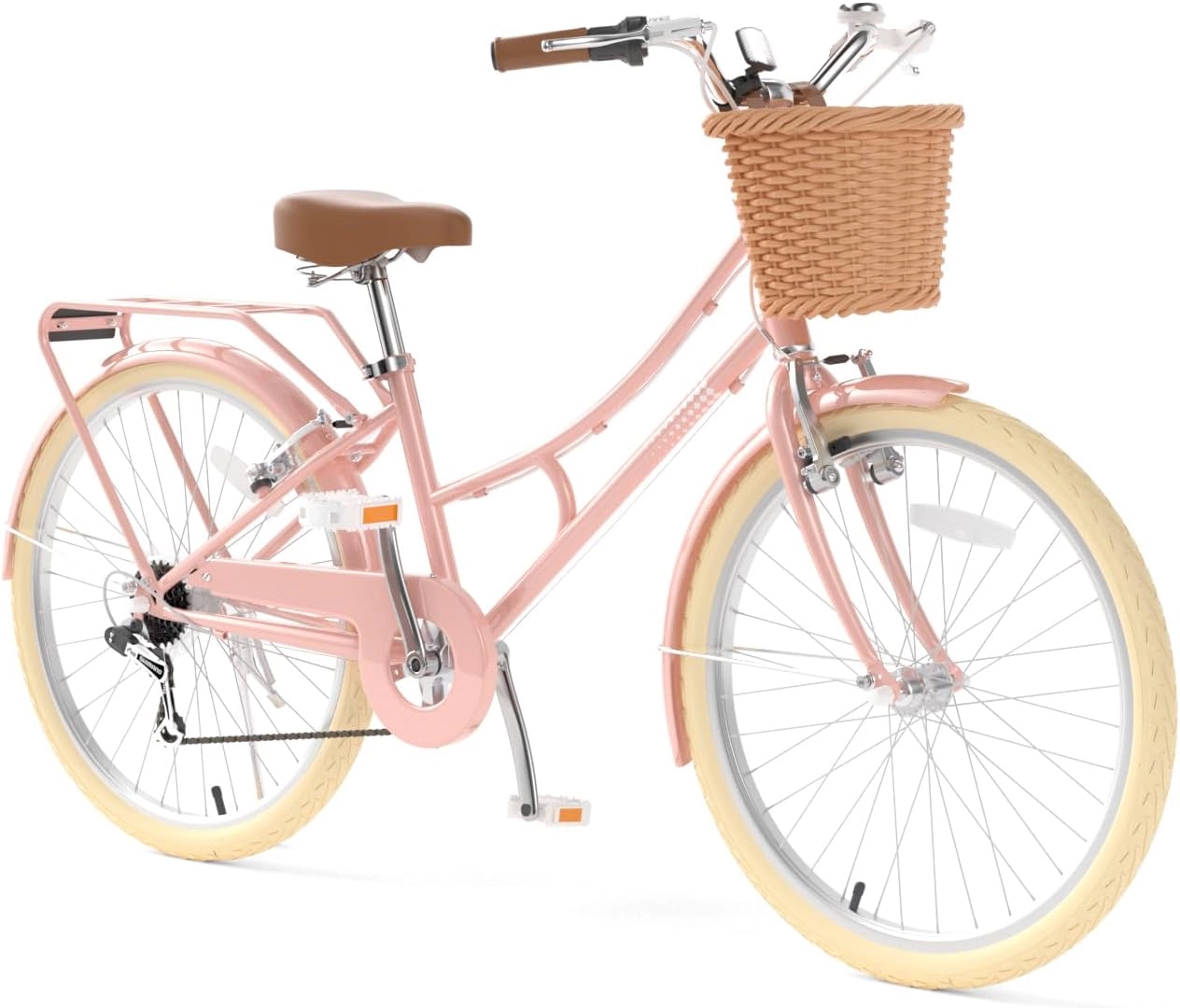
The supplied facts do not provide frame measurements, adjustment ranges, assembly instructions, load limits or compatibility details. Consult the exact product manual for those points, and use a qualified bicycle mechanic for assembly or adjustments when needed.
Make the final decision in this order
- Confirm that measured standing height is reasonably aligned with the 48–60 in (122–152 cm) starting range.
- Use the inseam to assess comfortable stand-over on the exact frame.
- Check mounting, reach, steering and reliable brake operation.
- Watch the child start, stop and turn with present-day confidence.
- Reject the size if it is being chosen mainly for room to grow.
Add a properly fitting bicycle helmet for every ride. It should sit level and its straps should be used according to the helmet manufacturer’s instructions, consistent with U.S. Consumer Product Safety Commission guidance.
Choose a 20-inch bike only when the child’s measured height points toward it and the exact bicycle passes the stand-over, reach, brake-control and confidence checks today.
Bikes for your next adventure
-
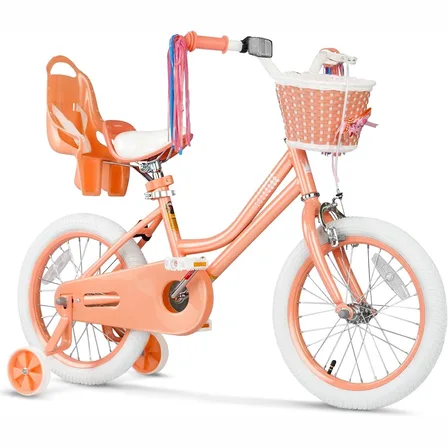
Girls 12/14/16 Inch Kids Bike by XJD with Training Wheels – Peach
The XJD Girls Bike in Peach is a training-wheel bike built for girls roughly 3 t…$149
$169 -
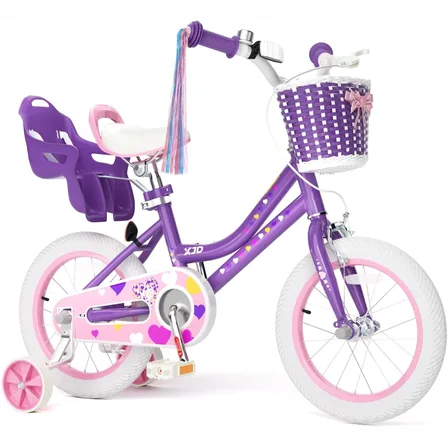
XJD Light Purple Girls Bike with Basket, Training Wheels, 12/14/16/20 Inch
The XJD Girls Bike with Basket in Light Purple is a single-speed training-wheel …$99.99
$119.99 -

26-Inch XJD Beach Cruiser Bike for Girls – Purple, V-Brake
This XJD 26-inch purple beach cruiser is sized for big kids and teens — suggeste…$218.49
$229.99