

What is 20 inch bike
A 20 inch bike is a bicycle built around 20-inch wheels. For XBikes sizing, it is a starting point for riders 48–60 in (122–152 cm) tall, usually ages 7–12, but the child must still pass an individual fit and control check.
What “20 inch” describes
The 20-inch label describes the bicycle’s wheel-size class. It does not mean the frame is 20 inches tall, and it does not describe the bicycle’s total length or the child’s inseam.
Wheel size is useful for narrowing the search, but bicycles with the same wheel size can differ in geometry and riding position. That is why the number alone cannot confirm that a particular bicycle fits.
Start with the rider’s measured height
Measure the child without shoes, standing straight against a wall. Compare that result with the XBikes starting point for a 20-inch bike: 48–60 in (122–152 cm). Age 7–12 is only a secondary guide because children of the same age can have different proportions and abilities.
| Wheel size | Rider height starting point | Age starting point |
|---|---|---|
| 16 Inch | 40–48 in / 102–122 cm | 4–7 |
| 18 Inch | 43–52 in / 109–132 cm | 5–9 |
| 20 Inch | 48–60 in / 122–152 cm | 7–12 |
| 24 Inch | 54–64 in / 137–163 cm | 10–14 |
The overlapping ranges are intentional starting points, not proof that either neighboring size will fit. A rider near a boundary should compare the actual bicycles rather than automatically moving up or down.
Measure inseam and check stand-over
Measure inseam from the floor to the top of the inside leg while the child stands upright. Use that measurement when checking the bicycle’s stand-over position: the child should be able to straddle the bike without the frame preventing stable contact with the ground.
Have the child try the bicycle whenever possible. Do not choose an oversized model merely to leave room for growth. A bike that is difficult to straddle, balance or steer now is not made suitable by the expectation that the rider will grow into it.
Check reach, controls and confidence
With the rider seated in a normal riding position, look for relaxed control rather than stretching. The child should be able to hold the handlebar, turn it smoothly and look ahead without an awkward reach.
Confirm that the rider can operate the bicycle’s fitted brakes and other controls reliably. Brake reach matters: the child must be able to reach and use the controls with confidence. Do not assume that matching the height range settles this question.
Current riding ability also affects the decision. A hesitant rider may need a setup that feels immediately manageable, while a confident rider still needs correct stand-over, reach and brake control. Confidence never compensates for a physically poor fit.
How the supplied catalog option helps
Girls' Training Wheel Bike by XJD, 12–20 Inch Wheels – Blue is listed in the Training Wheel Bikes category with 12 Inch, 14 Inch, 16 Inch and 20 Inch SKU labels. Its 20 Inch option matches the wheel-size class discussed here; the smaller labels provide distinct size comparisons and must not be treated as equivalent fits. These particular catalog options help show that one model listing can contain several wheel-size choices, so the exact SKU label must be checked.

This listing is relevant only if a training-wheel-category bicycle suits the intended purchase and the 20 Inch SKU passes the child’s individual fit check. The supplied facts do not establish its dimensions beyond wheel-size labels, brake arrangement, adjustability, load limit, assembly procedure or compatibility. Consult the exact product manual or a qualified bicycle mechanic for those details.
What to do before choosing
- Measure the rider’s standing height and inseam rather than estimating from age.
- Use 48–60 in (122–152 cm) and ages 7–12 only as the 20-inch starting point.
- Verify the selected listing or package says 20 Inch, not 12, 14 or 16 Inch.
- Have the child straddle and try the bicycle; check balance, reach, steering and access to the fitted brakes.
- Reject a bicycle that is oversized for future growth or cannot be controlled comfortably now.
- Follow the exact manual or ask a qualified bicycle mechanic about assembly, maintenance, limits and compatibility.
Add a properly fitting bicycle helmet for every ride. It should sit level and its straps should be adjusted according to the helmet manufacturer’s instructions.
The 20-inch decision
Choose a 20-inch bike only when the child’s measured height supports that starting point and the actual bicycle allows comfortable stand-over, reach, braking and control. If any of those checks fail, compare another wheel size or bicycle instead of relying on the age label or buying room to grow.
Bikes for your next adventure
-

26-Inch XJD Beach Cruiser Bike for Girls – Purple, V-Brake
This XJD 26-inch purple beach cruiser is sized for big kids and teens — suggeste…$218.49
$229.99 -
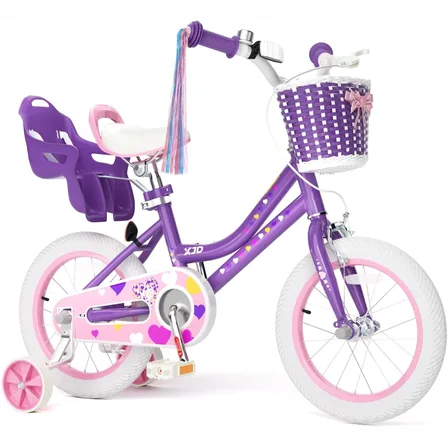
XJD Light Purple Girls Bike with Basket, Training Wheels, 12/14/16/20 Inch
The XJD Girls Bike with Basket in Light Purple is a single-speed training-wheel …$99.99
$119.99 -
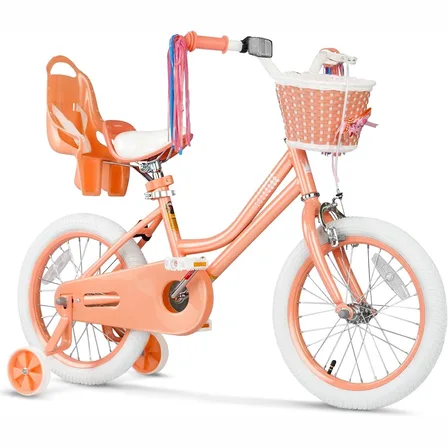
Girls 12/14/16 Inch Kids Bike by XJD with Training Wheels – Peach
The XJD Girls Bike in Peach is a training-wheel bike built for girls roughly 3 t…$149
$169