

What is a 12 inch bike
A 12 inch bike is a children’s bicycle identified by its 12-inch wheel-size class, not by its frame or seat height. It is a starting point for riders 34–40 in (86–102 cm) tall, typically ages 3–4, but the child must still try the bike for fit and control.
What “12 inch” actually describes
The term describes the bicycle’s wheel-size category. It does not mean the complete wheel will measure exactly 12 inches with a household tape, and it does not describe the distance from the ground to the saddle. Tire markings, the product’s size label and its manual are more reliable ways to identify the intended wheel size.
Wheel size helps narrow the search, but two 12-inch bicycles can have different frame shapes, saddle adjustment ranges and riding positions. That is why the size label cannot replace an in-person fit check.
Measure the child before comparing bikes
Measure the child’s standing height without shoes, against a wall, and record it in inches or centimetres. For a 12-inch bike, the XBikes starting range is 34–40 in (86–102 cm). Age 3–4 is only a secondary reference because children of the same age can differ considerably in proportions and confidence.
Also measure inseam: with the child standing naturally, measure from the floor to the crotch. There is no universal inseam number supplied here for a 12-inch bike, so compare that measurement with the actual bicycle’s stand-over clearance and saddle range rather than forcing it into a formula.
| Wheel size | Starting age | Rider height | Use in this decision |
|---|---|---|---|
| 12 Inch | 3–4 | 34–40 in / 86–102 cm | Requested size |
| 14 Inch | 3–6 | 37–45 in / 94–114 cm | Compare if the rider is near or above the 12-inch range |
| 16 Inch | 4–7 | 40–48 in / 102–122 cm | Compare only after a separate fit check |
Check fit on the actual 12-inch bike
Have the child try the bicycle. When standing over it, the child should have usable clearance rather than being pressed against the frame. Seated, the child should be able to reach the handlebar without stretching, turn it comfortably and maintain balance without an awkward posture.
Check that small hands can reach and operate the brake controls provided on the exact bicycle. The child should also be able to start, stop and steer with enough confidence to remain in control. Follow the specific product manual for saddle and handlebar adjustment, assembly, compatibility, load limits and torque. If anything is uncertain, use a qualified bicycle mechanic.
Do not choose an oversized bicycle merely to leave room for growth. If the rider cannot stand over, reach, brake and steer comfortably today, the next size is not an equivalent substitute.
How the supplied catalog options help
These particular training-wheel models include labeled 12-inch options, so they are relevant examples of the wheel size in the title. Their larger labeled variants also make size comparison possible, but their catalog labels do not prove that any one variant fits a particular child.
 XJD Kids Bike for Girls – Pink, 12/14/16/20 Inch with Training Wheels
A training-wheel bike offered in 12, 14, 16 and 20 Inch labels. Its 12 Inch option directly matches the title; the larger variants require their own height and individual fit checks.
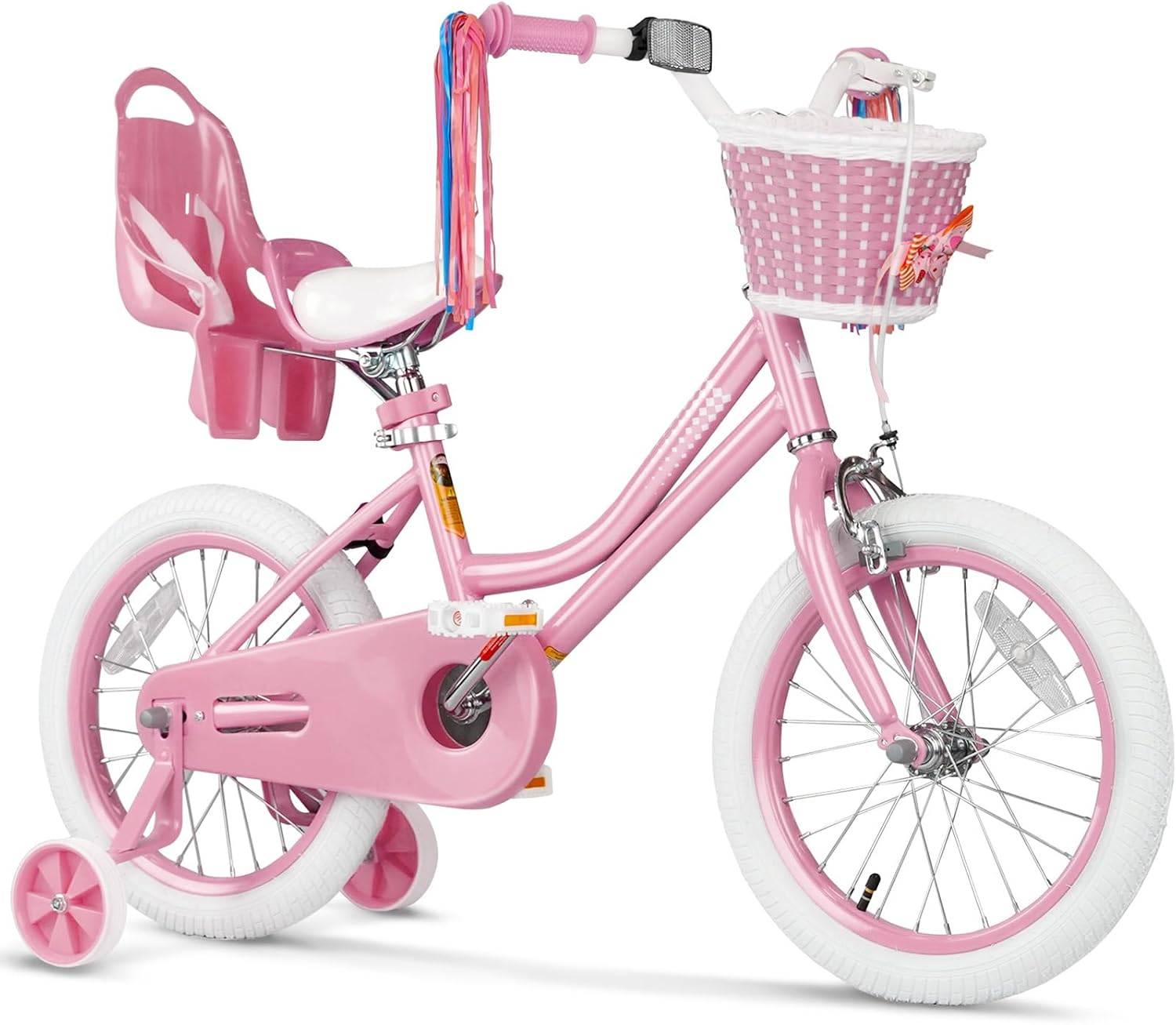 XJD Pink Girls' Bike – Kids 12/14/16 Inch Training Wheel Bicycle
A training-wheel bicycle with supplied 12, 14 and 16 Inch options. The 12 Inch label is relevant for comparison with a rider measuring 34–40 in (86–102 cm), subject to an actual fit check.
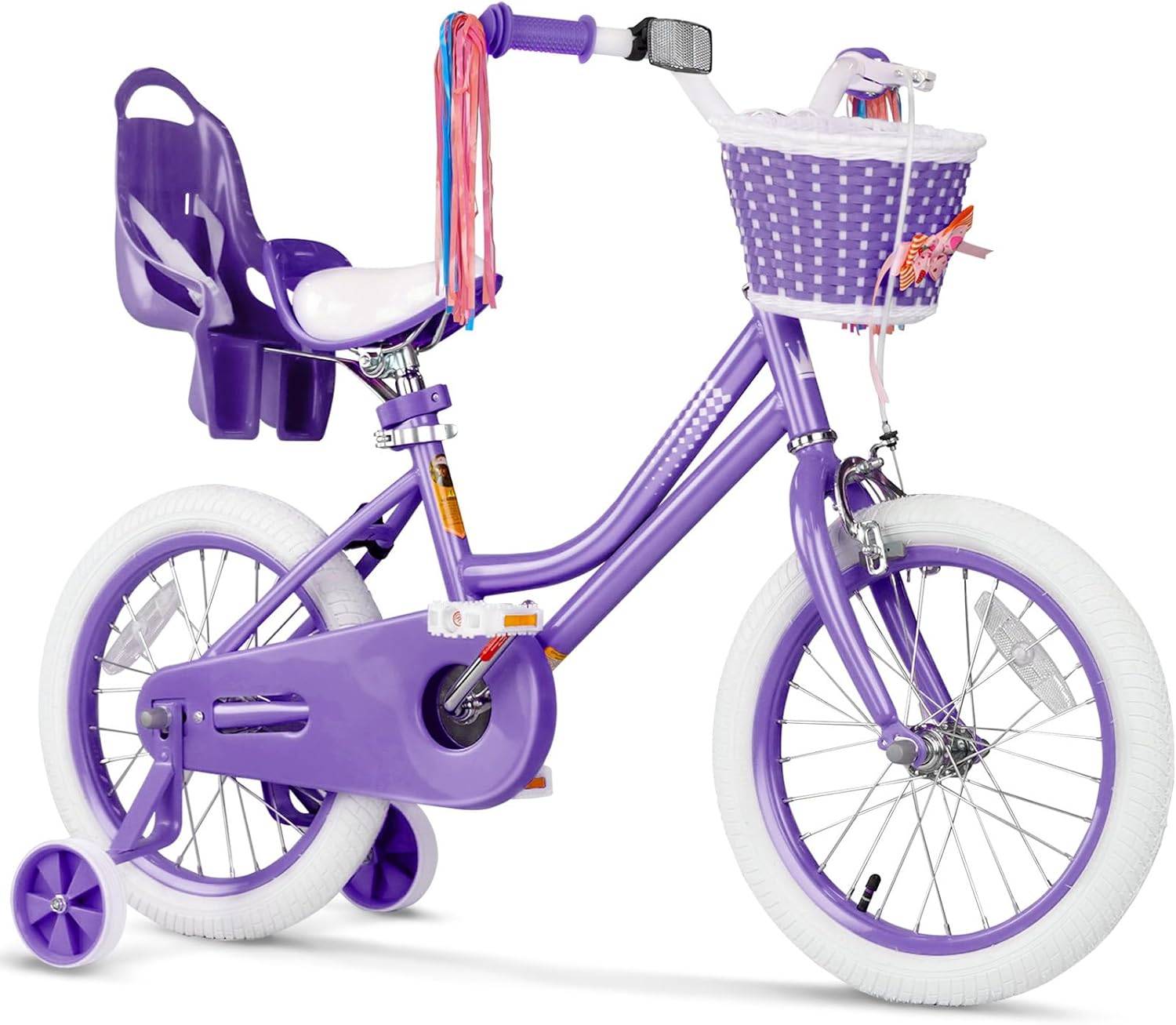 XJD Girls Bike for Kids Ages 3-8, 12/14/16 Inch with Training Wheels – Purple
A purple training-wheel bike offered in 12, 14 and 16 Inch labels. The age wording in its exact title is a catalog label; choose among sizes using measured height and individual fit.
XJD Kids Bike for Girls – Pink, 12/14/16/20 Inch with Training Wheels is listed in four size labels, including 12 Inch. Its 14-, 16- and 20-inch variants are different wheel-size choices, not equivalent versions of a 12-inch fit.
XJD Pink Girls' Bike – Kids 12/14/16 Inch Training Wheel Bicycle also includes 12 Inch, alongside 14 Inch and 16 Inch. Compare the labeled variants against measured height and an actual fit check.
XJD Girls Bike for Kids Ages 3-8, 12/14/16 Inch with Training Wheels – Purple includes the same three supplied size labels. “Ages 3-8” is part of its catalog title, not evidence that every child in that span fits it; use the XBikes height ranges and individual controls check instead.
Training wheels do not determine size
All three supplied products are categorized as training-wheel bikes, but training wheels do not make an oversized bicycle fit. They may relate to how a child learns, while wheel size and riding position determine whether the child can reach and control the bicycle. Current confidence therefore belongs in the decision alongside height, inseam, reach and brake operation.
What to do next
- Measure the child’s standing height and inseam.
- Start with 12 Inch if height is within 34–40 in (86–102 cm), using age 3–4 only as a guide.
- Have the child try the exact bicycle and verify stand-over clearance, reach, steering and brake control.
- If the child is outside the range or cannot control it comfortably, compare another wheel size and repeat the full fit check.
- Fit a bicycle helmet so it sits level and secure its straps according to the helmet manufacturer’s instructions.
Choose a 12-inch bike only when the measured rider fits the starting range and can comfortably stand over, reach, steer and brake on that exact bicycle now.
Bikes for your next adventure
-
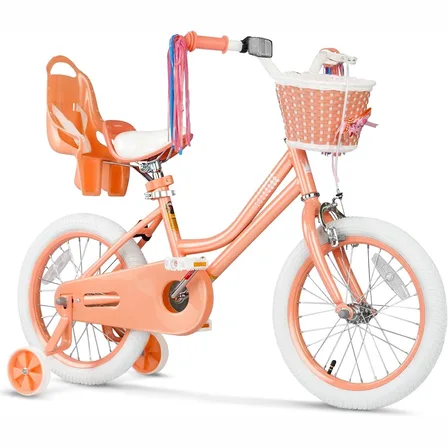
Girls 12/14/16 Inch Kids Bike by XJD with Training Wheels – Peach
The XJD Girls Bike in Peach is a training-wheel bike built for girls roughly 3 t…$149
$169 -
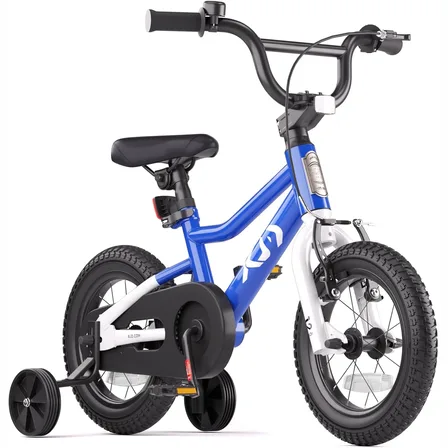
XJD Boys & Girls BMX Bike with Training Wheels, 12/14/16" – Blue
The XJD Boys & Girls BMX Bike in Blue is a first pedal bike for kids roughly age…$99.99
$119.99 -
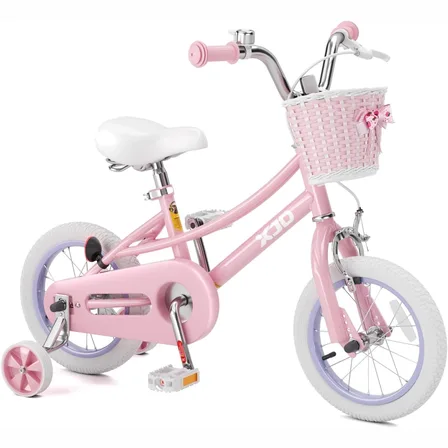
Pink 12/14/16/20" XJD Girls Bike with Training Wheels & Basket
The Pink XJD Girls Bike with Training Wheels & Basket is a first-bike pick f…$65.99
$75.99