

What is the best bike for kids
The best bike for kids is the smallest wheel size that fits the child now while allowing comfortable stand-over, reach, steering and brake control.
Start with height, then confirm the fit
Measure the child’s height without shoes, standing straight against a wall. Then measure inseam from the floor to the crotch. Height gives you a wheel-size starting point; inseam helps determine whether the child can stand over the particular bicycle comfortably.
Age is only a rough reference. Children of the same age can differ greatly in height, proportions and confidence, so never choose solely from an age label. Do not buy an oversized bicycle for a child to grow into. A bike that is too large can make starting, stopping and steering harder.
| Wheel size | Starting age | Rider height |
|---|---|---|
| 12 Inch | 3–4 | 34–40 in / 86–102 cm |
| 14 Inch | 3–6 | 37–45 in / 94–114 cm |
| 16 Inch | 4–7 | 40–48 in / 102–122 cm |
| 18 Inch | 5–9 | 43–52 in / 109–132 cm |
| 20 Inch | 7–12 | 48–60 in / 122–152 cm |
| 24 Inch | 10–14 | 54–64 in / 137–163 cm |
| 26 Inch | Youth and adults | Over 60 in / 153 cm |
If the child falls within two overlapping ranges, compare both sizes in person. The better choice is the one the rider can control confidently, not automatically the larger wheel.
Check these five things on the actual bike
A size chart narrows the search, but it cannot account for frame shape, arm length or skill. Have the child try the exact bicycle and check:
- Stand-over: The child can straddle the bicycle without the frame preventing a stable stance.
- Ground contact: The rider can get into a secure position when stopping, appropriate to the bicycle and their current ability.
- Reach: The handlebars are reachable without an extreme stretch, locked elbows or an awkwardly hunched posture.
- Brake control: The child can comfortably reach and operate the bicycle’s available braking controls. Confirm operation on the exact model rather than assuming from wheel size.
- Steering confidence: The rider can start, turn and stop without appearing overwhelmed by the bicycle’s size.
If any of these checks fail, try a different size or model. Adjustments should follow the exact product manual; uncertain assembly or fit work belongs with a qualified bicycle mechanic.
Match the bike to current riding confidence
The best fit also suits what the child can do today. A beginning rider needs predictable control and enough confidence to practise starts, turns and stops. Training wheels may be relevant when the family wants that type of learning setup, but wheel-size fit still comes first. Their presence does not make an oversized bicycle appropriate.
For a child already balancing and riding independently, compare bicycles that support their present control rather than choosing features intended for a different learning stage. Ask where the child will ride, how often and whether they can manage the exact bicycle comfortably.
How the supplied XBikes options compare
The two catalog options below are specifically relevant to families considering training-wheel bikes. Their verified size labels let you compare possible starting points, while their titles identify different included accessories and colors. A hands-on fit check remains necessary.
 Girls' Training Wheel Bike by XJD with Basket – Purple
A training-wheel bike offered in 14 Inch, 16 Inch and 20 Inch labels. It is relevant across several height starting points, but the child still needs an individual stand-over, reach, brake-control and confidence check.
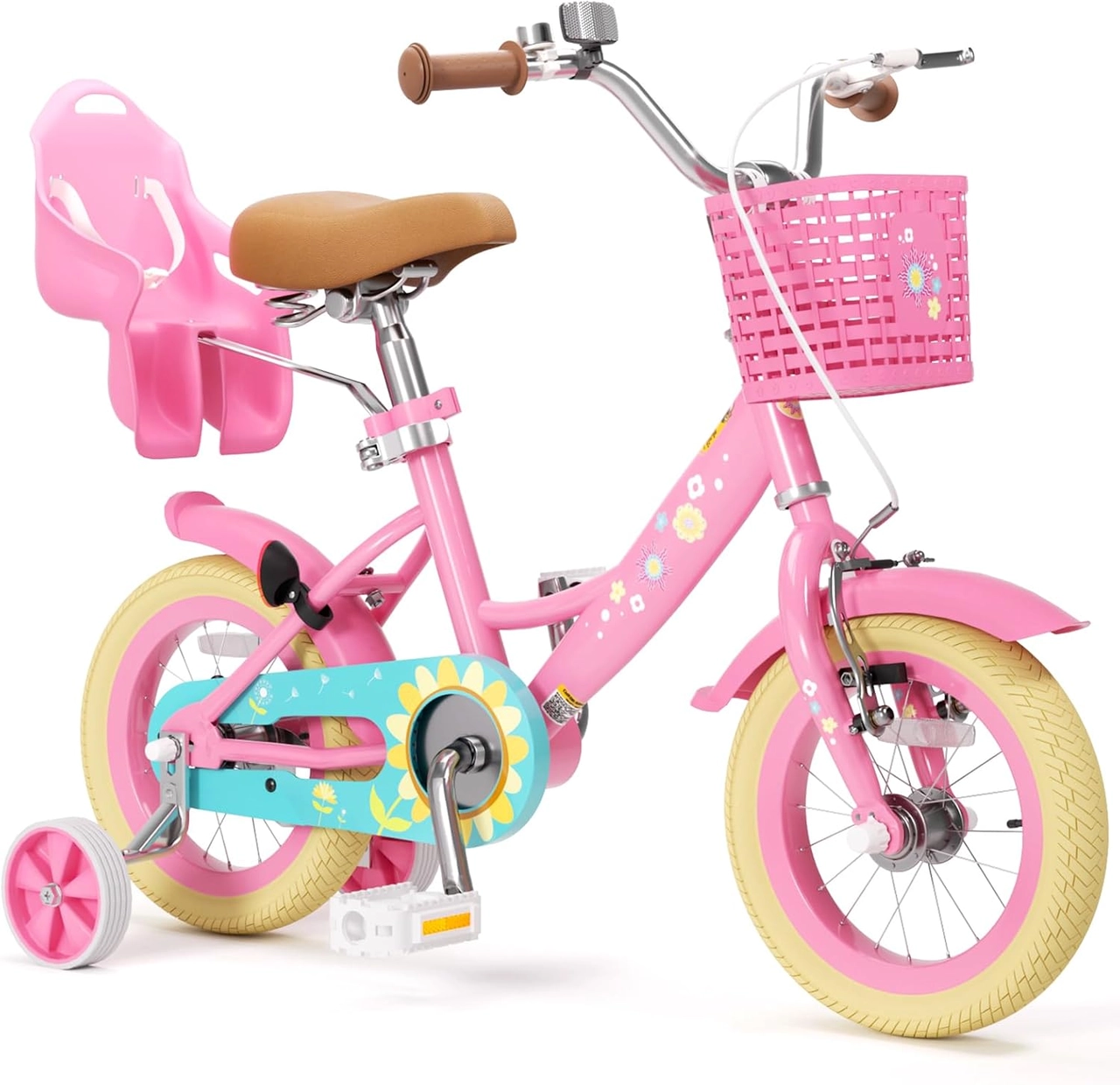 Flower Pink XJD Girls Bike with Doll Seat & Basket
A training-wheel bike offered in 12 Inch, 14 Inch and 16 Inch labels, with a doll seat and basket identified in its title. It is relevant to smaller size ranges, subject to an individual fit check.
Girls' Training Wheel Bike by XJD with Basket – Purple
This training-wheel model is offered with 14 Inch, 16 Inch and 20 Inch SKU labels. Those choices span several XBikes height starting points, from 37–45 in / 94–114 cm for 14 Inch through 48–60 in / 122–152 cm for 20 Inch. Choose only after checking the individual rider.
Flower Pink XJD Girls Bike with Doll Seat & Basket
This training-wheel model is offered in 12 Inch, 14 Inch and 16 Inch SKU labels. It is therefore relevant to the smaller size ranges in the XBikes table. The catalog title also identifies a doll seat and basket; confirm that these are useful to your child rather than treating accessories as evidence of fit.
The products overlap at 14 Inch and 16 Inch. At those sizes, the supplied facts do not establish that one fits better than the other. Compare the child’s stand-over, reach, brake control and confidence on the exact bike. For maintenance, assembly, compatibility and load limits, follow its product manual or consult a qualified bicycle mechanic.
Include a properly fitted helmet
A bicycle helmet must fit properly, sit level on the head and use its straps according to the helmet manufacturer’s instructions. Check the fit each time the child rides, especially after adjustments or growth. A helmet does not correct a bicycle that is too large or difficult for the child to control.
Make the final decision
Measure height and inseam, shortlist the matching wheel sizes, and have the child try the exact bicycle. Select the smallest suitable size on which the rider can stand securely, reach comfortably, steer confidently and operate the brakes. If neither supplied training-wheel bike passes those checks—or if training wheels do not match the child’s current skills—choose a different bicycle rather than compromising the fit.
Bikes for your next adventure
-
Flower Pink XJD Girls Bike with Doll Seat & Basket
The XJD Flower Pink girls' bike is made for riders 71–122 cm tall (roughly ages …$69.99
-

Kids Bike Helmet by XJD for Girls – Pink
The XJD Kids Bike Helmet in Pink is a lightweight multi-sport helmet for girls r…$59.99
$99 -

Light Purple XJD Toddler Bike Helmet, Adjustable, Size XS (46–51 cm)
This Light Purple XJD toddler bike helmet is made for the smallest riders — the …$20.39