

What size bicycle for a 12 year old
Most 12-year-olds should start by comparing 20-inch and 24-inch bicycles: use 20 inches for a measured height of 48–60 in (122–152 cm), 24 inches for 54–64 in (137–163 cm), and consider 26 inches above 60 in (153 cm). Height ranges overlap, so the correct choice is the bicycle the child can stand over, reach, steer and brake confidently.
Choose by height, not the birthday
Age 12 does not identify one guaranteed wheel size. According to the XBikes starting points, a shorter 12-year-old may remain within the 20-inch range, while many riders will fall within the 24-inch range. A rider taller than 60 in (153 cm) reaches the 26-inch youth-and-adult starting point.
| Wheel size to compare | XBikes age starting point | Rider-height starting point |
|---|---|---|
| 20 Inch | Ages 7–12 | 48–60 in / 122–152 cm |
| 24 Inch | Ages 10–14 | 54–64 in / 137–163 cm |
| 26 Inch | Youth and adults | Over 60 in / 153 cm |
These figures narrow the search; they do not confirm fit. In the overlap between 20 and 24 inches, do not automatically choose the larger bicycle for extra growing room.
Measure the rider before comparing bicycles
- Measure standing height: Have the child stand without shoes, upright against a wall, and measure from the floor to the top of the head.
- Measure inseam: With feet slightly apart, measure from the floor to the crotch. This helps assess clearance over the frame when the actual bicycle is available.
- Note present ability: Record whether the rider starts, stops, turns and balances independently. Confidence and control can affect which of two overlapping sizes feels manageable.
Use standing height to select the initial wheel-size range. Then take the height and inseam measurements to the product specifications or a bicycle shop. Frame shapes differ, so wheel diameter alone cannot establish stand-over clearance or reach.
Perform an individual fit check
Have the child try the exact bicycle. The American Academy of Pediatrics advises against buying an oversized bicycle simply for future growth. With the child standing over the frame, confirm there is usable clearance and that mounting and dismounting feel controlled.
Next, place the rider in the normal riding position. Check that the handlebars are reachable without an awkward stretch, steering remains controlled, and the child can operate the brakes comfortably. The rider should be able to start, turn and stop without the bicycle feeling cumbersome. If reach, stand-over or brake control is doubtful, reject that fit even when the height chart appears to match.
How the supplied XBikes products relate
The two supplied catalog options are training-wheel bicycles and help show the smaller end of the comparison. Only one has an available 20-inch SKU label; neither supplies an available 24-inch or 26-inch option. Therefore, they are relevant only when their available size matches the rider’s measured range and the individual fit check succeeds—not merely because the rider is 12.
XJD Light Purple Girls Bike with Basket, Training Wheels, 12/14/16/20 Inch has available SKU labels of 12 Inch, 14 Inch and 16 Inch. Despite “20 Inch” appearing in its exact catalog title, 20 Inch is not included in the supplied available SKU labels. Its available sizes correspond to younger and shorter XBikes starting ranges, so it will generally not answer the sizing need of a rider who measures within the 20-, 24- or 26-inch ranges.
Pink 12/14/16/20" XJD Girls Bike with Training Wheels & Basket has available 12-, 14-, 16- and 20-inch SKU labels. Its 20-inch option is a possible comparison for a 12-year-old measuring 48–60 in (122–152 cm), subject to stand-over, reach, brake control and confidence. It is not a substitute when the rider needs a properly fitting 24- or 26-inch bicycle.
These particular options clarify whether a listed training-wheel bicycle reaches the 20-inch starting point or stops at smaller available sizes.
 XJD Light Purple Girls Bike with Basket, Training Wheels, 12/14/16/20 Inch
Available in 12-, 14- and 16-inch SKU labels. These sizes sit below the main 20-, 24- and 26-inch comparisons for most 12-year-olds, so verify measured height and individual fit.
 Pink 12/14/16/20" XJD Girls Bike with Training Wheels & Basket
Its available sizes include 20 Inch, the XBikes starting point for riders 48–60 in tall. It is relevant only if the child fits that range and passes stand-over, reach and control checks.
Check control, setup and helmet fit
Wheel size is only the first filter. Confirm that the selected configuration suits the child’s current balance skills and that every control can be used reliably. Do not assume training wheels compensate for an oversized frame or unreachable brakes.
For assembly, adjustment, compatibility, maintenance, load limits and torque, follow the manual for the exact product or use a qualified bicycle mechanic. Do not guess at procedures or settings.
A bicycle helmet must also fit properly. Following U.S. Consumer Product Safety Commission guidance, position it level and secure its straps according to the helmet manufacturer’s instructions. A helmet cannot correct a poor bicycle fit, so check both separately.
Make the final size decision
Measure height and inseam first. Compare 20 inches at 48–60 in, 24 inches at 54–64 in, or 26 inches above 60 in; then have the 12-year-old try the exact bicycle. Choose only the size on which stand-over clearance, reach, steering, braking and current confidence all work together—never size up solely for growth.
Bikes for your next adventure
-

XJD Girls Bike for Kids Ages 3-8, 12/14/16 Inch with Training Wheels – Purple
The XJD Girls Bike in Purple is a training-wheel bicycle for kids ages 3 to 8, f…$149
$169 -

Pink Girls' 12/14/16" Bike by XJD – Basket & Doll Seat
The XJD Pink Girls' Bike with Basket & Doll Seat is made for riders 71–122 cm ta…$75.99
$99.99 -
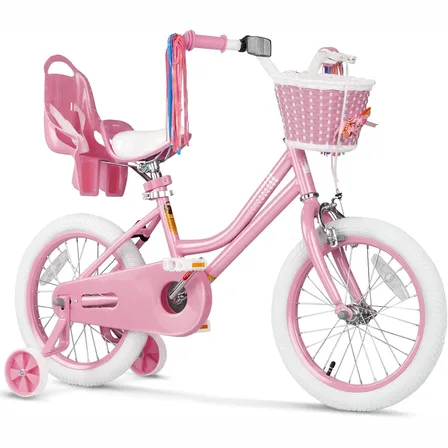
XJD Pink Girls' Bike – Kids 12/14/16 Inch Training Wheel Bicycle
The XJD Pink Girls' Bike is a training-wheel bicycle for girls ages 3 to 8 (ride…$149
$169