

What size bike do i need for my child
Measure your child’s height and inseam, then compare their height with the wheel-size table below. Confirm the fit in person before choosing a bike.
Start with two measurements
Have your child stand straight against a wall without shoes. Measure from the floor to the top of their head for height. For inseam, measure from the floor to the crotch while they stand with their feet slightly apart. Record both measurements in inches or centimetres.
Height gives you a useful wheel-size starting point. Inseam helps you check whether the child can stand over the bicycle comfortably. Bicycle frame shapes differ, so an inseam measurement does not translate into one universal wheel size by itself.
Compare height with the XBikes starting points
| Wheel size | Rider height | Age starting point |
|---|---|---|
| 12 Inch | 34–40 in / 86–102 cm | 3–4 |
| 14 Inch | 37–45 in / 94–114 cm | 3–6 |
| 16 Inch | 40–48 in / 102–122 cm | 4–7 |
| 18 Inch | 43–52 in / 109–132 cm | 5–9 |
| 20 Inch | 48–60 in / 122–152 cm | 7–12 |
| 24 Inch | 54–64 in / 137–163 cm | 10–14 |
| 26 Inch | Over 60 in / 153 cm | Youth and adults |
Use your child’s measured height before age because children of the same age can be very different sizes. Where height ranges overlap, compare both sizes in person. The larger option is not automatically the right choice.
Do the fit check before buying
Ask your child to try the bicycle in ordinary riding clothes and closed-toe shoes. Do not buy an oversized bicycle simply to leave room for growth. A bike that is difficult to mount, balance, steer or stop can undermine control and confidence.
Check these points while an adult steadies the bicycle:
- Stand-over: The child should be able to straddle the bicycle without the frame preventing a stable stance.
- Starting and stopping: They should be able to get into a riding position and return to a controlled stop without struggling.
- Reach: Their arms should reach the handlebar comfortably, without an exaggerated stretch or cramped posture.
- Brake control: They must be able to reach and operate the bicycle’s braking controls reliably.
- Steering: They should turn the handlebar while remaining balanced and in control.
- Confidence: Choose the size the child can manage now, especially if they are a new or cautious rider.
If the child cannot pass these checks, try another size or frame. For assembly, adjustment, torque, load limits or maintenance, follow the exact product manual or ask a qualified bicycle mechanic.
How the supplied 12, 14 and 16 Inch options help
The catalog includes one training-wheel bicycle offered in 12 Inch, 14 Inch and 16 Inch labels. These options are useful comparison points when your child’s measured height falls within the corresponding XBikes ranges, but each still requires the same individual stand-over, reach, brake-control and confidence checks.
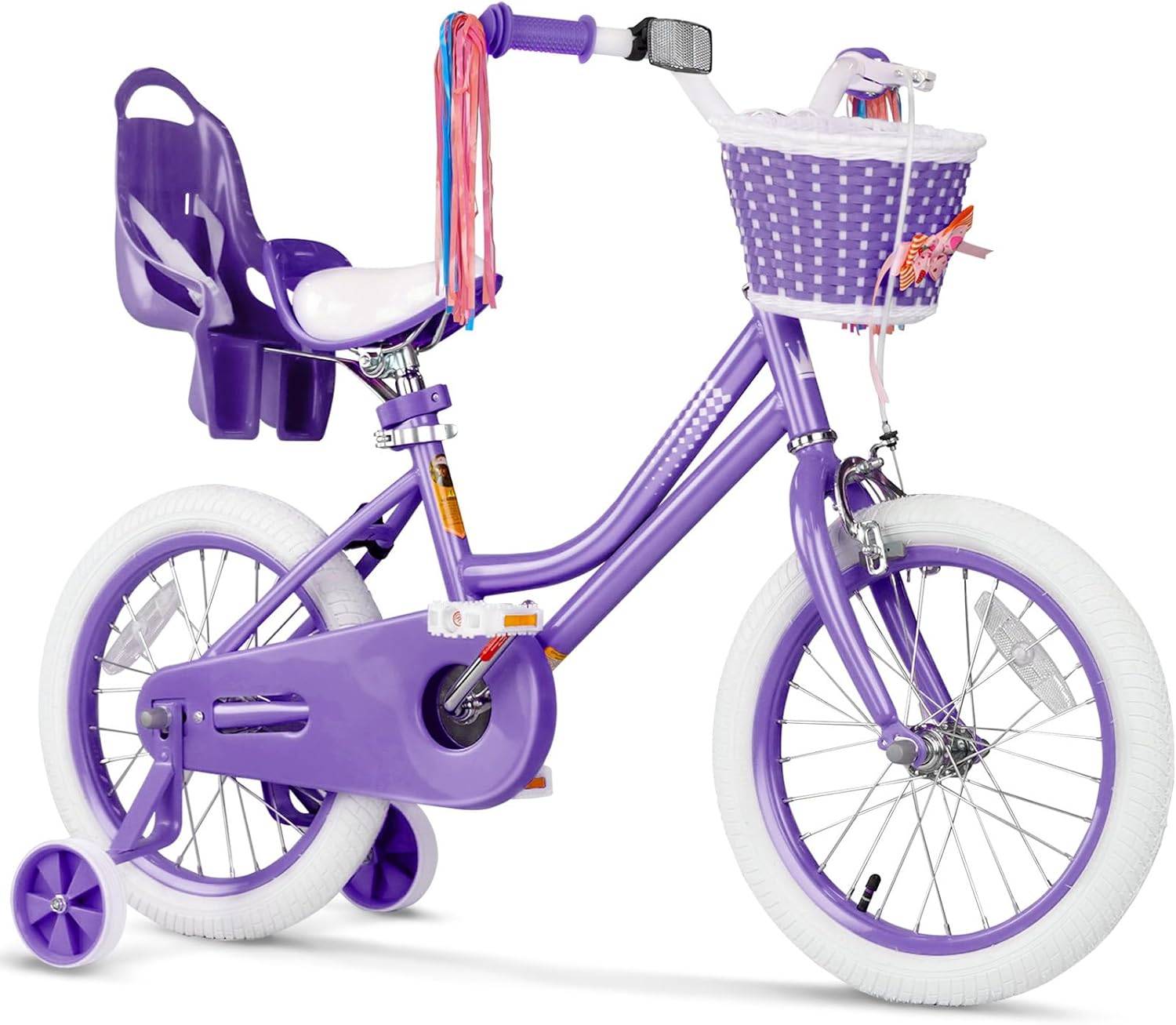
XJD Girls Bike for Kids Ages 3-8, 12/14/16 Inch with Training Wheels – Purple is listed in the Training Wheel Bikes category and has 12 Inch, 14 Inch and 16 Inch SKU labels. Its title’s “Ages 3-8” wording is a catalog label, not proof that every child in that span will fit.
Compare its available sizes with measured height: 12 Inch starts at 34–40 in / 86–102 cm, 14 Inch at 37–45 in / 94–114 cm, and 16 Inch at 40–48 in / 102–122 cm. If your child needs an 18, 20, 24 or 26 Inch wheel-size starting point, this product is only a nearby comparison where applicable; its smaller sizes are not substitutes for the required size.
Resolve an overlap or borderline measurement
If your child sits between sizes or within two overlapping ranges, have them try both. Select according to present control rather than the expectation that they will grow into the larger bicycle. Watch whether they can stand securely, reach without stretching, steer smoothly and operate the brakes.
Recheck measurements if your child has recently grown or if the fit seems inconsistent with the table. Wheel size is a starting point, while frame geometry and the child’s proportions determine the actual fit.
Make the final size decision
Choose the wheel-size range that matches measured height, confirm adequate stand-over with the inseam measurement, and require comfortable reach, steering and brake use during a real fit check. Finish by fitting a bicycle helmet so it sits level and secure, with its straps adjusted according to the helmet manufacturer’s instructions. If any control check fails, do not size up for growth—try a different size or bicycle.
Bikes for your next adventure
-
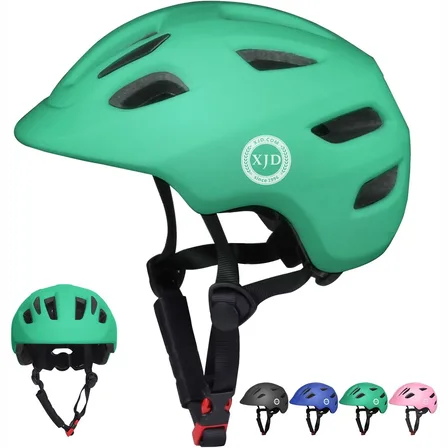
Green XJD Toddler Bike Helmet with Adjustable Fit, XS (46–51 cm)
The XJD toddler bike helmet in Green is built for the youngest riders — the size…$20.39
$23.99 -

Kids Bike Helmet by XJD for Boys & Girls – Black, Blue, Green, Pink, Purple
The XJD Kids Bike Helmet covers a wide 2-to-8-year age range thanks to two head-…$59.99
-

Kids Bike Helmet by XJD for Girls – Pink
The XJD Kids Bike Helmet in Pink is a lightweight multi-sport helmet for girls r…$59.99
$99