

What size bike for 12-14 year old
For most 12–14-year-olds, start by comparing a 24-inch bike; consider 26 inches only when the rider is over 60 in (153 cm) and fits it well.
Choose by height, not birthday
The XBikes starting points place a 24-inch bike at ages 10–14 and rider heights of 54–64 in (137–163 cm). A 26-inch bike is a starting point for youth and adults over 60 in (153 cm). These ranges overlap, so age alone cannot settle the choice.
A shorter 12-year-old may still need a 20-inch bike: its starting range is ages 7–12 and 48–60 in (122–152 cm). A taller teenager may be ready to try 26 inches. Wheel size is only the first comparison; frame shape and adjustment range can make two bicycles with the same wheel size feel different.
| Wheel size | XBikes age starting point | Rider-height starting point |
|---|---|---|
| 20 Inch | Ages 7–12 | 48–60 in / 122–152 cm |
| 24 Inch | Ages 10–14 | 54–64 in / 137–163 cm |
| 26 Inch | Youth and adults | Over 60 in / 153 cm |
Measure the rider before comparing bikes
First measure height without shoes, standing straight against a wall. Then measure inseam: with feet slightly apart, measure from the floor to the crotch using a firm, level object to represent the saddle contact point. Record both measurements rather than estimating from clothing size.
Use measured height to select the likely wheel-size range. Use inseam during an actual stand-over check; wheel diameter alone does not reveal the clearance provided by a particular frame. Do not convert the inseam into a bike size using an unsupplied formula.
Make these checks on the actual bicycle
Have the child try the exact bike. The rider should be able to stand over it without the frame obstructing a comfortable, controlled position. Seated, they should reach the handlebar without excessive stretching, twisting or locking their arms.
Ask the rider to demonstrate these controls in a protected area:
- Start and stop while remaining balanced.
- Steer smoothly at low speed and make controlled turns.
- Reach and operate the brakes without shifting the hands into an insecure position.
- Get on and off without the bicycle becoming difficult to manage.
Current confidence matters. A bike that technically matches a height range can still be too demanding if the rider cannot control its weight, reach or braking. Do not buy an oversized bicycle merely to allow room for growth.
How the supplied 24- and 26-inch options help
The supplied catalog choices are useful because both offer 24-inch and 26-inch size labels, letting families compare the two most likely starting points for taller riders in this age group. They do not establish fit by themselves; the rider must try the selected configuration and complete the checks above.
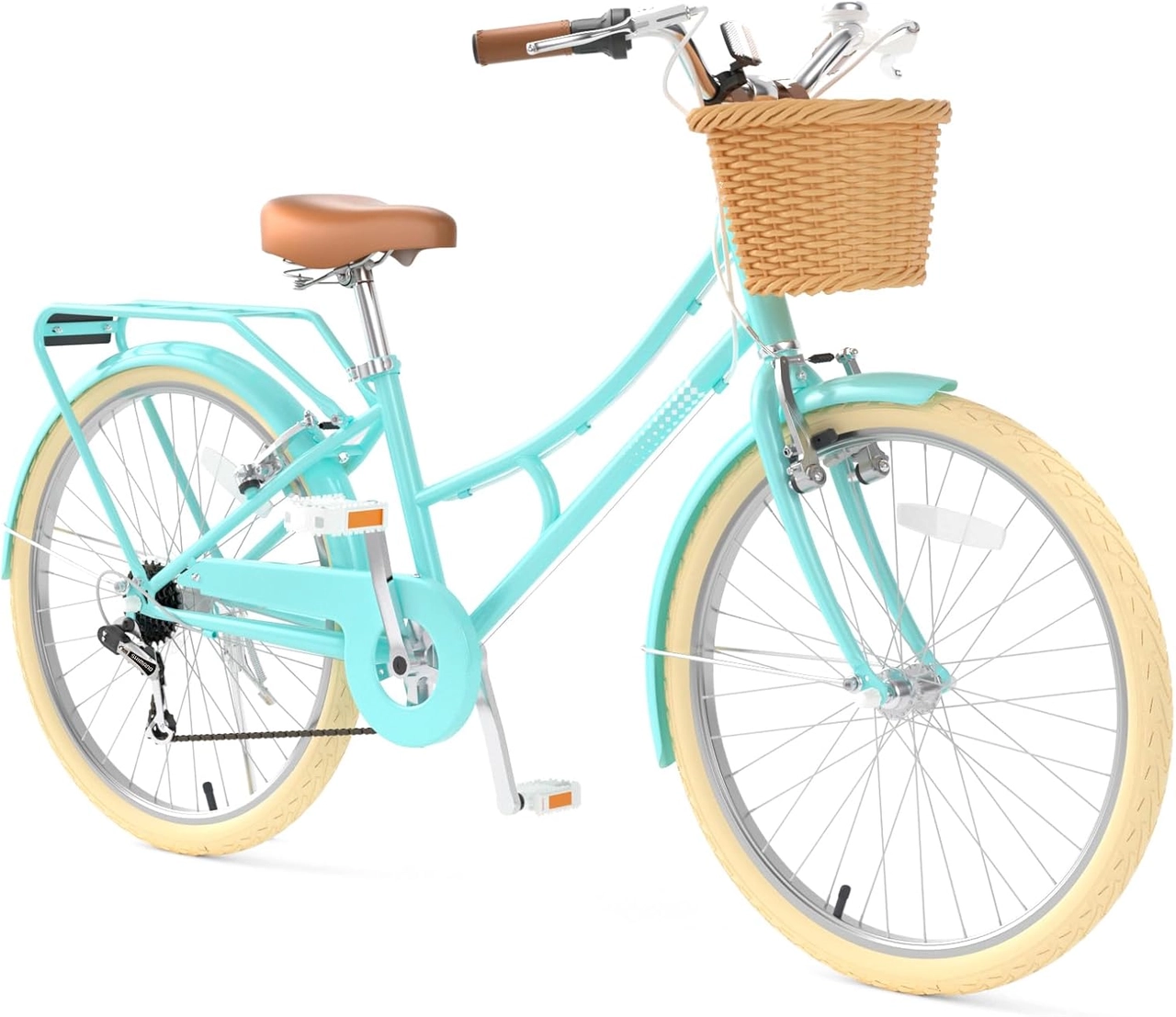 XJD 24-Inch Green Beach Cruiser Bike with U-Brake
A beach cruiser comparison offered in Green / 24 Inch, Pink / 24 Inch and Pink / 26 Inch labels; use the rider’s measurements and an exact-bike fit check to select a configuration.
 Pink XJD Beach Cruiser Bike, 24"/26", U-Brake
This beach cruiser listing offers 24 Inch and 26 Inch labels, making it relevant for comparing likely starting sizes for taller 12–14-year-olds after measuring height and checking individual control.
The XJD 24-Inch Green Beach Cruiser Bike with U-Brake has Green / 24 Inch, Pink / 24 Inch and Pink / 26 Inch SKU labels. The Pink XJD Beach Cruiser Bike, 24"/26", U-Brake has 24 Inch and 26 Inch SKU labels. Both are categorized as beach cruiser bikes, and both specify a U-brake in their catalog titles.
Compare only the labeled size actually being considered. A 26-inch configuration is not equivalent to a 24-inch configuration, even when it belongs to the same product listing. For a rider measuring 54–60 in (137–152 cm), 24 inches is the relevant starting comparison from these products. Above 60 in (153 cm), both 24 and 26 inches fall within the supplied height starting points, so an individual fit test must decide between them. At 60 inches exactly, the 26-inch “over 60 in” threshold has not yet been met.
If the rider is below 54 in (137 cm), neither supplied product offers a cataloged size that matches the XBikes height starting point; compare a smaller wheel size instead. These products should not be treated as substitutes for a needed 20-inch bike.
Before deciding
Repeat the fit check with the bicycle adjusted only as permitted by its exact product manual. Follow that manual for assembly, maintenance, compatibility, load limits and torque; when anything is uncertain, use a qualified bicycle mechanic.
Add a properly fitting bicycle helmet. It should sit level and its straps should be used according to the helmet manufacturer’s instructions. A helmet does not correct a poorly fitting bicycle.
For a 12–14-year-old, measure height and inseam now, shortlist 24 inches unless the recorded height points elsewhere, and choose 26 inches only after the rider exceeds 60 in (153 cm) and demonstrates comfortable stand-over, reach, braking and control on that exact bike.
Bikes for your next adventure
-

XJD Girls Bike for Kids Ages 3-8, 12/14/16 Inch with Training Wheels – Purple
The XJD Girls Bike in Purple is a training-wheel bicycle for kids ages 3 to 8, f…$149
$169 -

Pink Girls' 12/14/16" Bike by XJD – Basket & Doll Seat
The XJD Pink Girls' Bike with Basket & Doll Seat is made for riders 71–122 cm ta…$75.99
$99.99 -

Light Purple XJD Toddler Bike Helmet, Adjustable, Size XS (46–51 cm)
This Light Purple XJD toddler bike helmet is made for the smallest riders — the …$20.39