

What size bike for 15 inch inseam
A 15-inch inseam does not determine one bike size by itself. Measure the child’s full height, then compare 12-, 14-, and 16-inch bikes through an individual fit check.
Do not confuse inseam with wheel size
A 15-inch inseam is a body measurement, not a request for a 15-inch wheel. Children’s bicycle sizes are commonly labeled by wheel diameter, so the two numbers cannot be matched directly. The supplied XBikes standard does not assign wheel sizes by inseam; it uses rider height and age as starting points, with measured height taking priority over age.
For that reason, there is no responsible way to say that every child with a 15-inch inseam needs one particular wheel size. Body proportions, frame shape, reach, brake access and riding confidence can make two bicycles with the same wheel label fit differently.
Measure the child before comparing bikes
Have the child wear the shoes they will normally use for riding. For an inseam measurement, ask them to stand straight with their feet a small, natural distance apart. Place a firm, thin book between the legs and raise it until it meets the body like a bicycle saddle. Measure vertically from the floor to the top edge of the book. Record the result as 15 inches only if the measurement is repeatable.
Measure full standing height as well. Have the child stand upright against a wall, without rising onto their toes, and measure from the floor to the top of the head. This second number lets you use the XBikes starting points:
| Wheel label | XBikes rider-height starting point | Age starting point |
|---|---|---|
| 12 Inch | 34–40 in / 86–102 cm | Ages 3–4 |
| 14 Inch | 37–45 in / 94–114 cm | Ages 3–6 |
| 16 Inch | 40–48 in / 102–122 cm | Ages 4–7 |
If the child’s height appears in overlapping rows, treat both wheel sizes as candidates to try rather than choosing automatically by age. If the measured height falls outside these ranges, do not force a choice from this table simply because the inseam is 15 inches.
Check the actual fit
American Academy of Pediatrics guidance supports having the child try the bicycle and avoiding an oversized bike bought merely for future growth. With an adult holding the bicycle steady, check these points:
- Stand-over: The child should be able to stand over the frame with both feet planted securely. The frame must not prevent a comfortable, controlled stance.
- Starting and stopping: The child should be able to get on, begin moving and stop without struggling against the bicycle’s size.
- Reach: The child should reach the controls without stretching, locking the arms or losing a stable riding position.
- Brake control: If the bicycle has hand-operated brake controls, the child must be able to reach and operate them effectively.
- Confidence: A technically plausible size is still unsuitable if the child cannot control it comfortably at their current skill level.
Do not rely on lowering a seat to make an otherwise oversized frame acceptable. Stand-over, reach and control must all work together.
How the supplied catalog option helps
The Flower Pink XJD Girls Bike with Doll Seat & Basket is listed in the Training Wheel Bikes category with 12 Inch, 14 Inch and 16 Inch SKU labels. Those three catalog options are useful comparison points because they cover the wheel labels most relevant to the supplied height ranges above. They do not prove which size fits a child with a 15-inch inseam; each option still requires the same height, stand-over, reach, brake-control and confidence checks.

Choose the SKU label only after confirming the child’s measured standing height and trying the corresponding bicycle. Availability of a size label is not evidence of fit, and a larger option should not be selected solely to leave room for growth.
Confirm setup before riding
Once a size passes the fit check, follow the exact product manual for assembly, adjustment, maintenance, compatibility and any load or torque requirements. When the manual does not resolve a setup question, use a qualified bicycle mechanic rather than improvising a specification or procedure.
A bicycle helmet is also necessary riding equipment, but its fit is separate from bicycle sizing. U.S. Consumer Product Safety Commission guidance says the helmet should fit properly, sit level and have its straps used according to the helmet manufacturer’s instructions.
The decision for a 15-inch inseam
Start by verifying the 15-inch inseam and measuring full height. Use the 12-, 14- and 16-inch height ranges to identify candidates, then have the child try them. Select only the size that permits secure stand-over, comfortable reach, effective brake use and confident control today; if none does, do not substitute an oversized bike.
Bikes for your next adventure
-
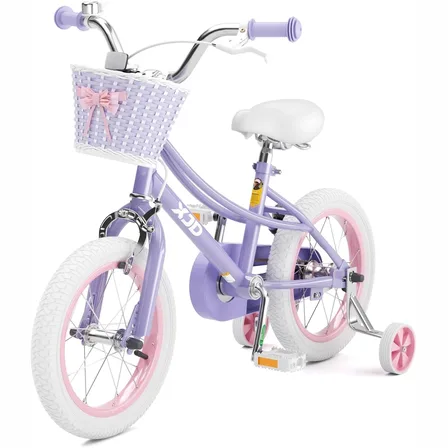
Girls' Training Wheel Bike by XJD with Basket – Purple
If you're shopping for a first bike for a girl roughly 3 to 12 years old (91–152…$75.99
-

XJD Kids Bike for Girls – Pink, 12/14/16/20 Inch with Training Wheels
The XJD Kids Bike for Girls in Pink is a training-wheel bike built to carry your…$139
$159 -

XJD Girls Bike for Kids Ages 3-8, 12/14/16 Inch with Training Wheels – Purple
The XJD Girls Bike in Purple is a training-wheel bicycle for kids ages 3 to 8, f…$149
$169