

What size bike for 16 inch inside leg
A 16-inch inside leg does not automatically mean a 16-inch bike. Bike sizes describe wheel diameter, so measure the child’s full height and check the actual bicycle for stand-over, reach, braking and confident control before choosing.
What a 16-inch inside leg tells you
The inside-leg measurement, also called inseam, is useful for judging whether a child can stand over a bicycle and reach the ground comfortably. It cannot be converted directly into a wheel size because frame shape, saddle position and handlebar reach can differ between bicycles with the same wheel diameter.
For a child with a 16-inch inside leg, begin by comparing the child’s measured height with the XBikes starting points below. Then arrange an individual fit check. Do not select a larger bicycle solely to leave growing room: a bike that is difficult to stand over, steer or stop is not an appropriate fit now.
Measure before comparing sizes
- Measure the inside leg: Have the child stand upright without shoes, with feet slightly apart. Place a rigid book level between the legs, gently raised to the crotch, and measure vertically from the floor to the top of the book.
- Measure full height: With the child still without shoes, measure from the floor to the top of the head.
- Record both measurements: Keep the results in inches or centimetres and compare full height—not inseam—with the XBikes wheel-size ranges.
Repeat the measurements if posture, footwear or a tilted book may have affected the result. Accurate measurements help narrow the options, but they do not replace trying the bicycle.
Use height to choose a starting point
| Wheel size | XBikes rider-height starting point | Age reference |
|---|---|---|
| 12 Inch | 34–40 in / 86–102 cm | Ages 3–4 |
| 14 Inch | 37–45 in / 94–114 cm | Ages 3–6 |
| 16 Inch | 40–48 in / 102–122 cm | Ages 4–7 |
| 18 Inch | 43–52 in / 109–132 cm | Ages 5–9 |
These ranges are starting points, not guarantees. Where height ranges overlap, compare both relevant sizes in person. Prioritise measured height, inseam, reach, brake control and current confidence over age alone.
A child with a 16-inch inseam may therefore need a 12-inch, 14-inch or 16-inch wheel bike depending on full height and the geometry of the particular model. An 18-inch bike should be considered only if the child’s height falls within its stated range and the physical fit checks also succeed.
How the supplied bikes help with the comparison
The Blue XJD Girls Bike with Training Wheels – 12/14/16 Inch and XJD Boys 12/14/16" Training Wheel Bike – Blue are relevant because each is a training-wheel bike offered with 12 Inch, 14 Inch and 16 Inch SKU labels. Those options let you compare wheel-size starting points around this query, but the label “16 Inch” identifies the wheel size; it does not mean the bike is designed for a 16-inch inside leg.
 Blue XJD Girls Bike with Training Wheels – 12/14/16 Inch
Available in 12 Inch, 14 Inch and 16 Inch SKU labels, this training-wheel bike provides relevant wheel-size comparison options. Its 16 Inch label describes wheel size, not suitability for a 16-inch inside leg.
 XJD Boys 12/14/16" Training Wheel Bike – Blue
This training-wheel bike is offered with 12 Inch, 14 Inch and 16 Inch SKU labels, making it relevant when shortlisting by measured height. An individual stand-over, reach and brake-control check is still required.
The supplied catalog facts do not establish differences in frame dimensions, saddle range, brakes, weight, materials or availability. Do not infer those details from the titles. Consult the exact product information and manual, and use a qualified bicycle mechanic for assembly, adjustment or compatibility questions not covered there.
Check the child on the actual bicycle
Have the child try the bicycle rather than making the final choice from a measurement chart. With the bicycle upright, confirm that the child can stand over it without the frame obstructing a stable stance. Check that mounting and stopping look controlled rather than hesitant or stretched.
Next, have the child hold the handlebars in a natural riding position. The child should be able to steer without overreaching and operate the brakes reliably with the controls adjusted as permitted by the product manual. Also consider present confidence: a technically possible size may still be too demanding if the child cannot start, turn and stop under control.
If the smaller option provides clear control while the larger option requires stretching or makes stopping awkward, choose the smaller suitable fit. Do not buy the oversized option merely for future growth. Recheck fit as the child grows and follow the exact manual for permitted saddle or handlebar adjustments.
Helmet and final decision
Use a bicycle helmet that fits properly, sits level and has its straps secured according to the helmet manufacturer’s instructions. Training wheels do not remove the need for a correctly fitted helmet or close adult supervision in an appropriate riding area.
For a 16-inch inside leg, the next step is simple: measure full height, shortlist the matching XBikes wheel-size range, and try that size alongside any overlapping option. Choose only the bicycle on which the child can stand over, reach, steer and brake confidently today.
Bikes for your next adventure
-
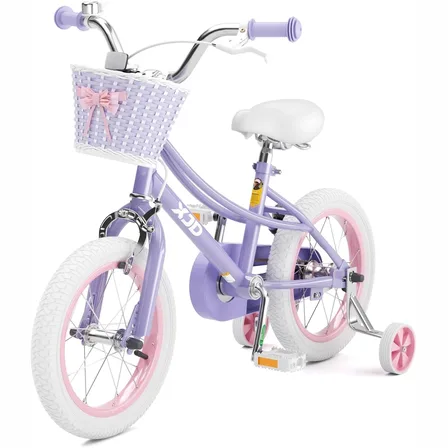
Girls' Training Wheel Bike by XJD with Basket – Purple
If you're shopping for a first bike for a girl roughly 3 to 12 years old (91–152…$75.99
-
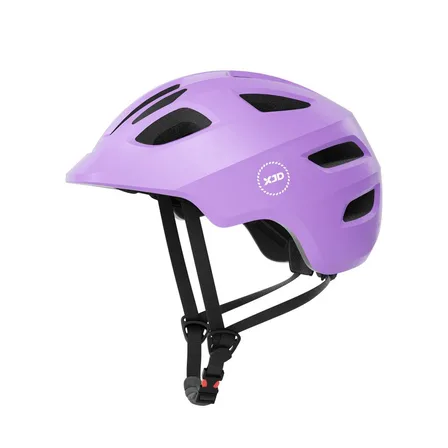
Girls' Bike Helmet from XJD – Purple
The XJD kids bike helmet in purple is a multi-sport helmet built for toddlers an…$59.99
$49 -
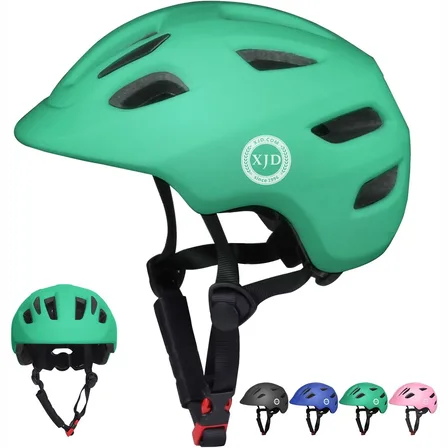
Green XJD Toddler Bike Helmet with Adjustable Fit, XS (46–51 cm)
The XJD toddler bike helmet in Green is built for the youngest riders — the size…$20.39
$23.99