

What size bike for a kid with 29 inseam
A 29-inch inseam does not determine one bike size by itself. Measure the child’s full height, then compare 20- and 24-inch starting points and require an in-person fit check.
Start with height, not an inseam conversion
A child with a 29-inch inseam may appear close to more than one wheel-size range, but XBikes does not use inseam-to-wheel-size conversions. Wheel diameter also does not reveal the frame’s stand-over height, saddle range or reach. Those dimensions can vary between bicycles with the same wheel label.
Measure the child’s standing height without shoes, with their back against a wall and eyes level. For the inseam, have them stand naturally and measure from the floor to the crotch, using a firm book held level to represent the saddle contact point. Record both measurements in inches or centimeters.
Compare the measured height with XBikes ranges
| Wheel size | XBikes starting point | What it means here |
|---|---|---|
| 18 Inch | Ages 5–9; 43–52 in / 109–132 cm | Consider only if the child’s measured height falls in this range. |
| 20 Inch | Ages 7–12; 48–60 in / 122–152 cm | A likely comparison size when the measured height is within this range. |
| 24 Inch | Ages 10–14; 54–64 in / 137–163 cm | Also worth comparing if the child is at least 54 inches tall and can control the bike. |
| 26 Inch | Youth and adults over 60 in / 153 cm | Compare only when measured height is over 60 inches and the individual fit works. |
These ranges are starting points, not a prescription. Where ranges overlap, do not choose the larger bicycle automatically. Height, stand-over clearance, reach, brake control and current confidence should decide the fit; age alone should not.
Perform the fit check before buying
Have the child try the exact bicycle rather than relying on a size chart. The American Academy of Pediatrics advises against buying an oversized bike merely for growth. During the check, look for all of the following:
- Stand-over: The child can straddle the bicycle comfortably without the frame pressing into them.
- Starting and stopping: They can get on, set off and stop without the bicycle pulling them off balance.
- Reach: They can hold the handlebar without stretching, locking their arms or losing a stable riding posture.
- Brake control: They can reach and operate the fitted brake controls confidently. Do not assume a control is usable because they can barely touch it.
- Turning: They can steer through a controlled turn while remaining balanced and attentive.
If the child is between two plausible sizes, compare both in their normal riding shoes. Favor the bicycle they can control now. A larger model that compromises stand-over, reach or braking is not the right choice today.
How the supplied XBikes options relate
The supplied catalog item, XJD Boys 12/14/16" Training Wheel Bike – Blue, offers 12 Inch, 14 Inch and 16 Inch SKU labels in the Training Wheel Bikes category. Those options help show the smaller end of the XBikes sizing scale, but none is a direct answer to a 29-inch inseam. They are comparison points only, not substitutes for an 18-, 20-, 24- or 26-inch bicycle when the child’s measured height and fit indicate one of those sizes.

For context, XBikes starts 16 Inch at ages 4–7 and heights 40–48 in / 102–122 cm. If the child with a 29-inch inseam is taller than 48 inches, that supplied 16 Inch option sits outside the stated height range. The 12 Inch and 14 Inch versions cover still shorter riders: 34–40 inches and 37–45 inches respectively. Do not infer fit from the word “Boys” in the catalog title; individual measurements and control remain decisive.
Check setup, helmet fit and confidence
Once a bicycle passes the basic size comparison, confirm that its permitted adjustments allow a usable riding position. Follow the exact product manual for assembly, adjustment, maintenance, load limits, compatibility and torque. If the instructions are missing or the setup is uncertain, use a qualified bicycle mechanic rather than improvising.
A properly fitted bicycle helmet is part of the next step. The U.S. Consumer Product Safety Commission advises that the helmet fit properly, sit level and have its straps used according to the helmet manufacturer’s instructions. A helmet does not make an oversized or poorly controlled bicycle suitable.
Make the decision for a 29-inch inseam
Measure height now. If it is 48–60 inches, begin by trying 20 Inch; if it is 54–64 inches, compare 24 Inch as well; if it exceeds 60 inches, a 26 Inch bicycle may enter the comparison. Then choose only the exact bike on which the child clears the frame, reaches comfortably, operates the brakes and rides with present-day control. If those checks fail, step back to the smaller suitable option instead of buying room to grow.
Bikes for your next adventure
-

Blue XJD Girls Bike with Training Wheels – 12/14/16 Inch
If you're shopping for a first pedal bike for a daughter roughly 3 to 8 years ol…$149
$169 -

XJD Kids Bike for Girls – Pink, 12/14/16/20 Inch with Training Wheels
The XJD Kids Bike for Girls in Pink is a training-wheel bike built to carry your…$139
$159 -
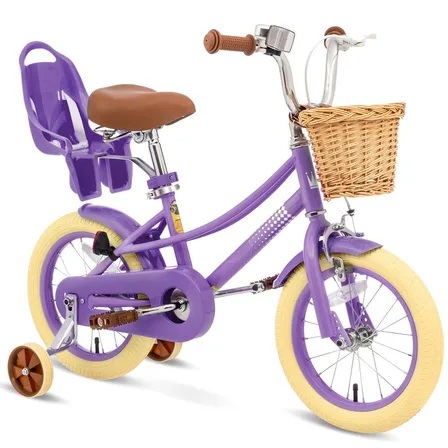
XJD Girls' Bike with Training Wheels, 12/14/16/20 Inch – Purple
The XJD girls' bike with training wheels in Purple is built to grow with your ri…$139
$159