

What size bike for my 3.5 year old
For a 3.5-year-old, start by comparing a 12-inch and 14-inch bike. Choose by measured height and fit—not age or room to grow.
Start with your child’s height
Measure your child without shoes, standing straight against a wall. The XBikes starting points place a 12-inch bike at ages 3–4 and heights of 34–40 inches (86–102 cm). A 14-inch bike starts at ages 3–6 and heights of 37–45 inches (94–114 cm).
That means many 3.5-year-olds fall near one or both sizes. If your child is 34–36 inches tall, begin with a 12-inch bike. At 41–45 inches, begin with a 14-inch bike. Between 37 and 40 inches, compare both in person because confidence, reach and control should decide.
| Wheel size | XBikes age starting point | XBikes height starting point | What it means at age 3.5 |
|---|---|---|---|
| 12 Inch | Ages 3–4 | 34–40 in / 86–102 cm | A likely starting size, especially for a shorter or less-confident rider |
| 14 Inch | Ages 3–6 | 37–45 in / 94–114 cm | Worth comparing when the child is tall enough and can control it comfortably |
| 16 Inch | Ages 4–7 | 40–48 in / 102–122 cm | Usually a later starting point; consider only after a complete individual fit check |
Measure inseam as well as height
For inseam, have your child stand in socks with feet slightly apart. Place a firm book upward between the legs to imitate the saddle contact point, then measure from the floor to the top edge of the book. Record the result and compare it with the bicycle maker’s exact stand-over and saddle-adjustment information.
No inseam range is supplied here for these products, so do not infer one from wheel size. A child should be able to straddle the bicycle without the frame interfering and should feel stable when getting on, stopping and getting off. Follow the exact product manual if it gives a specific fitting procedure.
Do the fit check before choosing
The American Academy of Pediatrics recommends having the child try the bicycle and avoiding an oversized bike bought merely for future growth. With the bicycle adjusted according to its manual, check these points:
- Stand-over: Your child can straddle the bike comfortably rather than being forced onto tiptoes by the frame.
- Reach: The handlebars are within easy reach without a strained, fully stretched posture.
- Steering: Your child can turn the bars while remaining balanced and in control.
- Brake control: Your child can reach and operate the bicycle’s braking controls. Confirm the exact controls on the specific model rather than assuming a brake type.
- Confidence: Starting, stopping and getting off look calm and controlled. Hesitation or difficulty handling the bike is a reason to reassess the fit.
If neither candidate passes every check, do not select it simply because the age label appears suitable. Ask a qualified bicycle mechanic to help assess fit or adjustment, and use the product manual for assembly, compatibility, maintenance and adjustment instructions.
How the supplied XBikes options compare
The supplied catalog options are useful because they let parents compare the two main starting sizes for many 3.5-year-olds. Flower Pink XJD Girls Bike with Doll Seat & Basket is offered in 12 Inch, 14 Inch and 16 Inch. Girls' Training Wheel Bike by XJD with Basket – Purple is offered in 14 Inch, 16 Inch and 20 Inch. These labels identify wheel-size options only; they do not establish an individual fit.
In practical terms, the Flower Pink model supplies both 12-inch and 14-inch comparison points. The Purple model begins at 14 inches, so it is relevant only if your child’s measurements and trial fit support that size. Its 16-inch and 20-inch options should not be treated as equivalents or growth-room substitutes for a 12-inch or 14-inch bike.
These particular catalog choices help answer the size question by showing which supplied model can be considered at each likely starting point and which options should be set aside after measuring.
 Girls' Training Wheel Bike by XJD with Basket – Purple
Available in 14 Inch, 16 Inch and 20 Inch. For a 3.5-year-old, the 14 Inch option is relevant only when measured height and an individual control check support that size.
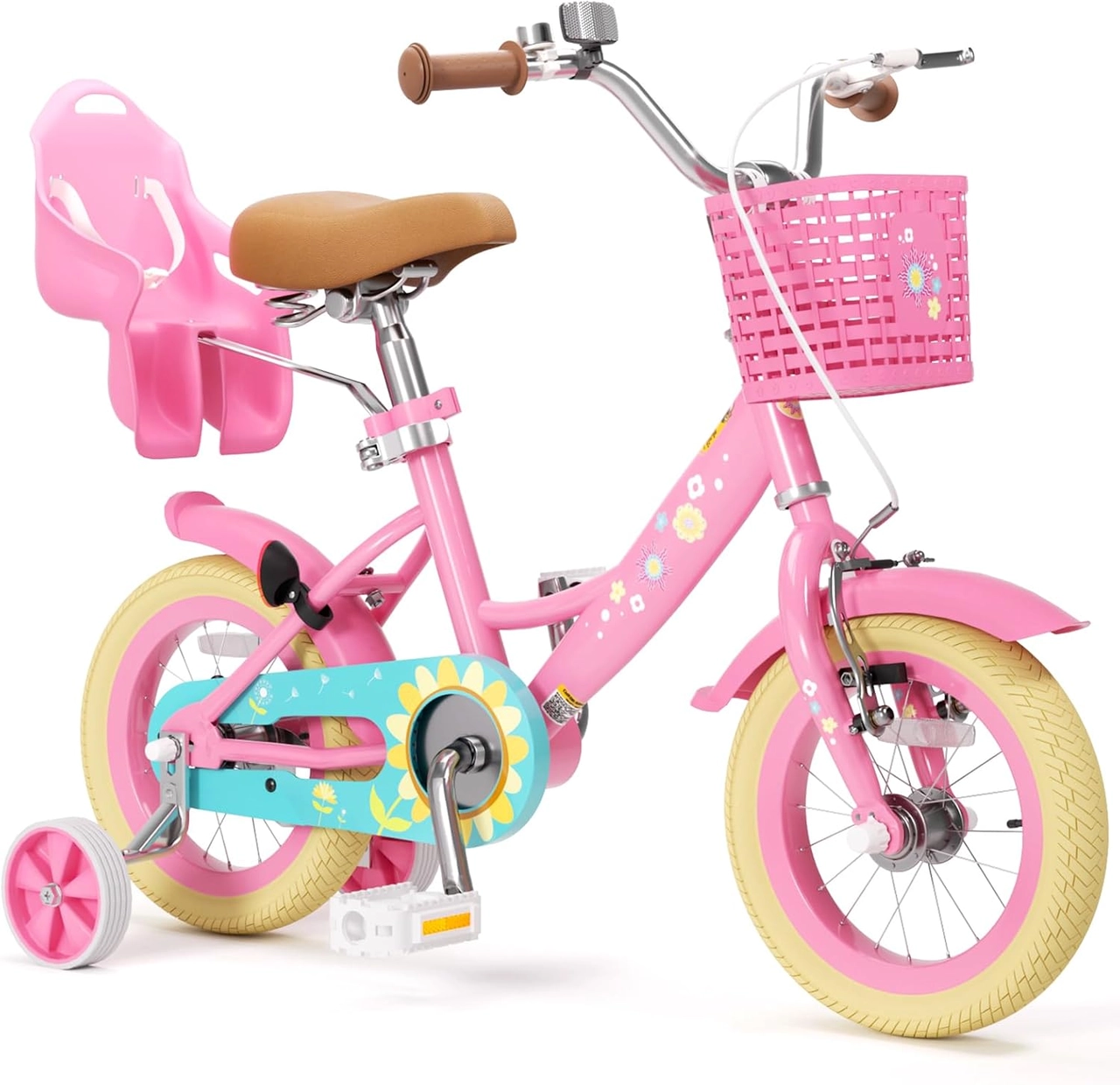 Flower Pink XJD Girls Bike with Doll Seat & Basket
Available in 12 Inch, 14 Inch and 16 Inch, providing both main comparison sizes for many 3.5-year-olds. Select between 12 Inch and 14 Inch using measured height and a hands-on fit check.
Helmet fit is a separate decision
A correctly sized bicycle does not make an ill-fitting helmet acceptable. The U.S. Consumer Product Safety Commission advises that a bicycle helmet fit properly, sit level on the head and use its straps according to the helmet manufacturer’s instructions. Check helmet fit each time your child rides.
Your next decision
- Measure standing height and inseam.
- Use 12 inches as the first comparison at 34–40 inches tall, and 14 inches at 37–45 inches tall.
- In the 37–40-inch overlap, try both and choose the one that gives better stand-over, reach, brake control and confidence.
- Reject any bicycle that feels oversized, even if your child may grow into it later.
For your 3.5-year-old, choose 12 or 14 inches only after that hands-on check: the correct answer is the smallest candidate that fits properly and allows confident control now.
Bikes for your next adventure
-
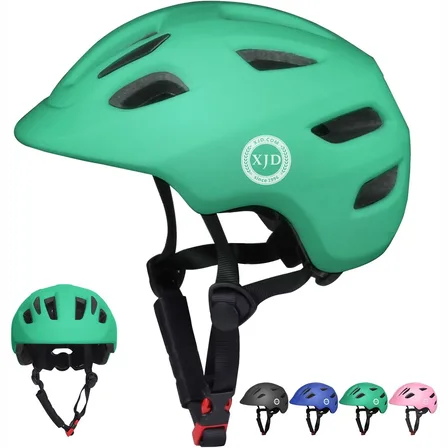
Green XJD Toddler Bike Helmet with Adjustable Fit, XS (46–51 cm)
The XJD toddler bike helmet in Green is built for the youngest riders — the size…$20.39
$23.99 -

Kids Bike Helmet by XJD for Boys & Girls – Black, Blue, Green, Pink, Purple
The XJD Kids Bike Helmet covers a wide 2-to-8-year age range thanks to two head-…$59.99
-

Kids Bike Helmet by XJD for Girls – Pink
The XJD Kids Bike Helmet in Pink is a lightweight multi-sport helmet for girls r…$59.99
$99