

What size bike is good for 5 year old
For most 5-year-olds, start by comparing a 16-inch bike, but choose by measured height and fit—not age. A 14-inch bike may suit a smaller rider, while an 18-inch bike may fit a taller child.
Which wheel size should you check first?
Measure your child’s height without shoes, then use the XBikes starting points below. The overlapping ranges are intentional: two wheel sizes may appear plausible, but only an individual fit check can show which bicycle gives the child comfortable control.
| Wheel size | Starting age | Rider height | Relevance at age 5 |
|---|---|---|---|
| 14 Inch | Ages 3–6 | 37–45 in / 94–114 cm | Check for a smaller 5-year-old |
| 16 Inch | Ages 4–7 | 40–48 in / 102–122 cm | The usual first comparison |
| 18 Inch | Ages 5–9 | 43–52 in / 109–132 cm | Check for a taller 5-year-old |
Do not automatically move up when your child is near an overlap. Height narrows the choices; stand-over room, reach, brake control and confidence decide between them. A child who is 43 inches tall, for example, falls within all three listed height ranges and therefore needs to try the actual bicycles.
What should you measure?
Record standing height and inseam in the same unit used by the comparison table. For inseam, have the child stand upright without shoes and measure from the floor to the crotch. The supplied starting points do not give an inseam-to-frame formula, so compare that measurement with the stand-over clearance and setup instructions for the exact bicycle rather than inventing a conversion.
Also observe arm reach. Seated in a normal riding position, the child should be able to hold the handlebar without stretching, twisting or locking the elbows. Confirm that the child can operate the bicycle’s brakes comfortably. Brake details differ, so follow the exact product manual when identifying, adjusting or checking them.
How to perform the fit check
- Have the child stand over the bicycle. Confirm there is comfortable clearance and that the bicycle can be steadied without strain.
- Check the riding position. The child should reach the handlebar naturally and remain balanced rather than leaning excessively.
- Test brake reach and control. Make sure the child can reach and operate the controls while keeping a secure grip.
- Watch a slow start, stop and turn. Use a controlled area and see whether the child can manage the bicycle without fear or obvious difficulty.
- Compare confidence between sizes. If the larger bicycle reduces control, select the smaller appropriate fit instead of expecting the child to grow into it.
The American Academy of Pediatrics’ HealthyChildren guidance supports having a child try the bicycle and avoiding an oversized purchase made only for future growth. A wheel-size label is a screening tool, not proof that the whole bicycle fits.
When the supplied catalog option is relevant
The XJD Girls Bike for Kids Ages 3-8, 12/14/16 Inch with Training Wheels – Purple offers 12 Inch, 14 Inch and 16 Inch SKU labels. For this question, its 14-inch and 16-inch options provide relevant comparison points for children whose measured height falls within those XBikes ranges. The age wording in the product title is only a catalog label and is not evidence that every 5-year-old will fit.
These particular catalog options help answer the size question because the same listed model can be considered at 14 and 16 inches after measuring the rider. Its 12-inch option starts at ages 3–4 and heights 34–40 in / 86–102 cm, so it is generally outside the age starting point for a 5-year-old and should only remain under consideration when the child’s measured dimensions and an actual fit check support it.
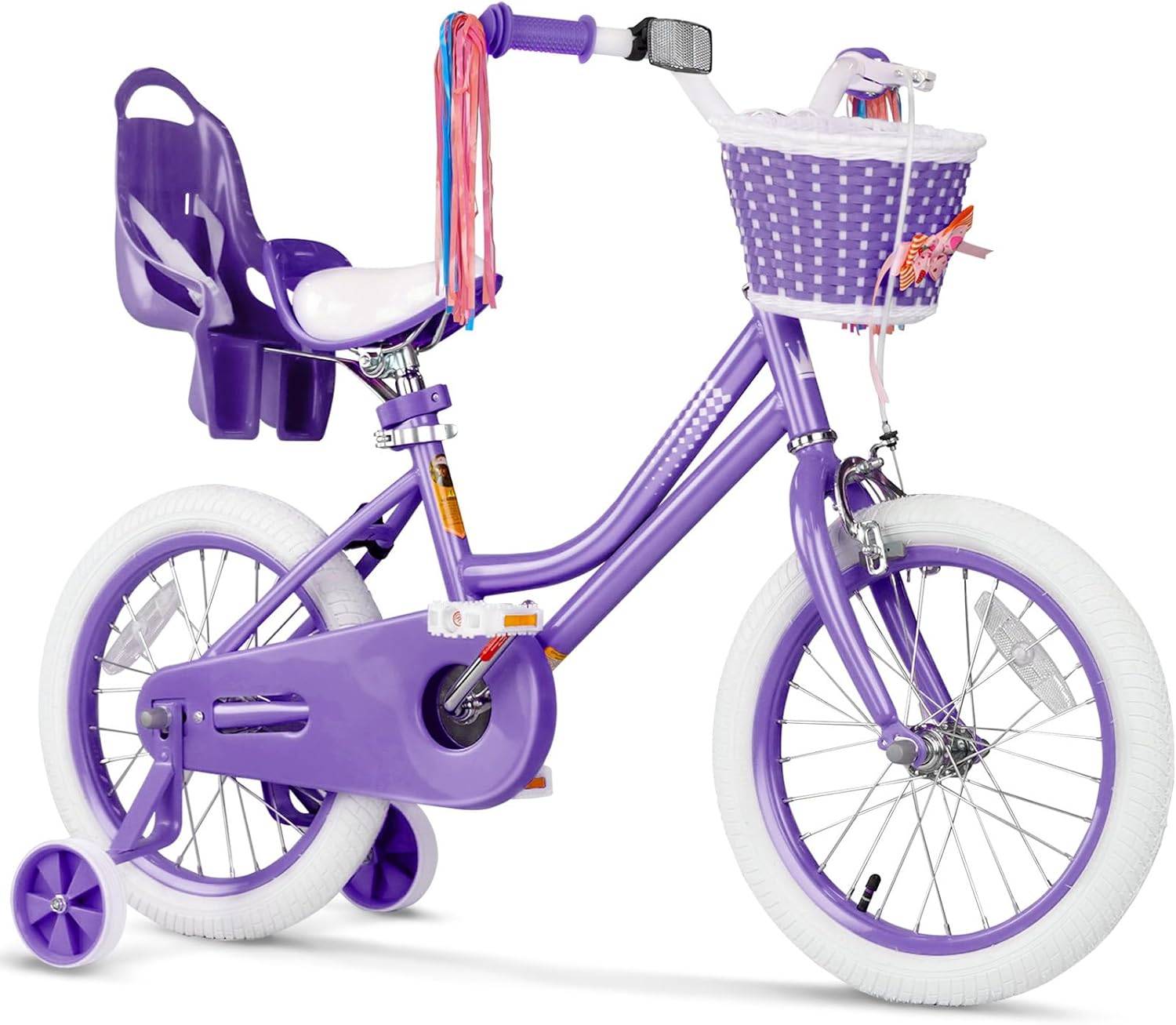
This supplied product does not include an 18-inch SKU label. If your child’s height and fit check point toward 18 inches, treat the listed 14- and 16-inch versions as smaller comparison points, not equal substitutes. Consider an actual 18-inch bicycle that the child can try.
What else should affect the decision?
Current confidence matters alongside physical measurements. A child learning basic balance and control may manage a correctly fitted smaller option more comfortably than a larger bicycle within an overlapping height range. Training wheels are part of the supplied product’s category and title, but they do not correct poor stand-over clearance, excessive reach or inaccessible controls.
Do not infer assembly steps, adjustment limits, load limits, compatibility or torque settings from wheel size. Use the exact product manual for those details, or ask a qualified bicycle mechanic to assemble and check the bicycle.
A properly fitted helmet is also necessary. U.S. Consumer Product Safety Commission guidance says the helmet should fit properly, sit level and have its straps used according to the helmet manufacturer’s instructions. Helmet fit does not change which bicycle size is appropriate.
The decision to make now
Measure height and inseam, begin with a 16-inch trial, and compare 14 or 18 inches when the height ranges indicate it. Buy only after your 5-year-old can stand over the bicycle, reach the handlebar and brakes, and start, stop and turn with present-day control.
Bikes for your next adventure
-

Light Purple XJD Toddler Bike Helmet, Adjustable, Size XS (46–51 cm)
This Light Purple XJD toddler bike helmet is made for the smallest riders — the …$20.39
-

Light Pink XJD Girls' Bicycle with Basket & Training Wheels
The Light Pink XJD Girls' Bicycle with Basket & Training Wheels is a retro-style…$109.99
$129.99 -

Blue XJD Kids Bike Helmet for Boys & Girls
The Blue XJD Kids Bike Helmet is a lightweight, adjustable multi-sport helmet fo…$59.99
$99