

What size bike is suitable for an 11 year old
For most 11-year-olds, start by comparing a 20 Inch and 24 Inch bike. Use measured height—not age alone—and confirm stand-over, reach and control.
The short answer: 20 Inch or 24 Inch
Under the XBikes starting points, a 20 Inch bike covers rider heights of 48–60 in (122–152 cm), while a 24 Inch bike covers 54–64 in (137–163 cm). Because these ranges overlap, either wheel size may be suitable for an 11-year-old between 54 and 60 in (137–152 cm). The correct choice depends on the child’s proportions, reach, brake control and confidence during an individual fit check.
If the rider is below 54 in (137 cm), begin with a 20 Inch model. At 54–60 in (137–152 cm), try both 20 Inch and 24 Inch options. Above 60 in (153 cm), include 24 Inch and 26 Inch bikes in the comparison; the XBikes starting point describes 26 Inch as suitable for youth and adults over 60 in (153 cm). Do not move up merely because the child is nearly 12.
Measure the rider before comparing bikes
- Height: Have the child stand straight without shoes against a wall. Measure from the floor to the top of the head.
- Inseam: With feet slightly apart, measure from the floor to the crotch. This helps assess whether the child can stand over the particular frame with comfortable clearance.
- Current control: Note whether the rider starts, stops, turns and balances confidently. Confidence affects which of two overlapping sizes is easier to handle.
Wheel size is only a starting point; it does not state the frame’s stand-over height or reach. Compare the measurements with the actual bicycle and its product manual. If the necessary dimensions or adjustment instructions are unavailable, ask a qualified bicycle mechanic to check the fit.
XBikes sizing starting points
| Wheel size | Age starting point | Rider-height starting point |
|---|---|---|
| 20 Inch | 7–12 | 48–60 in / 122–152 cm |
| 24 Inch | 10–14 | 54–64 in / 137–163 cm |
| 26 Inch | Youth and adults | Over 60 in / 153 cm |
These are the sizes most likely to enter an 11-year-old’s comparison. Age ranges can overlap and children of the same age can have different proportions, so measured height and an in-person fit check remain decisive.
What to check during a test fit
- Stand-over: The child should be able to straddle the frame comfortably rather than being forced onto tiptoes or against the frame.
- Reach: Seated in a normal riding position, the child should reach the handlebar without an exaggerated stretch or cramped posture.
- Brake control: Confirm that the rider can reach and operate the fitted brakes confidently while maintaining control of the handlebar.
- Starting and stopping: Ask the child to demonstrate controlled starts, turns and stops in an appropriate traffic-free area.
- Overall confidence: Watch for hesitation caused by the bike feeling tall, long or difficult to steer.
Do not buy an oversized bike solely to leave room for growth. A child should try the bicycle now and demonstrate control now. Follow the exact product manual for assembly, adjustments, maintenance, compatibility, load limits and torque; otherwise use a qualified bicycle mechanic.
How the supplied catalog options help
The catalog provides useful side-by-side size options for this decision. XJD Pink Beach Cruiser for Girls – Rear Rack & V-Brake is offered in 20 Inch, 24 Inch and 26 Inch labels, allowing comparison across the three likely height bands. Girls' Training Wheel Bike by XJD with Basket – Purple is offered in 14 Inch, 16 Inch and 20 Inch labels; for an 11-year-old, only its 20 Inch option aligns with the relevant XBikes age and height starting point. Its smaller options should not be treated as equivalent substitutes.
These particular products help illustrate whether the rider should begin with a 20 Inch comparison or also try 24 Inch and 26 Inch choices. Their catalog labels do not prove individual fit, so the child must still try the selected bicycle and demonstrate stand-over clearance, comfortable reach and reliable control.
 XJD Pink Beach Cruiser for Girls – Rear Rack & V-Brake
Available in 20 Inch, 24 Inch and 26 Inch labels, this beach cruiser provides comparison points across the likely XBikes height bands for an 11-year-old, subject to an individual fit check.
 Girls' Training Wheel Bike by XJD with Basket – Purple
Available in 14 Inch, 16 Inch and 20 Inch labels; only the 20 Inch option matches the relevant XBikes starting range for many 11-year-olds, and fit must still be checked individually.
Make the final size decision
Begin with the measured height: choose 20 Inch as the first comparison below 54 in (137 cm); compare 20 Inch and 24 Inch from 54–60 in (137–152 cm); and compare 24 Inch with 26 Inch above 60 in (153 cm). When two sizes fall within the starting points, select the bicycle the child can straddle, reach, steer and brake on more confidently—not the larger one by default.
Before riding, add a properly fitting bicycle helmet. It should sit level, and its straps should be used according to the helmet manufacturer’s instructions. The practical next step is therefore simple: measure the 11-year-old’s height and inseam, shortlist the corresponding wheel sizes, and arrange a hands-on fit check before choosing.
Bikes for your next adventure
-
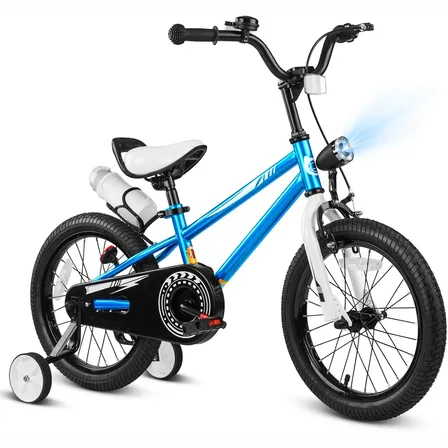
XJD Boys 12/14/16" Training Wheel Bike – Blue
The XJD Boys Bike in Blue is a training wheel bike for riders 71–122 cm tall—rou…$169
$199 -
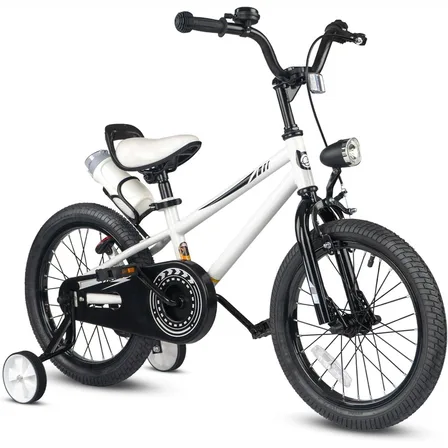
XJD Kids' Training Wheel Bike for Boys & Girls, 12/14/16 Inch – White
The XJD kids' training wheel bike in White is made for riders ages 3–8 (roughly …$169
$199 -

XJD Girls Bike for Kids Ages 3-8, 12/14/16 Inch with Training Wheels – Purple
The XJD Girls Bike in Purple is a training-wheel bicycle for kids ages 3 to 8, f…$149
$169