

What size bike should a 12 year old get
A 12-year-old will usually start with a 20-inch or 24-inch bike, while a rider over 60 in (153 cm) may need a 26-inch bike. Measure height and inseam, then confirm stand-over clearance, reach, brake control and confidence on the actual bicycle.
Choose by measured height, not age alone
Age narrows the search, but it cannot confirm fit. Measure the child without shoes, standing straight against a wall, from the floor to the top of the head. Then measure inseam from the floor to the crotch while the child stands with feet slightly apart.
Compare measured height with the XBikes starting points below. Inseam is still important because two children of equal height can have different leg lengths and different stand-over needs.
| Wheel size | XBikes age starting point | Rider-height starting point |
|---|---|---|
| 20 Inch | Ages 7–12 | 48–60 in / 122–152 cm |
| 24 Inch | Ages 10–14 | 54–64 in / 137–163 cm |
| 26 Inch | Youth and adults | Over 60 in / 153 cm |
The ranges overlap, so a 12-year-old measuring 54–60 in (137–152 cm) could begin by trying both 20-inch and 24-inch bicycles. Do not assume the larger option is automatically right. A rider at or above 60 in (153 cm) may also need to compare a 26-inch model, especially if the smaller bicycle feels cramped.
Check the fit on the actual bike
Wheel size is only a screening tool; bicycle frame shapes and riding positions can differ. Have the child try each candidate rather than ordering an oversized bicycle for future growth.
- Stand-over: With both feet flat on the ground and the bicycle upright, the child should be able to straddle it without the frame pressing into the body.
- Starting and stopping: The rider should get on, push off, stop and put a foot down without struggling to control the bicycle.
- Reach: The child should hold the handlebars without stretching excessively, locking the elbows or hunching forward.
- Brake control: The rider must be able to reach and operate the brakes comfortably. If the controls cannot be used confidently, that bicycle does not fit.
- Confidence: Ask the child to turn, look ahead and ride at a manageable pace. Hesitation caused by the bicycle feeling tall, long or unwieldy is a reason to try another fit.
How the supplied catalog option helps
The Light Pink XJD Girls' Bicycle with Basket & Training Wheels is listed in 12 Inch, 14 Inch, 16 Inch and 20 Inch sizes. Only its 20 Inch option falls within the XBikes height starting points commonly relevant to a 12-year-old, so the smaller listed options are comparison points for younger or shorter riders, not equivalent substitutes for a 24-inch or 26-inch bicycle. This catalog option helps when the measured rider is within the 20-inch starting range and training wheels are relevant to current confidence.
Use the product shown below to compare the available 20-inch option with the child's measurements and control needs; its catalog listing does not replace an individual fit check.

If the child measures above the 20-inch range, or feels cramped during a trial, this supplied product is not the relevant size choice. The catalog facts provided here do not include a 24-inch or 26-inch version of this bicycle. Do not treat its 20-inch option as equal to those sizes.
Decide between overlapping sizes
When height falls into both the 20-inch and 24-inch ranges, compare control rather than choosing for maximum growth. The useful size is the one the child can straddle, steer, start, stop and brake on comfortably now. A larger bicycle that compromises any of those checks should be rejected even if the child may grow into it later.
If both sizes pass, consider the rider's current confidence and posture. A less-confident rider may control one candidate more naturally, while a confident rider may still prefer the other because its reach and riding position fit better. Wheel diameter alone cannot settle that comparison.
Before the first ride
Use a bicycle helmet that fits properly, sits level and has straps adjusted according to the helmet manufacturer's instructions. Recheck bicycle controls before riding. For assembly, maintenance, adjustment limits, compatibility, load limits or torque values, follow the exact product manual or ask a qualified bicycle mechanic; those details should never be guessed.
For this 12-year-old, measure height and inseam first: try 20 and 24 inches if the child is 54–60 in (137–152 cm), add 26 inches to the comparison at over 60 in (153 cm), and choose only the bicycle that passes every stand-over, reach, braking and confidence check today.
Bikes for your next adventure
-

Pink Girls' 12/14/16" Bike by XJD – Basket & Doll Seat
The XJD Pink Girls' Bike with Basket & Doll Seat is made for riders 71–122 cm ta…$75.99
$99.99 -

XJD Girls Bike for Kids Ages 3-8, 12/14/16 Inch with Training Wheels – Purple
The XJD Girls Bike in Purple is a training-wheel bicycle for kids ages 3 to 8, f…$149
$169 -
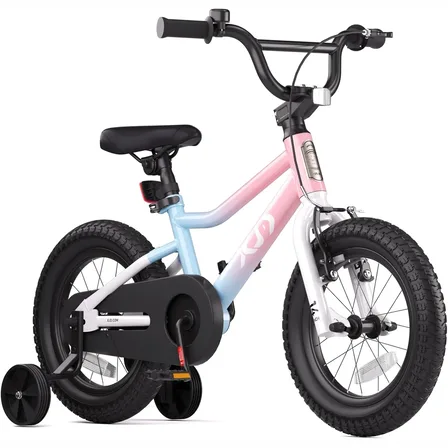
XJD Girls BMX Bike 12/14/16 Inch with Training Wheels – Pink Blue
The XJD Girls BMX Bike in Pink/Blue is built as a first pedal bike for kids roug…$99.99
$119.99