

What size bike should my 6 year old have
Most 6-year-olds should start by comparing 14-, 16- and 18-inch bikes, but measured height and an in-person fit check—not age alone—determine the right size.
Match height to the wheel-size starting points
Measure your child without shoes, standing straight against a wall. Compare that height with the XBikes starting points below. Wheel size describes the bicycle’s wheels; it is not the same as frame size or seat height.
| Wheel size | XBikes age starting point | Rider height |
|---|---|---|
| 14 Inch | Ages 3–6 | 37–45 in / 94–114 cm |
| 16 Inch | Ages 4–7 | 40–48 in / 102–122 cm |
| 18 Inch | Ages 5–9 | 43–52 in / 109–132 cm |
These ranges overlap deliberately. For example, a 6-year-old who is 44 inches tall falls within all three height ranges, so height narrows the choice but does not settle it. Compare actual bicycles and favor the one the child can control confidently.
If your child is outside these ranges, use the same height-first approach. The XBikes starting points are 12 Inch for 34–40 in / 86–102 cm, 20 Inch for 48–60 in / 122–152 cm, 24 Inch for 54–64 in / 137–163 cm, and 26 Inch for youth and adults over 60 in / 153 cm. These figures are screening points, not substitutes for trying the bike.
Measure inseam as well as total height
For inseam, have the child stand in socks with feet slightly apart. Place a firm, thin book between the legs and raise it gently to simulate a saddle, then measure from the floor to the book’s top edge. Record both height and inseam before shopping.
Because frame shapes and adjustment ranges vary, do not turn the inseam measurement into a universal wheel-size formula. Use it while checking stand-over clearance and starting position on the exact bicycle. If the product manual gives an adjustment method or limit, follow that manual; ask a qualified bicycle mechanic when the instructions or fit are unclear.
Try the bicycle before choosing
Do not buy an oversized bicycle merely to leave room for growth. Have your child try each plausible size and check the following:
- Stand-over: The child can straddle the bicycle securely without the frame preventing stable footing.
- Starting and stopping: The child can get moving, stop and put a foot down without panic or a large sideways lean.
- Reach: The handlebars are reachable without locking the elbows, stretching the torso or losing steering control.
- Brake control: The child can comfortably reach and operate the fitted braking controls while maintaining a secure grip.
- Confidence: Steering and low-speed balance look controlled rather than hesitant or strained.
If two sizes match the height range, these checks decide between them. Current riding confidence matters: a less-confident rider may control the smaller suitable option more easily, but only the individual trial can confirm that.
How the supplied XBikes option helps
The Black XJD Kids' BMX Bicycle with Training Wheels is listed in 12 Inch, 14 Inch and 16 Inch SKU labels. Its 14- and 16-inch choices provide relevant comparison points for many 6-year-olds; the 12-inch choice is relevant only when the child’s measurements and actual fit support that smaller starting point. This product does not include an 18-inch option in the supplied catalog facts, so it cannot substitute when an 18-inch bike proves to be the correct fit.
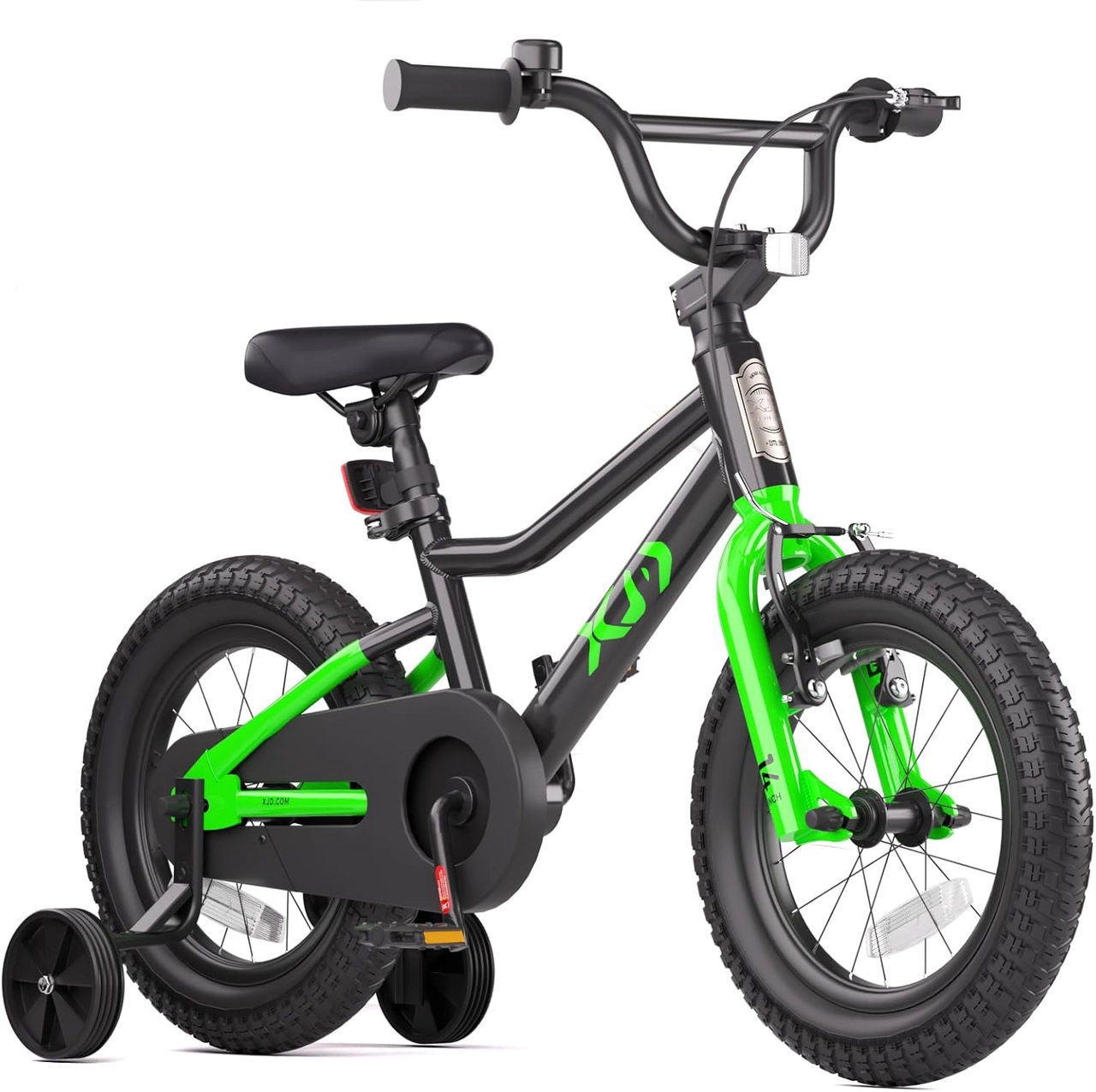
Use the product labels only to select which versions to try. They do not establish frame geometry, saddle range, brake reach, assembly requirements or compatibility. Check the exact product manual for those details, and use a qualified bicycle mechanic for assembly or adjustments when appropriate.
Complete the fit with a helmet
A correctly sized bicycle still requires a properly fitting bicycle helmet. The helmet should sit level on the child’s head, fit properly and use its straps according to the helmet manufacturer’s instructions. Recheck the fit after any adjustment and before riding.
Also repeat the bicycle fit check as the child grows or gains confidence. A child may remain inside a height band while reach, stand-over position or control changes.
Your next decision
- Measure standing height and inseam.
- Use height to shortlist 14, 16 or 18 Inch for the typical 6-year-old range, considering another listed starting point only if the measured height indicates it.
- Have the child try the shortlisted bicycles and compare stand-over, reach, braking, starts, stops and steering confidence.
- Choose the size the child controls now rather than an oversized bike intended for future growth.
For your 6-year-old, take the two measurements first, then trial every overlapping size; buy only the bicycle that passes the child-specific control and fit checks today.
Bikes for your next adventure
-
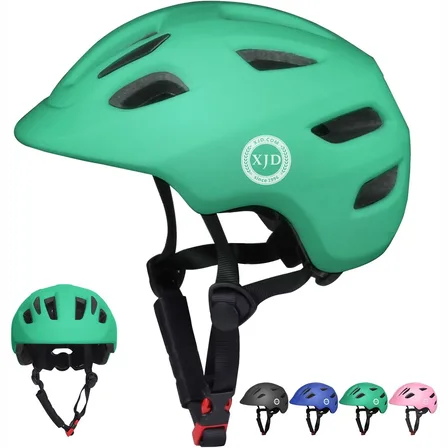
Green XJD Toddler Bike Helmet with Adjustable Fit, XS (46–51 cm)
The XJD toddler bike helmet in Green is built for the youngest riders — the size…$20.39
$23.99 -

Kids Bike Helmet by XJD for Boys & Girls – Black, Blue, Green, Pink, Purple
The XJD Kids Bike Helmet covers a wide 2-to-8-year age range thanks to two head-…$59.99
-

Kids Bike Helmet by XJD for Girls – Pink
The XJD Kids Bike Helmet in Pink is a lightweight multi-sport helmet for girls r…$59.99
$99