

What size bike wheels for a 7 year old
For most 7-year-olds, start by comparing 18-inch and 20-inch bike wheels. Choose by measured height and fit: 18-inch suits 43–52 in (109–132 cm), while 20-inch suits 48–60 in (122–152 cm).
Which wheel size should you try first?
Age seven sits at the overlap between two XBikes starting points. An 18-inch bike covers ages 5–9 and heights of 43–52 in (109–132 cm). A 20-inch bike covers ages 7–12 and heights of 48–60 in (122–152 cm).
- Under 48 in (122 cm): begin with an 18-inch bike.
- From 48 to 52 in (122–132 cm): compare both 18-inch and 20-inch bikes in person.
- Over 52 in (132 cm): begin with a 20-inch bike, provided the child can stand over, reach and control it comfortably.
These are starting points, not guarantees. Children of the same age can have different leg length, reach and confidence, so age alone cannot determine the correct bike.
Measure before comparing bikes
Measure the child without shoes, standing upright against a wall. Record total height from the floor to the top of the head. Then measure inseam from the floor to the crotch, using a book held level between the legs to represent the bike’s contact point.
Use measured height to select the likely wheel-size range. Keep the inseam measurement ready when checking the actual bicycle, because wheel size does not define every frame dimension. Two bikes with the same wheel label can still feel different in stand-over clearance, reach and riding position.
Perform an individual fit check
Have the child try the exact bicycle rather than relying on its wheel label. Do not choose an oversized bike merely to leave room for growth. On the candidate bike, check that the child can:
- Stand over the bicycle with comfortable clearance and without leaning it sharply.
- Reach the handlebars without stretching, locking the elbows or losing a stable posture.
- Turn the bars while remaining balanced and in control.
- Reach and operate the brakes confidently with the controls set according to the product manual.
- Start, stop and place a foot down predictably during a supervised trial.
Current confidence matters. A child who is still developing balance and stopping skills may handle a smaller suitable bike more comfortably than a larger bike that technically falls within the height range. If neither size allows calm, reliable control, keep looking rather than forcing the fit.
How the supplied 12-, 14- and 16-inch bikes help
The supplied catalog choices stop at 16 inches, so they do not include the usual 18- or 20-inch starting sizes for many 7-year-olds. They are nearest-size comparison points, not equivalent substitutes. A 16-inch bike is an XBikes starting point for ages 4–7 and heights of 40–48 in (102–122 cm), so it may remain relevant for a shorter seven-year-old who passes the individual fit check.
The Purple XJD Girls' Bike with Doll Seat & Basket is listed under Training Wheel Bikes in 12 Inch, 14 Inch and 16 Inch options. The Black XJD Kids' BMX Bicycle with Training Wheels is listed under Kids' BMX Bikes in the same three wheel-size options. These catalog choices help you compare a 16-inch candidate with smaller labels, but neither supplies an 18-inch or 20-inch option.
 Purple XJD Girls' Bike with Doll Seat & Basket
Available in 12-, 14- and 16-inch sizes. Its 16-inch option may be relevant for a seven-year-old measuring 40–48 inches, subject to an individual fit and control check.
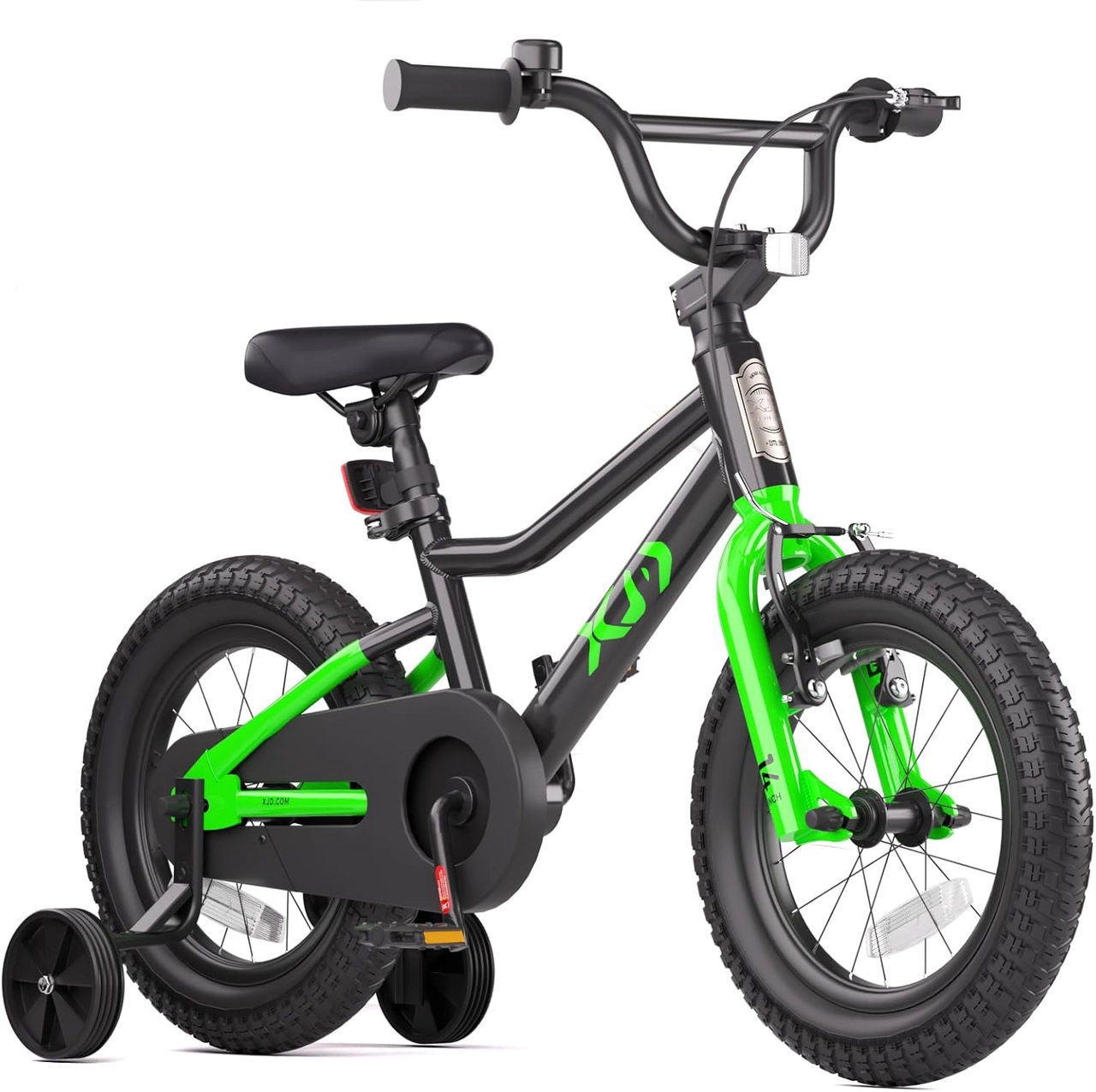 Black XJD Kids' BMX Bicycle with Training Wheels
This kids' BMX catalog option comes in 12-, 14- and 16-inch sizes. Use the 16-inch version only as a fit candidate for a child within the supplied 40–48-inch height range.
If the child measures 48 in (122 cm) or taller, do not treat either product’s 16-inch option as a replacement for an 18- or 20-inch trial. If the child is below 48 in, the 16-inch version may be worth trying, but stand-over clearance, reach, brake control and confidence still decide whether it fits.
What to do after choosing a likely size
Compare the child’s measured height with the ranges first, then arrange a supervised fit check on the exact model and size. Follow that bicycle’s manual for assembly, adjustments, maintenance, compatibility, load limits and torque. When those instructions are unavailable or the setup is uncertain, use a qualified bicycle mechanic rather than guessing.
Add a properly fitting bicycle helmet for every ride. It should sit level and its straps should be adjusted according to the helmet manufacturer’s instructions. A helmet does not correct a poorly fitting bicycle, so verify both separately.
The decision for a 7-year-old
Start with 18 inches below 48 in, compare 18 and 20 inches from 48–52 in, and start with 20 inches above 52 in. Consider the supplied 16-inch products only when the child is within the 40–48 in range and demonstrates comfortable control. Measure now, try the exact bike next, and choose the size the child can safely and confidently manage today—not one intended only for future growth.
Bikes for your next adventure
-

Pink Girls' 12/14/16" Bike by XJD – Basket & Doll Seat
The XJD Pink Girls' Bike with Basket & Doll Seat is made for riders 71–122 cm ta…$75.99
$99.99 -

XJD Girls Bike for Kids Ages 3-8, 12/14/16 Inch with Training Wheels – Purple
The XJD Girls Bike in Purple is a training-wheel bicycle for kids ages 3 to 8, f…$149
$169 -
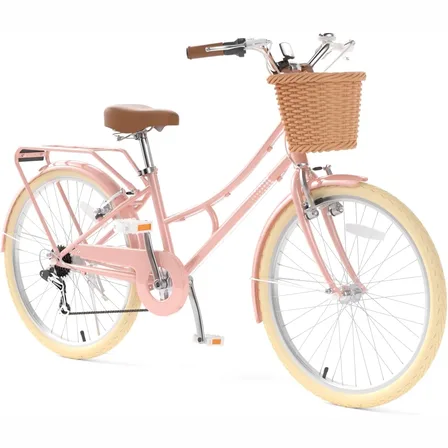
XJD Pink Beach Cruiser for Girls – Rear Rack & V-Brake
The XJD Pink Beach Cruiser for girls is the step-up bike for riders who've outgr…$179.99
$209.99