

What size does 16 kid bike fit
A 16-inch kids’ bike is an initial fit for many children ages 4–7 who measure 40–48 inches (102–122 cm) tall. Height is only the starting point: measure the child, check inseam clearance, reach, brake control and confidence on the exact bicycle before choosing it.
What “16-inch” fit means
The 16-inch label refers to the bicycle’s wheel size, not the child’s inseam or the bike’s frame dimensions. Two bicycles with the same wheel label can still feel different, so the label cannot confirm fit by itself.
Use the XBikes range of ages 4–7 and heights 40–48 inches (102–122 cm) as a screening tool. Give measured height more weight than age. Children of the same age can have different leg lengths, arm lengths, coordination and riding confidence.
Measure before comparing bikes
- Measure standing height: Have the child stand without shoes, upright against a wall. Mark the top of the head and measure from the floor.
- Measure inseam: With feet slightly apart, place a firm, book-like object between the legs to represent the saddle area. Measure vertically from its top edge to the floor.
- Record current ability: Note whether the child starts, stops, steers and balances confidently, and whether training wheels are currently appropriate.
Compare the measured height with the 40–48-inch range, but use the inseam during the physical stand-over check. Do not convert inseam into a wheel size using an unsupported formula; frame shapes and adjustment ranges vary.
Perform the fit check on the exact bike
Have the child try the assembled bicycle under adult supervision. The American Academy of Pediatrics advises trying the bicycle rather than buying an oversized model for future growth.
- Stand-over: The child should be able to straddle the bicycle with both feet firmly on the ground and comfortable clearance from the frame.
- Reach: The handlebars should be reachable without excessive stretching, locked elbows or an awkwardly hunched position.
- Control: The child should be able to steer while remaining balanced and looking ahead.
- Brakes: The child must be able to reach and operate the fitted brake controls reliably. Confirm the exact operation from that bike’s product manual.
- Confidence: A technically possible fit is not a useful fit if the bicycle feels intimidating or the child cannot start, stop and turn under control.
If any of these checks fails, do not choose that bike merely because the child’s age or height appears in the starting range. Try another size or model.
How nearby wheel sizes compare
| Wheel label | XBikes age starting point | XBikes height starting point |
|---|---|---|
| 14 Inch | Ages 3–6 | 37–45 in / 94–114 cm |
| 16 Inch | Ages 4–7 | 40–48 in / 102–122 cm |
| 20 Inch | Ages 7–12 | 48–60 in / 122–152 cm |
The overlapping ranges explain why age alone cannot settle the decision. A shorter or less-confident child may need to try a 14-inch option, while a child at the upper edge should not automatically move to 20 inches. A larger wheel is not an acceptable substitute unless the exact bicycle passes every individual fit and control check.
Which supplied XBikes products are relevant
All three supplied catalog options include a 16 Inch SKU label, so they are directly relevant models to compare after measuring the rider. Their other listed wheel sizes also help families compare adjacent starting points, but each selected SKU remains a distinct size requiring its own fit check.
 Girls' Training Wheel Bike by XJD with Basket – Purple
Available in 14 Inch, 16 Inch and 20 Inch SKUs. Its 16 Inch option is directly relevant; the adjacent labels help comparison but do not replace an individual fit check.
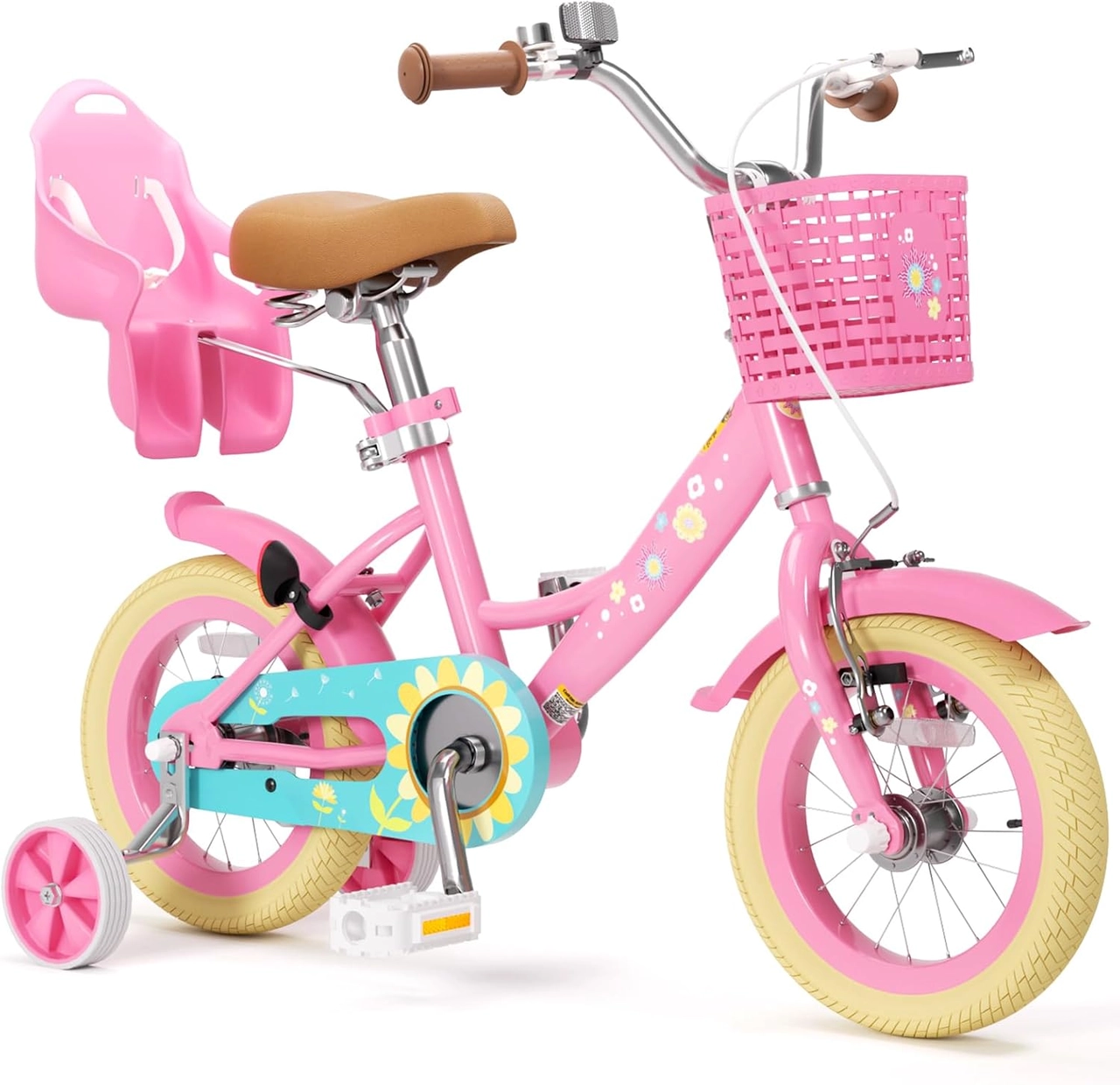 Flower Pink XJD Girls Bike with Doll Seat & Basket
Available in 12 Inch, 14 Inch and 16 Inch SKUs. The 16 Inch choice is relevant when the rider’s measured height, stand-over, reach, brake control and confidence support it.
 Purple XJD Girls' Bike with Doll Seat & Basket
This Training Wheel Bike offers 12 Inch, 14 Inch and 16 Inch SKU labels. Consider the 16 Inch option only after checking the child on the exact bicycle.
Girls' Training Wheel Bike by XJD with Basket – Purple is listed in Training Wheel Bikes with 14 Inch, 16 Inch and 20 Inch choices. Its 16 Inch option matches the requested wheel label; the 14- and 20-inch options are comparisons, not equivalent fits.
Flower Pink XJD Girls Bike with Doll Seat & Basket is listed in Training Wheel Bikes with 12 Inch, 14 Inch and 16 Inch choices. Consider its 16 Inch SKU only if the child’s measurements and on-bike controls check out.
Purple XJD Girls' Bike with Doll Seat & Basket has the same supplied size choices—12 Inch, 14 Inch and 16 Inch—and is also categorized as a Training Wheel Bike. Nothing in the supplied facts establishes frame geometry, brake type or adjustment range, so verify those details on the exact bicycle and in its manual.
Make the final 16-inch decision
Choose a 16-inch bike only when the child is near the 40–48-inch (102–122 cm) starting range and can comfortably straddle, reach, steer and operate the brakes on that exact model. Do not size up solely to leave growing room.
Before riding, use a properly fitting bicycle helmet. The U.S. Consumer Product Safety Commission advises that it sit level and that its straps be used according to the helmet manufacturer’s instructions. Follow the bicycle’s exact product manual for assembly, maintenance, compatibility, load limits and torque; when anything is uncertain, use a qualified bicycle mechanic.
The next step is simple: measure height and inseam today, then have the child try the selected 16 Inch SKU and reject it if any stand-over, reach, braking or confidence check fails.
Bikes for your next adventure
-

26-Inch XJD Beach Cruiser Bike for Girls – Purple, V-Brake
This XJD 26-inch purple beach cruiser is sized for big kids and teens — suggeste…$218.49
$229.99 -

Blue XJD Girls Bike with Training Wheels – 12/14/16 Inch
If you're shopping for a first pedal bike for a daughter roughly 3 to 8 years ol…$149
$169 -
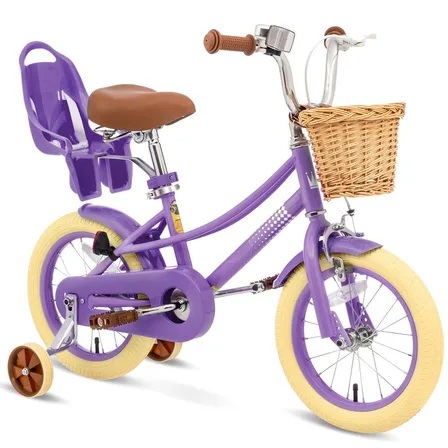
XJD Girls' Bike with Training Wheels, 12/14/16/20 Inch – Purple
The XJD girls' bike with training wheels in Purple is built to grow with your ri…$139
$159