

What size kid for 20 inch bike
A 20-inch bike is an XBikes starting point for a child 48–60 inches (122–152 cm) tall, usually age 7–12, but measurements and a hands-on fit check decide.
Start with height, not age
Measure the child without shoes, standing straight against a wall with feet flat and together. Mark the top of the head and measure from the floor. Compare that result with the XBikes 20-inch range of 48–60 inches (122–152 cm).
Age is only a rough starting point. A child within the stated 7–12 age range may have different proportions, reach, coordination or confidence from another child of the same age. A measured height outside the range is a reason to compare another wheel size rather than forcing the 20-inch choice.
Measure the inseam correctly
Have the child stand in socks with feet slightly apart. Place a firm, thin book between the legs and raise it gently until it meets the crotch, as a saddle would. Measure straight from the floor to the top edge of the book.
Use that inseam measurement to check the actual bicycle’s stand-over clearance and saddle adjustment. Wheel size alone does not reveal frame shape or minimum saddle position, so compare the measurement with the exact bicycle and follow its product manual. Do not invent extra clearance by having the child lean the bike or stand on tiptoe.
Perform the hands-on fit check
The American Academy of Pediatrics advises having a child try the bicycle and avoiding an oversized bike bought merely for future growth. On the exact 20-inch model being considered, check these points:
- Stand-over: The child can straddle the bicycle comfortably and manage it without being trapped by the frame.
- Starting and stopping: The child can get into position, set off and stop while remaining in control.
- Reach: The handlebars can be held without stretching, locking the elbows or losing a stable riding posture.
- Brake control: The child can reach and operate the fitted brake controls confidently. Verify the actual controls because no brake type is assumed here.
- Steering: The child can turn the bars both ways and look ahead without wobbling from excessive effort.
- Confidence: The bicycle feels manageable at walking speed, during turns and while stopping.
If any of these checks fail, a height number or age label does not make the bike fit. Compare a different size or model and repeat the complete check.
How nearby wheel sizes compare
| Wheel size | XBikes rider height | Starting age |
|---|---|---|
| 16 Inch | 40–48 in / 102–122 cm | 4–7 |
| 18 Inch | 43–52 in / 109–132 cm | 5–9 |
| 20 Inch | 48–60 in / 122–152 cm | 7–12 |
| 24 Inch | 54–64 in / 137–163 cm | 10–14 |
The overlapping ranges are intentional starting points, not proof that two sizes fit equally. For a child near 48 or 60 inches, compare the actual bikes side by side. Choose according to stand-over, reach, brake control and present confidence—not the larger wheel simply because it may last longer.
When the supplied product is relevant
The Light Pink XJD Girls' Bicycle with Basket & Training Wheels is relevant because its available SKU labels include 12 Inch, 14 Inch, 16 Inch and the requested 20 Inch. Those options can help a parent compare labeled sizes within one catalog product, while the 20 Inch option is the one that directly matches this page’s wheel-size question.

Its title and catalog category identify it as a training-wheel bicycle, and the supplied facts confirm a basket and training wheels in the exact product title. They do not establish frame dimensions, brake type, weight, load limit or whether the training wheels suit a particular rider. Confirm the chosen SKU and use the exact product manual for assembly, adjustments, compatibility and maintenance; consult a qualified bicycle mechanic when needed.
A child who already rides confidently may not need a training-wheel model, while a learner may find that category relevant. Either way, training wheels do not correct a poor frame fit or an unreachable control.
Make the final decision
Proceed with a 20-inch bike only after recording the child’s barefoot height and inseam, confirming that height is within the 48–60 inch (122–152 cm) starting range, and successfully checking stand-over, reach, steering, braking and control on the exact bicycle.
Before riding, provide a bicycle helmet that fits properly. U.S. Consumer Product Safety Commission guidance calls for the helmet to sit level and for its straps to be used according to the manufacturer’s instructions. If the child cannot comfortably control the 20-inch bike today, select a better-fitting size now rather than buying the 20-inch bike for growth.
Bikes for your next adventure
-

XJD Kids Bike for Girls – Pink, 12/14/16/20 Inch with Training Wheels
The XJD Kids Bike for Girls in Pink is a training-wheel bike built to carry your…$139
$159 -
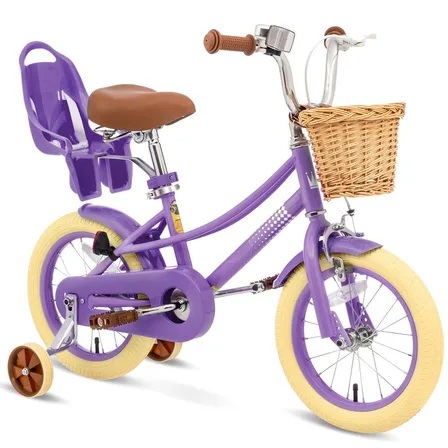
XJD Girls' Bike with Training Wheels, 12/14/16/20 Inch – Purple
The XJD girls' bike with training wheels in Purple is built to grow with your ri…$139
$159 -

Kids Bike Helmet by XJD for Girls – Pink
The XJD Kids Bike Helmet in Pink is a lightweight multi-sport helmet for girls r…$59.99
$99