

What size of bike should a 10 year old have
Most 10-year-olds should start by trying a 24-inch bike, but a shorter rider may fit a 20-inch bike. Measure height and inseam, then check control.
Start with measured height, not age
At age 10, the XBikes starting ranges overlap. A 20-inch bike corresponds to a rider height of 48–60 inches (122–152 cm) and ages 7–12. A 24-inch bike corresponds to 54–64 inches (137–163 cm) and ages 10–14. A 26-inch bike is a starting point for youth and adults over 60 inches (153 cm).
This means 24 inches is the usual first size to compare for a 10-year-old, not an automatic answer. Riders below 54 inches should also try a 20-inch bike. Riders over 60 inches may compare a 26-inch bike, but only if they can comfortably stand over it, reach its controls and handle it confidently.
Take the two useful measurements
- Measure standing height: Have the child stand without shoes, back against a wall, looking straight ahead. Mark the top of the head and measure from the floor.
- Measure inseam: With feet slightly apart, place a firm book between the legs and raise it gently to simulate a saddle. Measure from the floor to the book’s top edge.
Use height to select the first wheel size to try. Use inseam during the actual stand-over check. Wheel diameter alone does not reveal the frame’s stand-over height, saddle range or reach, so do not calculate fit from age or wheel size alone.
Compare the likely wheel sizes
| Wheel size | XBikes starting point | What it means at age 10 |
|---|---|---|
| 20 Inch | 48–60 in / 122–152 cm; ages 7–12 | Compare for a shorter 10-year-old or a rider who needs easier control. |
| 24 Inch | 54–64 in / 137–163 cm; ages 10–14 | The main starting size for many 10-year-olds. |
| 26 Inch | Over 60 in / 153 cm; youth and adults | Compare only for a sufficiently tall rider who passes every fit check. |
Do not move up merely because the child is close to a boundary. The American Academy of Pediatrics advises having the child try the bicycle and avoiding an oversized bike bought for future growth.
Perform an individual fit check
Have the child try the fully prepared bicycle in a controlled area with adult supervision. Check these points before deciding:
- Stand-over: The child can straddle the frame with both feet firmly supported and without the frame pressing uncomfortably against the body.
- Reach: The child can hold the handlebars without stretching, locking the elbows or leaning excessively.
- Brake control: The child can reach and operate the brake controls while maintaining a secure grip and steering position.
- Starting and stopping: The rider can mount, start, steer, slow and stop without the bicycle feeling unwieldy.
- Confidence: The child looks and feels in control now, rather than expecting to grow into the bike later.
If either of two sizes falls within the height range, compare both in person. Choose the one that provides better present-day control. Follow the exact product manual for assembly and adjustments, or ask a qualified bicycle mechanic when the correct setup is uncertain.
How the supplied XBikes options help
The supplied catalog provides useful 20-, 24- and 26-inch comparison points. The 26-Inch XJD Beach Cruiser Bike for Girls – Purple, V-Brake has listed Mint Green and Pink options in 20, 24 and 26 inches, plus Purple in 26 inches. The XJD 24-Inch Green Beach Cruiser Bike with U-Brake has Green and Pink 24-inch labels and a Pink 26-inch label. These labels identify catalog variants; they do not establish an individual child’s fit.
 26-Inch XJD Beach Cruiser Bike for Girls – Purple, V-Brake
Relevant because its catalog variants include 20-, 24- and 26-inch choices for comparison. Select by the child’s measured height and individual fit, not by the 26-inch wording in the title.
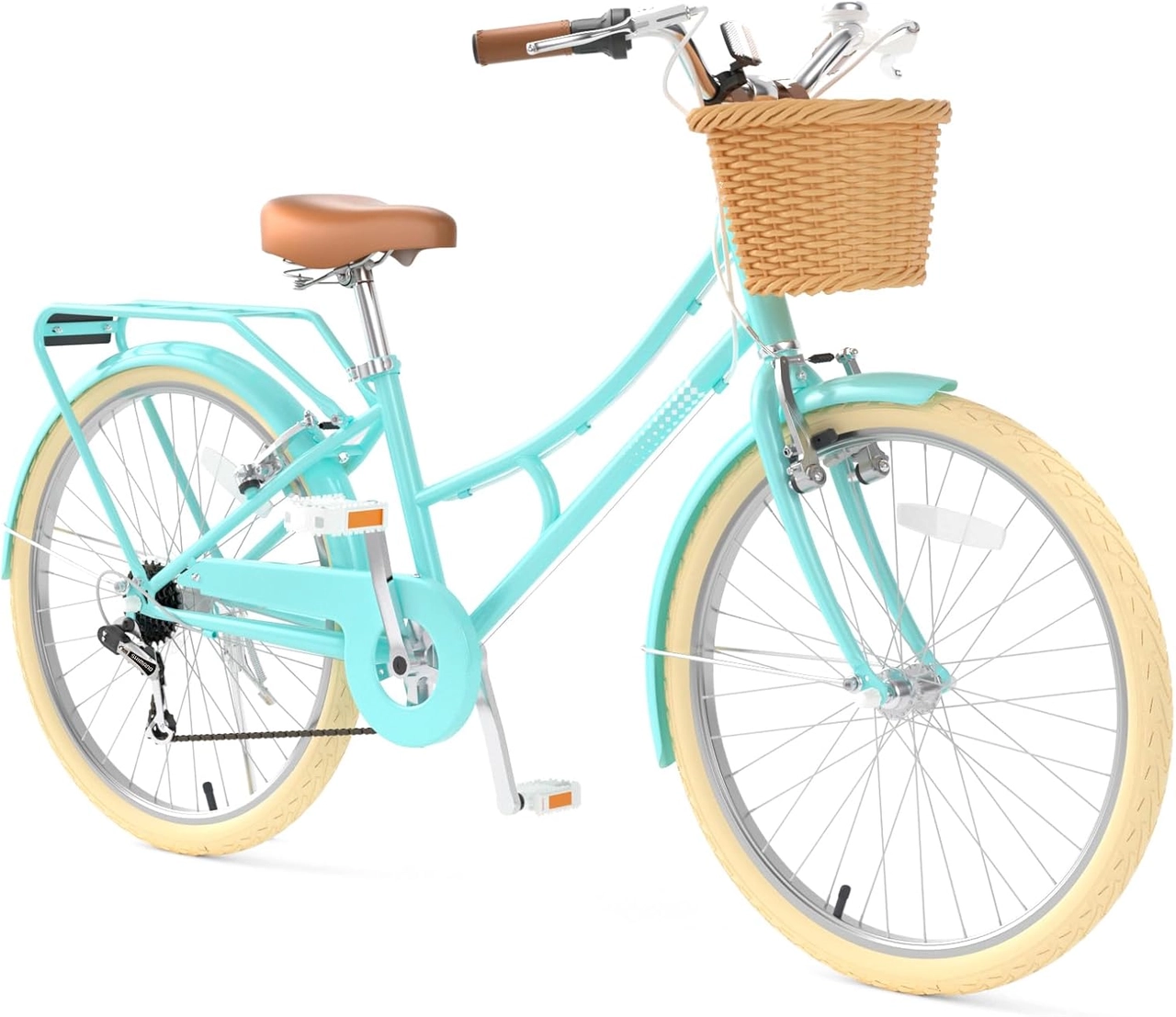 XJD 24-Inch Green Beach Cruiser Bike with U-Brake
Its listed 24-inch variants align with the main starting size for many 10-year-olds; its Pink 26-inch label is relevant only for riders over 60 inches who pass the fit check.
For a child under 54 inches, the first product’s listed 20-inch variants may be relevant to compare. For a child from 54 to 64 inches, the listed 24-inch variants across both products are relevant starting points. A listed 26-inch variant becomes relevant only above 60 inches and after the rider passes the physical control checks. Color should be chosen only after size and control are resolved.
Make the final decision
Begin with 24 inches for a typical 10-year-old, add 20 inches to the comparison below 54 inches, and consider 26 inches only above 60 inches. Reject any bike the child cannot comfortably straddle, reach, brake, steer and stop today. Finally, provide a properly fitting bicycle helmet that sits level, with its straps used according to the helmet manufacturer’s instructions.
Bikes for your next adventure
-

XJD Girls Bike for Kids Ages 3-8, 12/14/16 Inch with Training Wheels – Purple
The XJD Girls Bike in Purple is a training-wheel bicycle for kids ages 3 to 8, f…$149
$169 -

Pink Girls' 12/14/16" Bike by XJD – Basket & Doll Seat
The XJD Pink Girls' Bike with Basket & Doll Seat is made for riders 71–122 cm ta…$75.99
$99.99 -
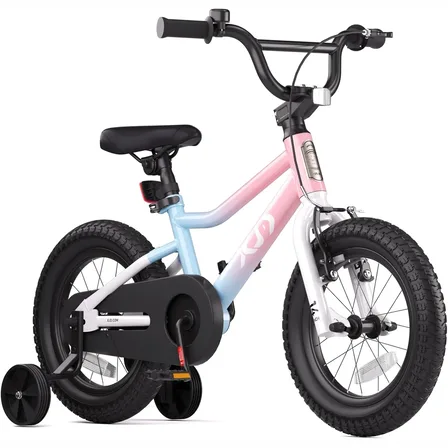
XJD Girls BMX Bike 12/14/16 Inch with Training Wheels – Pink Blue
The XJD Girls BMX Bike in Pink/Blue is built as a first pedal bike for kids roug…$99.99
$119.99