

What size wheels for toddler bike
For most toddlers, start by comparing 12-inch and 14-inch wheels, then confirm fit in person. Measure height and inseam; choose the bike the child can stand over, reach, steer and brake confidently.
Choose by fit, not by the toddler label
Wheel size describes the bicycle, not the child. Two toddlers of the same age can differ enough in height, leg length, reach and confidence to need different sizes. XBikes lists 12-inch wheels as a starting point for ages 3–4 and heights of 34–40 in (86–102 cm). Its 14-inch starting point covers ages 3–6 and heights of 37–45 in (94–114 cm).
Because those ranges overlap, age alone cannot settle the choice. Use the child’s measured height first, then test inseam clearance, reach, brake control and current confidence. Do not move up merely to leave room for growth: an oversized bicycle can be harder to mount, balance, steer and stop.
Measure the child before comparing bikes
- Measure standing height: Have the child stand without shoes, back against a wall, looking straight ahead. Mark the top of the head and measure from the floor.
- Measure inseam: With feet slightly apart, place a firm, thin book between the legs and raise it gently to mimic a saddle. Measure vertically from the floor to the book’s top edge.
- Note current ability: Record whether the child is learning from scratch, already balancing, or confidently steering and stopping. Confidence affects whether a borderline larger size is manageable.
Compare height with the XBikes starting ranges, but use the inseam during the actual stand-over and saddle checks. A wheel-size label does not reveal frame shape or minimum saddle position, so measurements cannot replace trying the exact bicycle.
Make the in-person fit check
Have the child try the assembled bicycle with an adult holding it steady. While straddling the frame, the child should have usable clearance rather than being forced onto tiptoes or against the frame. Seated, the child should reach the handlebars without stretching, twisting or locking the elbows.
Ask the child to turn the bars both ways and operate the brakes. Fingers must reach and control the brake levers; simply touching them is not enough. Watch for shoulders lifting, the torso lunging forward, or hands slipping from the grips. The rider should also be able to start, steer and stop without the bicycle’s size overwhelming their present skill.
If the child falls between 12-inch and 14-inch height ranges, compare both exact bikes. Favor the one that provides controlled starts, turns and stops now. Follow the exact product manual for assembly, adjustments, maintenance and compatibility, or use a qualified bicycle mechanic when the correct setup is uncertain.
Where the supplied XBikes options fit
The Pink Girls' 12/14/16" Bike by XJD – Basket & Doll Seat is relevant because its available SKU labels include 12 Inch, 14 Inch and 16 Inch, allowing the two common toddler starting points to be compared within one catalog listing. The 16 Inch option is a separate larger size, not an equivalent substitute.
These particular catalog options help answer the sizing question by showing the exact 12-inch and 14-inch labels a parent may compare after measuring, plus a 16-inch reference for children who already meet that larger starting range and pass an individual fit check.
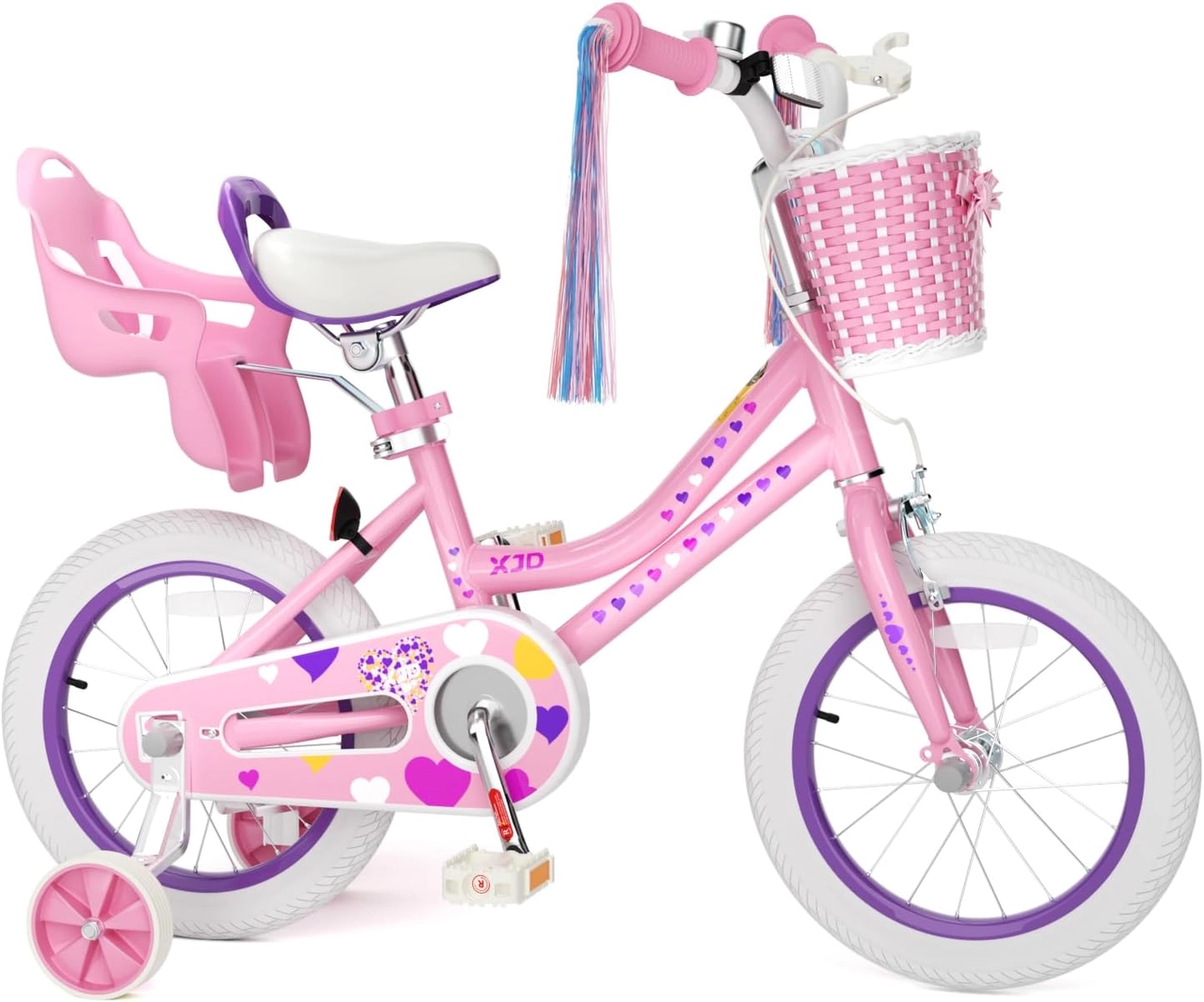
For context, XBikes places 16-inch wheels at ages 4–7 and heights of 40–48 in (102–122 cm). That does not make 16 inches appropriate for a smaller toddler, even if the bicycle is intended to last longer. The product title and SKU labels establish available sizes only; they do not prove that any one size fits a particular child.
Use this quick decision sequence
- If height is 34–40 in (86–102 cm), try a 12-inch bicycle first.
- If height is 37–45 in (94–114 cm), include a 14-inch bicycle in the comparison.
- If the child is within the overlap, test both and judge stand-over clearance, reach, brake control and confidence.
- Consider 16 inches only from the supplied 40–48 in (102–122 cm) starting range, followed by the same fit checks.
- Reject any size the child cannot comfortably straddle, steer or stop, regardless of the age guideline.
Before riding, add a properly fitting bicycle helmet. It should sit level, and its straps should be adjusted according to the helmet manufacturer’s instructions. Recheck bicycle fit as the child grows and after meaningful saddle or handlebar adjustments.
The practical answer
Measure height and inseam today, use 12 inches and 14 inches as the initial toddler comparison, and let an in-person control check decide between them. Buy for confident use now—not future growth—and leave 16 inches for a child who reaches its height range and can fully control the exact bike.
Bikes for your next adventure
-

XJD Kids Bike for Girls – Pink, 12/14/16/20 Inch with Training Wheels
The XJD Kids Bike for Girls in Pink is a training-wheel bike built to carry your…$139
$159 -
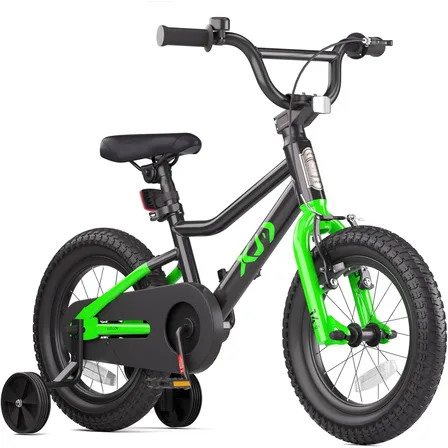
Black XJD Kids' BMX Bicycle with Training Wheels
The XJD Kids' BMX Bicycle with Training Wheels is built for children roughly 3 t…$99.99
$119.99 -

Light Pink XJD Girls' Bicycle with Basket & Training Wheels
The Light Pink XJD Girls' Bicycle with Basket & Training Wheels is a retro-style…$109.99
$129.99