

What yesr should my.kid ride a bike
Your child can start riding a bike when they fit an appropriate wheel size and can control it confidently; age is only a starting point, not the deciding test.
Start with height, not a birthday
There is no single year when every child should ride. Measure your child’s standing height without shoes, then use the XBikes starting points below to identify likely wheel sizes. If your child falls into overlapping ranges, compare both sizes in person rather than automatically choosing the larger one.
| Wheel size | Starting age | Rider height |
|---|---|---|
| 12 Inch | 3–4 | 34–40 in / 86–102 cm |
| 14 Inch | 3–6 | 37–45 in / 94–114 cm |
| 16 Inch | 4–7 | 40–48 in / 102–122 cm |
| 18 Inch | 5–9 | 43–52 in / 109–132 cm |
| 20 Inch | 7–12 | 48–60 in / 122–152 cm |
| 24 Inch | 10–14 | 54–64 in / 137–163 cm |
| 26 Inch | Youth and adults | Over 60 in / 153 cm |
These ranges narrow the search, but they do not confirm fit. Body proportions, coordination and confidence differ even among children of the same age and height.
Measure inseam and check the actual bike
Measure inseam by having your child stand straight against a wall, with shoes off and feet slightly apart. Place a rigid book between the legs, raise it gently to mimic the bicycle saddle, and measure from the floor to the book’s top edge. Record both height and inseam before shopping.
Next, have the child try the exact bicycle. The American Academy of Pediatrics recommends trying a bike rather than buying an oversized model for future growth. Check that the child can:
- Stand over the bike without the frame pressing into the body.
- Get on and off without being lifted or catching a leg.
- Reach the handlebar without locking the elbows or stretching forward.
- Steer while looking ahead and maintaining balance.
- Reach and operate the available brakes with control.
- Start, stop and put a foot down without panic.
If any of these checks fail, adjust the bike only as its manual permits or compare another size. A wheel-size label alone cannot show whether the frame geometry and controls suit an individual child.
Is your child ready to ride now?
A correctly sized bike may still be too demanding today. Look for current readiness: your child wants to practise, follows simple directions, keeps attention on the riding area and can respond when asked to slow or stop. Begin in a flat, open place away from traffic and obstacles, with close adult supervision.
Do not use a larger bike as a shortcut to a longer useful life. A child who cannot manage the reach, stand-over clearance or braking controls needs a different fit, more skill development, or more time—not pressure to “grow into” the bicycle.
How the available XBikes options compare
The supplied catalog options help when the height-and-fit check points toward 12 Inch, 14 Inch or 16 Inch wheels. The Black XJD Kids' BMX Bicycle with Training Wheels is listed in Kids' BMX Bikes with 12 Inch, 14 Inch and 16 Inch choices. The Pink Girls' 12/14/16" Bike by XJD – Basket & Doll Seat is listed in Training Wheel Bikes with the same three wheel-size choices.
Because both models cover those three sizes, parents can compare the size indicated by the child’s measurements without treating the wording or styling of either title as proof of fit.
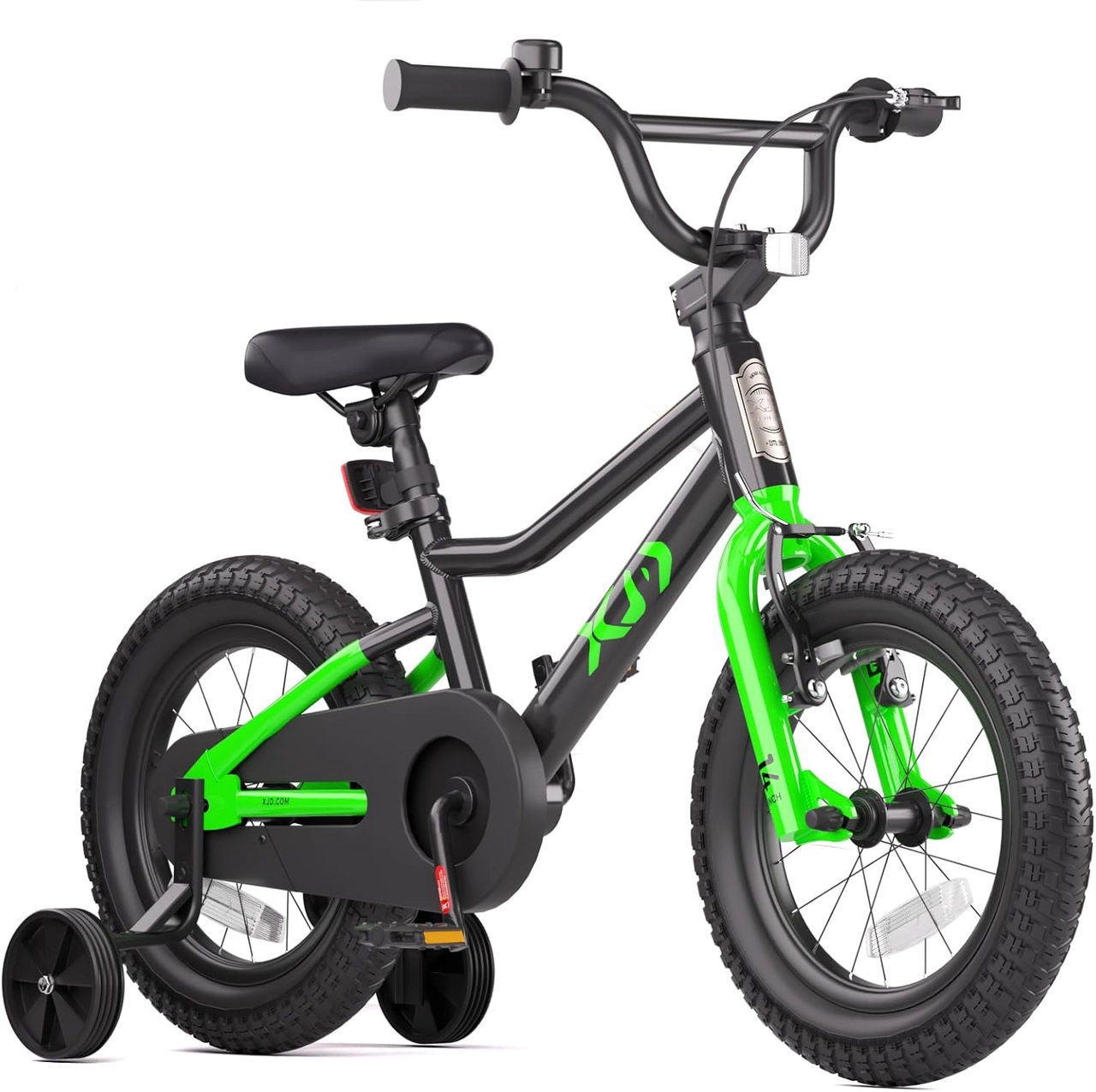 Black XJD Kids' BMX Bicycle with Training Wheels
Relevant when an individual fit check points to a 12 Inch, 14 Inch or 16 Inch bicycle; this Kids' BMX Bikes model is offered in all three supplied wheel-size labels.
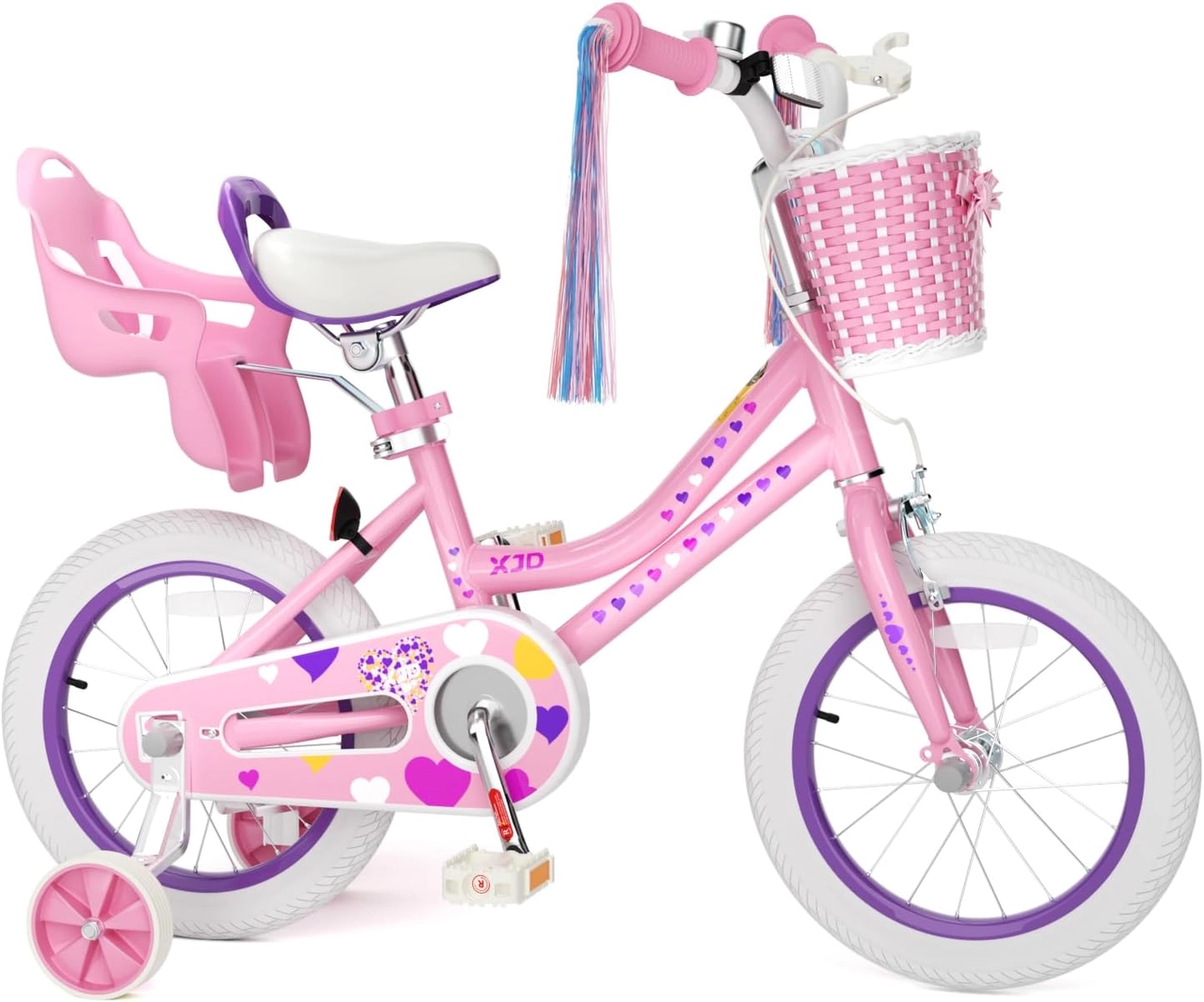 Pink Girls' 12/14/16" Bike by XJD – Basket & Doll Seat
A Training Wheel Bikes comparison option available in 12 Inch, 14 Inch and 16 Inch labels. Its catalog title does not replace checking the child’s height, inseam, reach and control.
These products are relevant only if a 12 Inch, 14 Inch or 16 Inch option fits the child in person. If measurements point to 18 Inch, 20 Inch, 24 Inch or 26 Inch wheels, neither supplied product offers that size; they are comparison points for nearby catalog options, not substitutes, and another wheel size is not equivalent.
Make the final fit and safety check
Before riding, confirm that the selected configuration matches the exact product manual. Follow that manual for assembly, maintenance, compatibility, load limits and torque. If instructions are missing, unclear, or the bicycle does not operate correctly, use a qualified bicycle mechanic rather than improvising a procedure.
Add a properly fitted bicycle helmet. U.S. Consumer Product Safety Commission guidance says the helmet should sit level and its straps should be used according to the helmet manufacturer’s instructions. Replace guesswork with a fresh fit check whenever the child grows noticeably or begins struggling with control.
What to do next
- Measure your child’s height and inseam.
- Use height to shortlist one or two wheel sizes from the table.
- Have the child try each candidate and check stand-over, reach, braking and control.
- Choose only the size the child can manage confidently now.
The right year for your child to ride is therefore the year they can fit and control an appropriately sized bicycle—not simply the year they reach a particular birthday.
Bikes for your next adventure
-
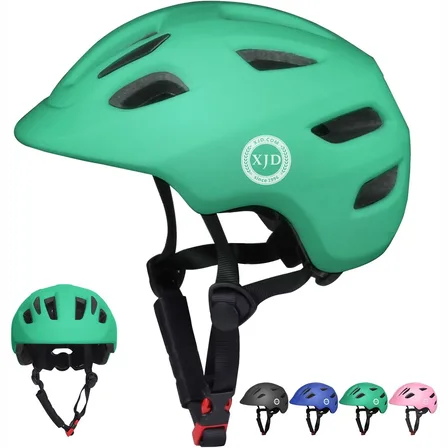
Green XJD Toddler Bike Helmet with Adjustable Fit, XS (46–51 cm)
The XJD toddler bike helmet in Green is built for the youngest riders — the size…$20.39
$23.99 -

Kids Bike Helmet by XJD for Boys & Girls – Black, Blue, Green, Pink, Purple
The XJD Kids Bike Helmet covers a wide 2-to-8-year age range thanks to two head-…$59.99
-

Kids Bike Helmet by XJD for Girls – Pink
The XJD Kids Bike Helmet in Pink is a lightweight multi-sport helmet for girls r…$59.99
$99