

When can baby sit in bike trailer
A baby can sit in a bike trailer only when they can sit unsupported, hold their head steady while wearing a helmet, and meet every minimum in the trailer manual.
Use readiness, not a birthday alone
There is no single birthday that proves a baby is ready. Before riding, confirm that the child can remain upright without being propped up and can maintain stable head and neck control for the whole trip. A helmet adds weight, so check control while the properly fitted helmet is on.
Then compare the child’s age, size and developmental readiness with the exact trailer manufacturer’s instructions. Some trailers, seats or infant accessories may have different restrictions. An accessory that permits strolling does not automatically permit cycling. If the manual is missing or unclear, contact the manufacturer rather than guessing.
For a premature baby, a child with delayed development, or any concern about head, neck or trunk control, ask the child’s pediatrician before towing them.
A quick pre-ride decision check
- Observe unsupported sitting: The baby should stay upright without cushions, straps or an adult holding them in position.
- Check helmeted head control: The head should remain steady rather than tipping forward, backward or sideways.
- Read the exact trailer manual: Confirm its minimum rider requirements, approved seating arrangement, harness use and any restrictions on accessories.
- Check the towing bicycle: Follow both manuals for hitch compatibility, assembly, maintenance and load limits. Use a qualified bicycle mechanic if compatibility or setup is uncertain.
- Make a stationary fit check: Secure the child exactly as directed and confirm that the harness and helmet do not interfere with each other.
If any one of these checks fails, wait. An insert, pillow or improvised support cannot replace the required developmental readiness or override the manual.
What to measure and compare
Record the child’s current measurements required by the trailer maker, then compare them with the manual rather than relying on clothing size or an estimate. Check the trailer’s stated child and cargo limits, seating position and harness adjustment. No universal load or fit number should be substituted for the exact product documentation.
The helmet must be the correct size, sit level on the head and use its straps according to the helmet manufacturer’s instructions. Replace guesswork with a fresh fit check whenever the child grows, clothing changes substantially or another child uses the trailer.
Make the first outing deliberately short
Start with the trailer stationary, then take a brief ride on a smooth, low-traffic route. Stop immediately if the child slumps, cannot keep their head steady, appears distressed, or if the helmet or harness shifts. Recheck the hitch, wheels, tires and fasteners as directed by the trailer and bicycle manuals before later rides.
Weather and route conditions matter too. Avoid circumstances in which heat, cold, rough surfaces or traffic make it hard to monitor the passenger or control the towing bicycle. Never exceed the maker’s operating limits.
How the supplied bike relates to this question
The XJD Girls' Bike with Training Wheels, 12/14/16/20 Inch – Purple is a training-wheel bicycle offered in 12 Inch, 14 Inch, 16 Inch and 20 Inch labels. It is not a baby trailer, so it cannot establish whether an infant is ready to ride as a trailer passenger. These sizes are useful only as future bicycle-fit comparison points once a child is ready to ride a bicycle.

XBikes’ starting points are 12 Inch for heights 34–40 in (86–102 cm), generally ages 3–4; 14 Inch for 37–45 in (94–114 cm), generally ages 3–6; 16 Inch for 40–48 in (102–122 cm), generally ages 4–7; and 20 Inch for 48–60 in (122–152 cm), generally ages 7–12. Age is secondary: measure height and inseam, then check stand-over clearance, reach, brake control and confidence on the actual bicycle. Do not buy an oversized bicycle merely for growth.
When the answer is “not yet”
Do not use the trailer for cycling if the baby cannot sit unsupported, loses head control under the helmet’s weight, falls below any manual requirement, or cannot be secured exactly as instructed. Also postpone the ride if the hitch, harness, helmet fit or towing-bike compatibility remains uncertain.
Your next step is simple: test unsupported sitting and helmeted head control, open the exact trailer manual, and proceed only when the child passes both the developmental check and every manufacturer requirement.
Bikes for your next adventure
-

Kids Bike Helmet by XJD for Girls – Pink
The XJD Kids Bike Helmet in Pink is a lightweight multi-sport helmet for girls r…$59.99
$99 -

Blue XJD Kids Bike Helmet for Boys & Girls
The Blue XJD Kids Bike Helmet is a lightweight, adjustable multi-sport helmet fo…$59.99
$99 -
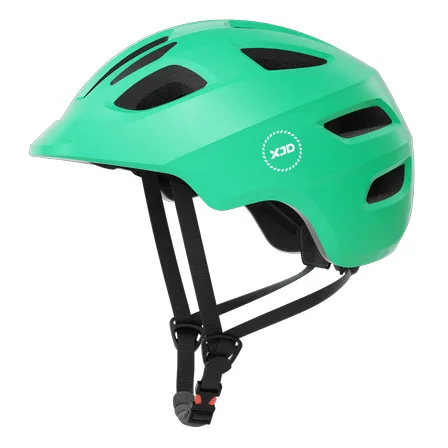
Green XJD Kids Bike Helmet for Boys & Girls
The Green XJD Kids Bike Helmet is a lightweight multi-sport helmet for toddlers …$59.99
$99