

When can you teach a kid to ride a bike
Most children can start learning to ride between ages 3 and 6, but readiness matters more than the birthday. Measure height and inseam, then check balance, reach, braking and confidence on the actual bicycle.
Look for readiness before choosing a bike
A child is ready for a first lesson when they can follow simple directions, walk or run steadily, and show interest without being pressured. They should be able to sit on the bicycle, hold the handlebar comfortably and remain attentive long enough for a short practice session.
Balance is especially important. Before expecting independent pedaling, check whether the child can coast or move forward while staying upright and looking ahead. If steering, stopping or putting a foot down still causes panic, continue with brief balance-focused sessions.
There is no deadline. A confident four-year-old may learn sooner than an uncertain six-year-old, while another child may need more time for coordination or comfort. Stop when frustration or fatigue begins and try again on another day.
Measure the child and check the actual fit
Measure standing height without shoes. For inseam, have the child stand upright with feet slightly apart and measure from the floor to the crotch. Compare height with the XBikes starting points below, but use the inseam and an in-person fit check to confirm the choice.
| Wheel size | Age starting point | Rider height |
|---|---|---|
| 12 Inch | 3–4 | 34–40 in / 86–102 cm |
| 14 Inch | 3–6 | 37–45 in / 94–114 cm |
| 16 Inch | 4–7 | 40–48 in / 102–122 cm |
| 18 Inch | 5–9 | 43–52 in / 109–132 cm |
| 20 Inch | 7–12 | 48–60 in / 122–152 cm |
| 24 Inch | 10–14 | 54–64 in / 137–163 cm |
| 26 Inch | Youth and adults | Over 60 in / 153 cm |
On the bicycle, check that the child can stand over it, reach the handlebar without stretching, turn it without losing control and operate the brakes reliably. Confidence also counts: a technically plausible size is not suitable if the bicycle feels intimidating. Do not buy an oversized bicycle for future growth.
Choose a learning method that matches the child
Begin in a flat, open area away from traffic, slopes and obstacles. A properly fitting bicycle helmet should sit level, fit securely and have its straps adjusted according to the helmet manufacturer’s instructions.
- Start with walking the bicycle and practising deliberate stops.
- Let the child practise balance and steering at a comfortable pace.
- Add pedaling only after they can remain composed while moving.
- Practise starting, riding a short straight line, turning and stopping.
Training wheels can provide support while a child becomes familiar with pedaling and steering, but they do not remove the need to learn balance. Whether they help depends on the child’s present skills and confidence. Keep lessons short, calm and focused on one task at a time.
How the supplied 12, 14 and 16 Inch options compare
The two supplied BMX catalog options help answer when lessons can begin because both offer 12 Inch, 14 Inch and 16 Inch SKU labels, covering XBikes starting points from ages 3–4 through 4–7 and heights from 34–48 in / 86–122 cm. Those ranges overlap, so the child must try the chosen size rather than selecting by age alone.
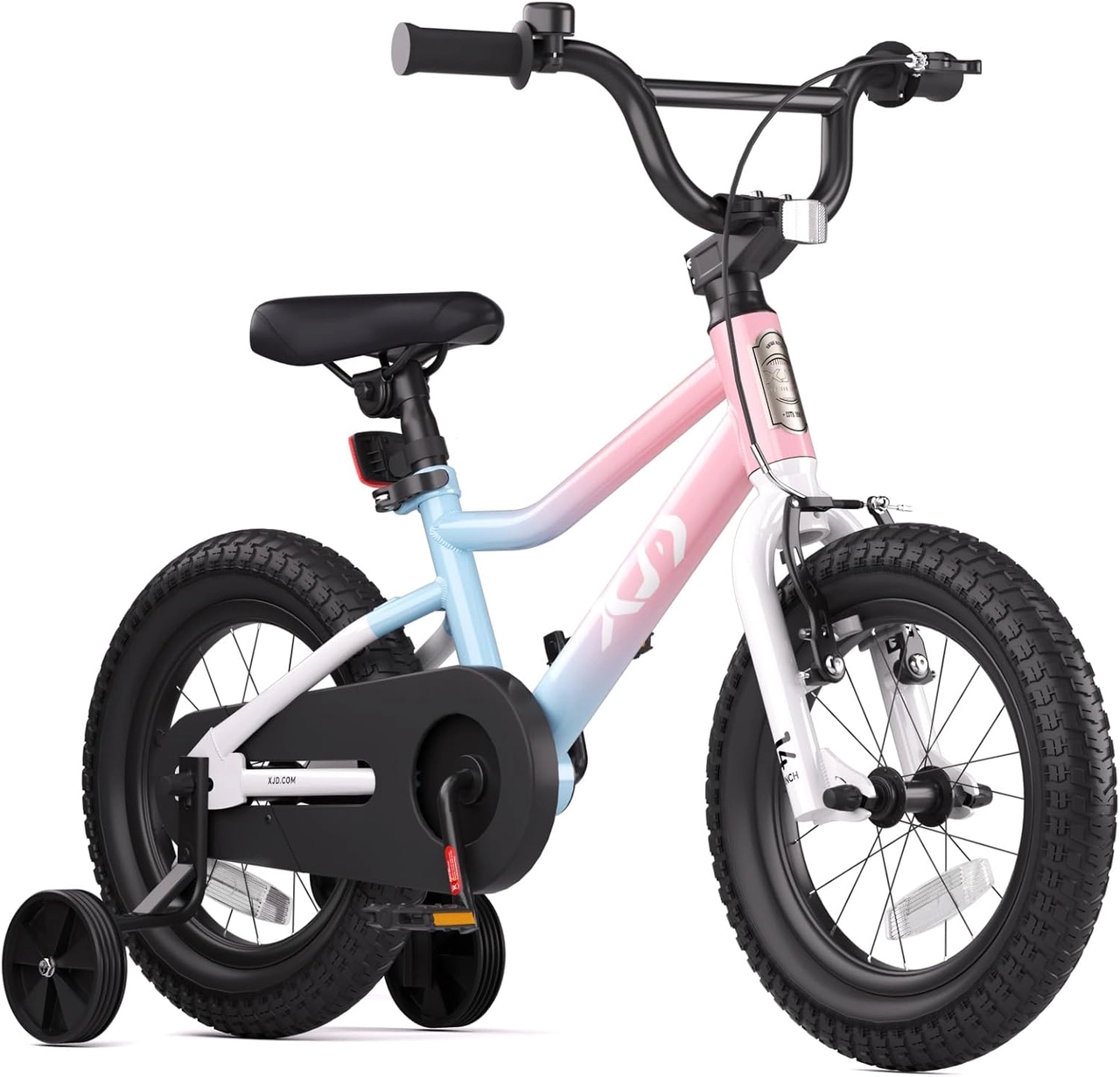 XJD Girls BMX Bike 12/14/16 Inch with Training Wheels – Pink Blue
Available in 12 Inch, 14 Inch and 16 Inch labels with training wheels in the title; relevant when the child’s measurements and individual fit check support one of those sizes.
 XJD Boys & Girls BMX Bike with Training Wheels, 12/14/16" – Blue
A Kids' BMX Bikes option offered with 12 Inch, 14 Inch and 16 Inch labels. Use measured height, inseam, reach, brake control and confidence to determine whether any listed size is relevant.
XJD Girls BMX Bike 12/14/16 Inch with Training Wheels – Pink Blue is listed in Kids' BMX Bikes and is available with 12 Inch, 14 Inch and 16 Inch labels. XJD Boys & Girls BMX Bike with Training Wheels, 12/14/16" – Blue is in the same category and has the same three supplied size labels.
Based on the provided facts, their useful comparison is limited to title wording, color wording and the shared wheel-size choices. No supplied information establishes differences in brakes, weight, materials, geometry or other components. If the child measures outside the applicable height starting points, neither product should be treated as a substitute for a properly fitting size.
Decide what to do next
Measure the child now, identify the likely wheel size from the table, and arrange a fit check on that exact size. Confirm comfortable stand-over clearance, natural reach, controlled steering, dependable brake operation and a calm willingness to practise.
If a 12, 14 or 16 Inch size fits, the two supplied products are relevant catalog options because each is offered in all three labels and includes training wheels in its title. Choose between them only on the verified distinctions shown, then consult the exact product manual or a qualified bicycle mechanic for assembly, maintenance, compatibility, load limits and torque guidance.
If the fit or confidence check fails, wait and reassess instead of sizing up. The right time to teach your child is when a correctly sized bicycle lets them balance, reach, steer and stop with control—and they are willing to try.
Bikes for your next adventure
-

Kids Bike Helmet by XJD for Boys & Girls – Black, Blue, Green, Pink, Purple
The XJD Kids Bike Helmet covers a wide 2-to-8-year age range thanks to two head-…$59.99
-

Kids Bike Helmet by XJD for Girls – Pink
The XJD Kids Bike Helmet in Pink is a lightweight multi-sport helmet for girls r…$59.99
$99 -

XJD Kids Bike for Girls – Pink, 12/14/16/20 Inch with Training Wheels
The XJD Kids Bike for Girls in Pink is a training-wheel bike built to carry your…$139
$159