

When do children learn to ride a bike
Children learn to ride a bike at different times; readiness matters more than a birthday. Measure height and inseam, then check balance, reach, braking and confidence on the actual bike.
When is a child ready to learn?
A child is ready to begin when they want to try, can follow simple directions and can stay attentive in a quiet practice area. They should be able to hold the handlebar comfortably, place their feet where the learning method requires and stop the bicycle without panic.
Age can suggest where to start, but it cannot confirm fit or readiness. A confident younger child may progress sooner than an older child who needs more time. Avoid pressure or comparisons with siblings and friends; short, positive sessions usually give a clearer picture of readiness.
Measure before choosing a wheel size
Measure the child barefoot against a wall for height. For inseam, have them stand naturally and measure from the floor to the crotch. Record both measurements rather than relying on clothing size or age.
Use the XBikes ranges below as starting points only. Overlapping sizes are intentional: where two sizes appear possible, the correct decision depends on the child's stand-over clearance, reach, brake control and present confidence.
| Wheel size | Starting age | Rider height |
|---|---|---|
| 12 Inch | 3–4 | 34–40 in / 86–102 cm |
| 14 Inch | 3–6 | 37–45 in / 94–114 cm |
| 16 Inch | 4–7 | 40–48 in / 102–122 cm |
| 18 Inch | 5–9 | 43–52 in / 109–132 cm |
| 20 Inch | 7–12 | 48–60 in / 122–152 cm |
| 24 Inch | 10–14 | 54–64 in / 137–163 cm |
| 26 Inch | Youth and adults | Over 60 in / 153 cm |
Do not buy an oversized bicycle merely to leave room for growth. The child should try the bike. Check that they can stand over it appropriately, steer without stretching, remain balanced and reach and operate the brakes with control.
How to compare the available 12, 14 and 16 Inch options
The supplied catalog choices are relevant to children whose measurements place them around the 12, 14 or 16 Inch starting ranges. All three let a parent compare those same wheel-size labels, while their catalog categories and styling differ.
Flower Pink XJD Girls Bike with Doll Seat & Basket and Purple XJD Girls' Bike with Doll Seat & Basket are cataloged as Training Wheel Bikes. Each is offered with 12 Inch, 14 Inch and 16 Inch labels. Black XJD Kids' BMX Bicycle with Training Wheels is cataloged under Kids' BMX Bikes and carries the same three size labels.
These particular options help answer the learning-age question because their 12, 14 and 16 Inch choices cover the XBikes starting ranges from ages 3–7 and heights 34–48 in / 86–122 cm, subject to the range for each size and an individual fit check.
 Flower Pink XJD Girls Bike with Doll Seat & Basket
A Training Wheel Bike offered in 12 Inch, 14 Inch and 16 Inch labels, relevant for comparing measured riders within those XBikes starting ranges after an individual fit check.
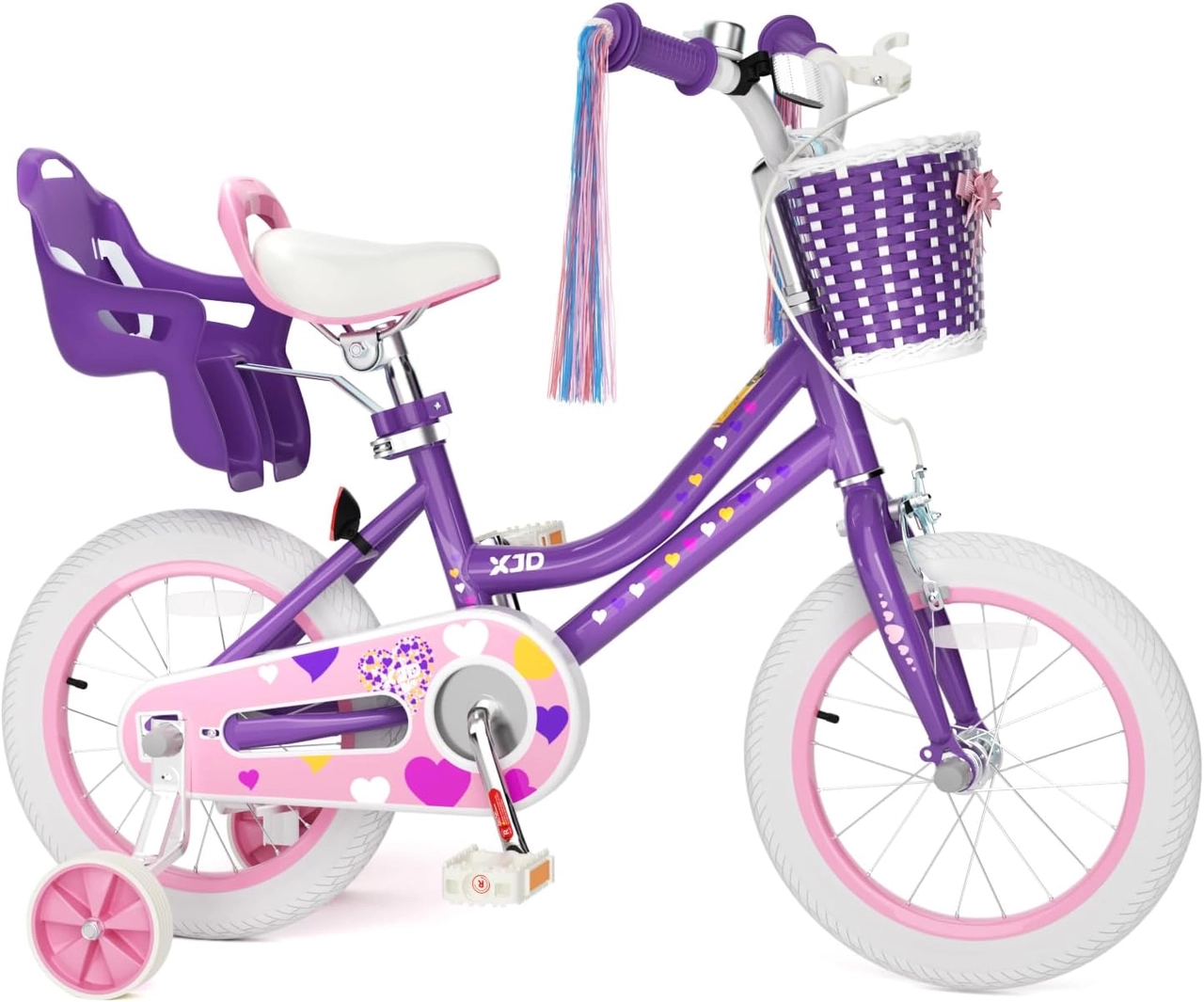 Purple XJD Girls' Bike with Doll Seat & Basket
This Training Wheel Bike has 12 Inch, 14 Inch and 16 Inch options, making it relevant when measurements point to one of those ranges and the child can try the fit.
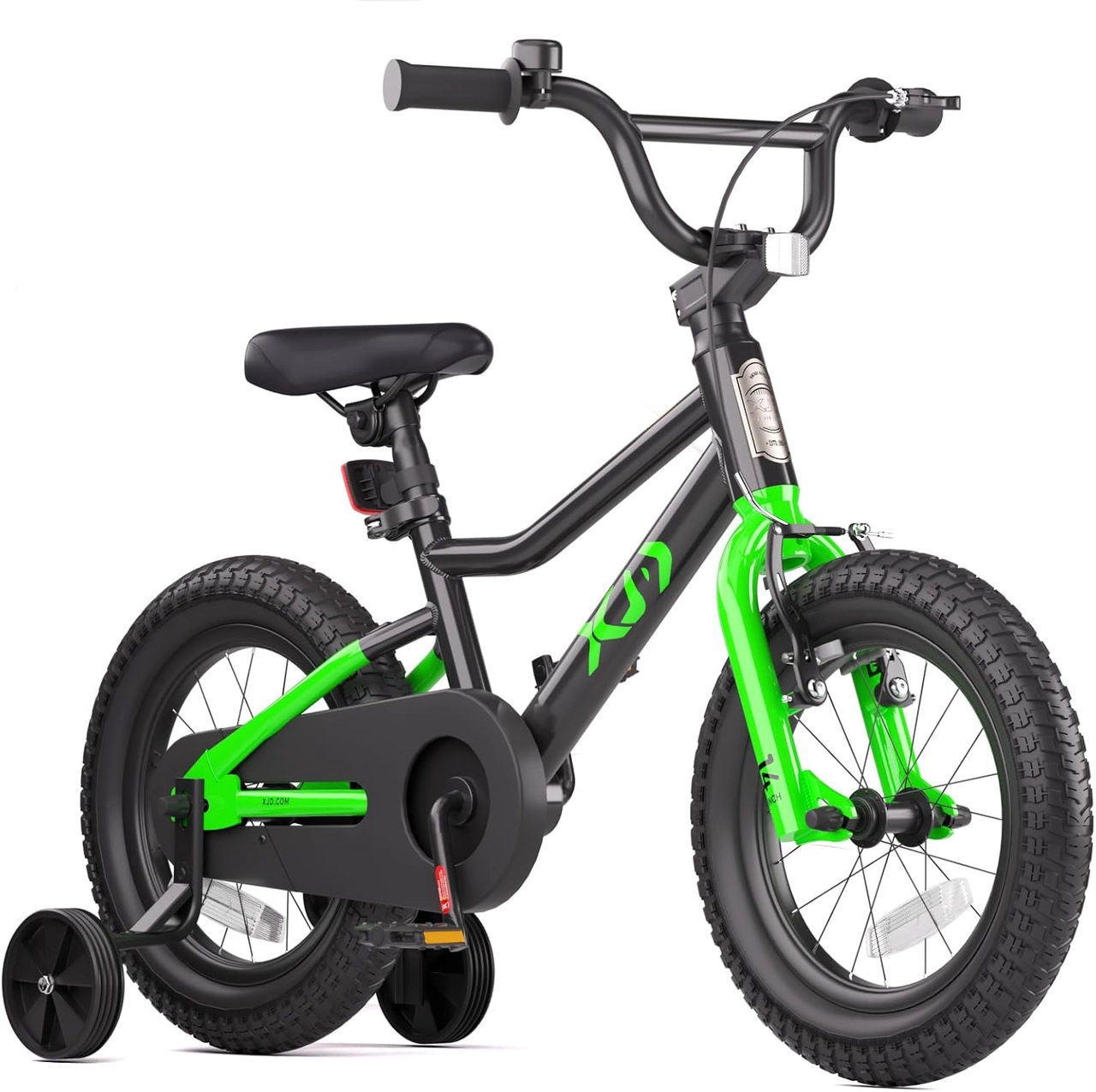 Black XJD Kids' BMX Bicycle with Training Wheels
Cataloged as a Kids' BMX Bike, this model has training wheels and 12 Inch, 14 Inch and 16 Inch labels for size comparison, subject to measured fit and control.
If the child's measurements indicate 18, 20, 24 or 26 Inch, these products are only smaller, nearest-range comparison points; they are not substitutes for the required wheel size. Likewise, sharing a size label does not prove that reach, stand-over clearance or brake access will suit a particular rider.
What to do during the first practice sessions
- Choose a flat, open area away from traffic, obstacles and steep slopes.
- Begin with brief practice focused on starting, looking ahead, steering and stopping under control.
- Let the child build balance at a comfortable pace. End the session before tiredness turns into frustration.
- Recheck fit if the child repeatedly stretches for the controls, struggles to steady the bike or cannot stop predictably.
Training wheels may be relevant because all three supplied products include that wording in their catalog facts or exact titles. Their presence does not replace a fit check, active adult supervision or practice with braking and steering. Follow the exact product manual for assembly, adjustment, maintenance, compatibility and load limits; use a qualified bicycle mechanic when the instructions or setup are unclear.
Helmet fit and the final decision
A bicycle helmet must fit properly, sit level and have its straps adjusted according to the helmet manufacturer's instructions. A helmet that tilts back, shifts noticeably or cannot be secured as directed needs correction before riding.
The practical answer is to start when the child is willing and able to control a correctly fitted bicycle. Measure height and inseam today, compare the matching XBikes size range, and have the child try that size. Proceed only when stand-over, reach, braking, balance and confidence all support controlled practice.
Bikes for your next adventure
-

Blue XJD Girls Bike with Training Wheels – 12/14/16 Inch
If you're shopping for a first pedal bike for a daughter roughly 3 to 8 years ol…$149
$169 -

Black XJD Kids Bike for Boys – 12, 14 & 16 Inch Sizes
For a son between roughly 3 and 8 years old, the XJD Kids Bike in Black covers t…$169
$199 -

XJD Kids Bike for Girls – Pink, 12/14/16/20 Inch with Training Wheels
The XJD Kids Bike for Girls in Pink is a training-wheel bike built to carry your…$139
$159