

When do kids start riding bikes
Most kids start riding a bike around ages 3–6, but readiness and fit matter more than a birthday. Measure your child, check control, and begin with a correctly sized bike.
When is a child ready to start?
A child may be ready when they want to try, can follow simple directions, and can coordinate balancing, steering and stopping during a supervised practice session. Hesitation is useful information: waiting and trying again later is better than turning riding into a struggle.
Age provides only a starting point. Two children of the same age can differ in height, proportions, reach and confidence. The practical answer to “when” is therefore: when the child fits an appropriate bike and can begin learning while remaining in control.
Measure before choosing a wheel size
Measure the child’s height without shoes, then measure the inseam from the floor to the crotch. Compare those measurements with the bicycle’s actual geometry and stand-over clearance. Have the child try the bike whenever possible; do not buy an oversized model simply to allow room for growth.
These XBikes ranges are starting points, not guarantees of fit:
| Wheel size | Starting age | Rider height |
|---|---|---|
| 12 Inch | 3–4 | 34–40 in / 86–102 cm |
| 14 Inch | 3–6 | 37–45 in / 94–114 cm |
| 16 Inch | 4–7 | 40–48 in / 102–122 cm |
| 18 Inch | 5–9 | 43–52 in / 109–132 cm |
| 20 Inch | 7–12 | 48–60 in / 122–152 cm |
| 24 Inch | 10–14 | 54–64 in / 137–163 cm |
| 26 Inch | Youth and adults | Over 60 in / 153 cm |
Where ranges overlap, do not choose by age alone. The child’s measured height, inseam, reach, brake control and present confidence should decide between sizes.
Check the fit with the child on the bike
A promising chart match still needs an individual check. Ask the child to stand over the bicycle and confirm that they are not crowded against the frame. Seated, they should be able to hold the handlebars without an uncomfortable stretch or awkward body position.
Next, check whether they can steer deliberately and reach and operate the brakes with control. A bike is not a suitable fit merely because the child can sit on its saddle. If stand-over, reach or braking is uncertain, compare another size or ask a qualified bicycle mechanic to assess the fit.
How the supplied 12-, 14- and 16-inch bikes help
The two catalog options make the most sense when the child’s measurements fall within the supplied 12-, 14- or 16-inch starting ranges and training wheels suit the intended learning approach. Both offer the same three labeled wheel-size choices, so their relevance comes from fit and catalog presentation rather than a different size range.
XJD Girls BMX Bike 12/14/16 Inch with Training Wheels – Pink Blue is listed as a Kids' BMX Bike with 12 Inch, 14 Inch and 16 Inch options. XJD Boys & Girls BMX Bike with Training Wheels, 12/14/16" – Blue is also a Kids' BMX Bike with those three available size labels. Neither supplied listing includes 18-, 20-, 24- or 26-inch options.
These particular catalog options help answer the title because their sizes cover XBikes starting points from ages 3–7 and heights 34–48 inches / 86–122 cm, with overlapping ranges that demonstrate why measurement and a physical fit check matter.
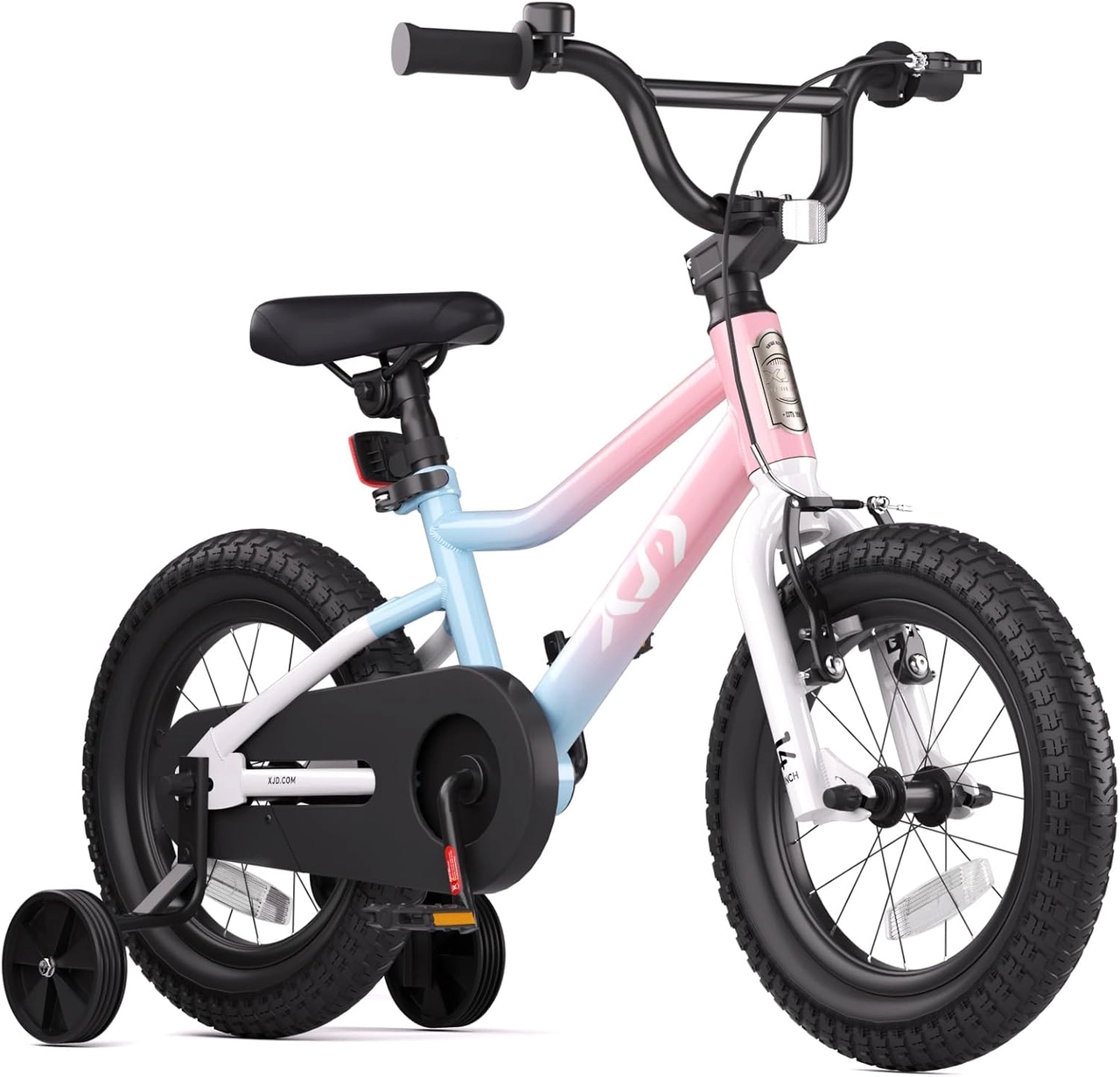 XJD Girls BMX Bike 12/14/16 Inch with Training Wheels – Pink Blue
A Kids' BMX Bike offered in 12 Inch, 14 Inch and 16 Inch labels with training wheels. It is relevant when the rider’s measurements and individual fit check support one of those sizes.
 XJD Boys & Girls BMX Bike with Training Wheels, 12/14/16" – Blue
A Kids' BMX Bike with training wheels and 12 Inch, 14 Inch and 16 Inch size labels. Compare the rider’s height, inseam, reach, brake control and confidence before selecting among them.
What to do for the first rides
- Choose a flat practice area away from traffic and obstacles, with close adult supervision.
- Fit a bicycle helmet so it sits level and secure, using its straps according to the helmet manufacturer’s instructions.
- Let the child practice mounting, looking ahead, steering and stopping before adding distance or speed.
- Keep early sessions short enough that fatigue does not replace control or confidence.
Training wheels can support one learning approach, but their presence does not correct a poor fit. Follow the exact bicycle manual for assembly, adjustments, maintenance and any limits not stated here. If the instructions are missing or the setup is uncertain, use a qualified bicycle mechanic.
Make the start-or-wait decision
Start now if your child is willing, falls within a relevant height range, fits the actual bicycle, can reach its controls and can practice under supervision. Compare sizes if measurements overlap. Wait, or choose a different wheel size, if the child is stretched, crowded, unable to control the brakes or not yet confident. Measure first, conduct the fit check, then let readiness—not age alone—set the day riding begins.
Bikes for your next adventure
-

Blue XJD Girls Bike with Training Wheels – 12/14/16 Inch
If you're shopping for a first pedal bike for a daughter roughly 3 to 8 years ol…$149
$169 -
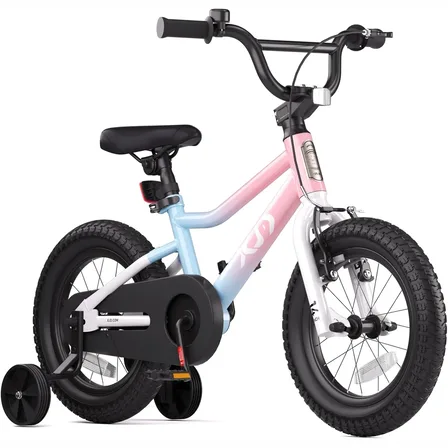
XJD Girls BMX Bike 12/14/16 Inch with Training Wheels – Pink Blue
The XJD Girls BMX Bike in Pink/Blue is built as a first pedal bike for kids roug…$99.99
$119.99 -

26-Inch XJD Beach Cruiser Bike for Girls – Purple, V-Brake
This XJD 26-inch purple beach cruiser is sized for big kids and teens — suggeste…$218.49
$229.99