

When should a child learn to ride a bike
A child should learn to ride a bike when they are willing to practise and can control a correctly fitted bicycle—not simply when they reach a certain age. For many children, the XBikes starting point is a 12-inch bike at ages 3–4 and 34–40 in (86–102 cm), but an individual fit check decides.
Use readiness and fit, not a birthday
There is no single correct learning age. A child is ready to begin when they show interest, can follow simple directions, and have enough balance and coordination to steer, stop and remain aware of their surroundings. Hesitation is a reason to slow down, not to move to a larger bicycle.
Age ranges help narrow the search, but measured height, inseam, reach, brake control and current confidence matter more. Have the child try the bicycle. Do not buy an oversized model for future growth: extra size can make starting, stopping and correcting a wobble harder to control.
Measure before choosing a wheel size
- Measure standing height: Have the child stand straight without shoes against a wall. Record the result in inches or centimetres.
- Measure inseam: With feet slightly apart, measure from the floor to the crotch. Use this to compare the child with the bicycle’s stand-over height and available seat adjustment.
- Check reach: On the actual bicycle, the child should be able to hold the handlebar and steer without an uncomfortable stretch.
- Check stopping control: Confirm that the child can reach and operate the bicycle’s brakes while maintaining control.
Geometry can vary even among bicycles with the same wheel size. If stand-over dimensions, adjustment limits, assembly requirements or other specifications are not available, consult the exact product manual or a qualified bicycle mechanic.
Compare the measurements with these starting points
| Wheel size | Starting age | Rider height |
|---|---|---|
| 12 Inch | 3–4 | 34–40 in / 86–102 cm |
| 14 Inch | 3–6 | 37–45 in / 94–114 cm |
| 16 Inch | 4–7 | 40–48 in / 102–122 cm |
| 18 Inch | 5–9 | 43–52 in / 109–132 cm |
| 20 Inch | 7–12 | 48–60 in / 122–152 cm |
| 24 Inch | 10–14 | 54–64 in / 137–163 cm |
| 26 Inch | Youth and adults | Over 60 in / 153 cm |
These ranges overlap because age does not determine body proportions or skill. Start with the row matching measured height, then require a successful stand-over, reach and brake check on the specific bicycle. If the child cannot comfortably control it, choose a more suitable fit even when their age falls inside the listed range.
What to do for the first learning sessions
Choose a flat, open area away from traffic and obstacles. Keep the session short enough that fatigue does not replace confidence. Let the child practise mounting, looking ahead, steering and stopping in manageable steps, with a supervising adult close enough to help.
Use a bicycle helmet every time. It must fit properly, sit level and have its straps adjusted according to the helmet manufacturer’s instructions. Before riding, follow the bicycle’s exact manual for assembly, inspection and maintenance; use a qualified bicycle mechanic when correct setup is uncertain.
When the supplied cruiser options are relevant
The supplied catalog choices help parents compare later-stage sizes, not identify a universal first bicycle. The XJD 24-Inch Green Beach Cruiser Bike with U-Brake offers Green / 24 Inch, Pink / 24 Inch and Pink / 26 Inch labels. The Pink XJD Beach Cruiser Bike, 24"/26", U-Brake offers 24 Inch and 26 Inch labels. Because both begin at 24 inches, they are relevant only when the rider’s measurements and individual control check support 24 or 26 inches; they are not substitutes for the smaller sizes commonly considered at the start of learning.
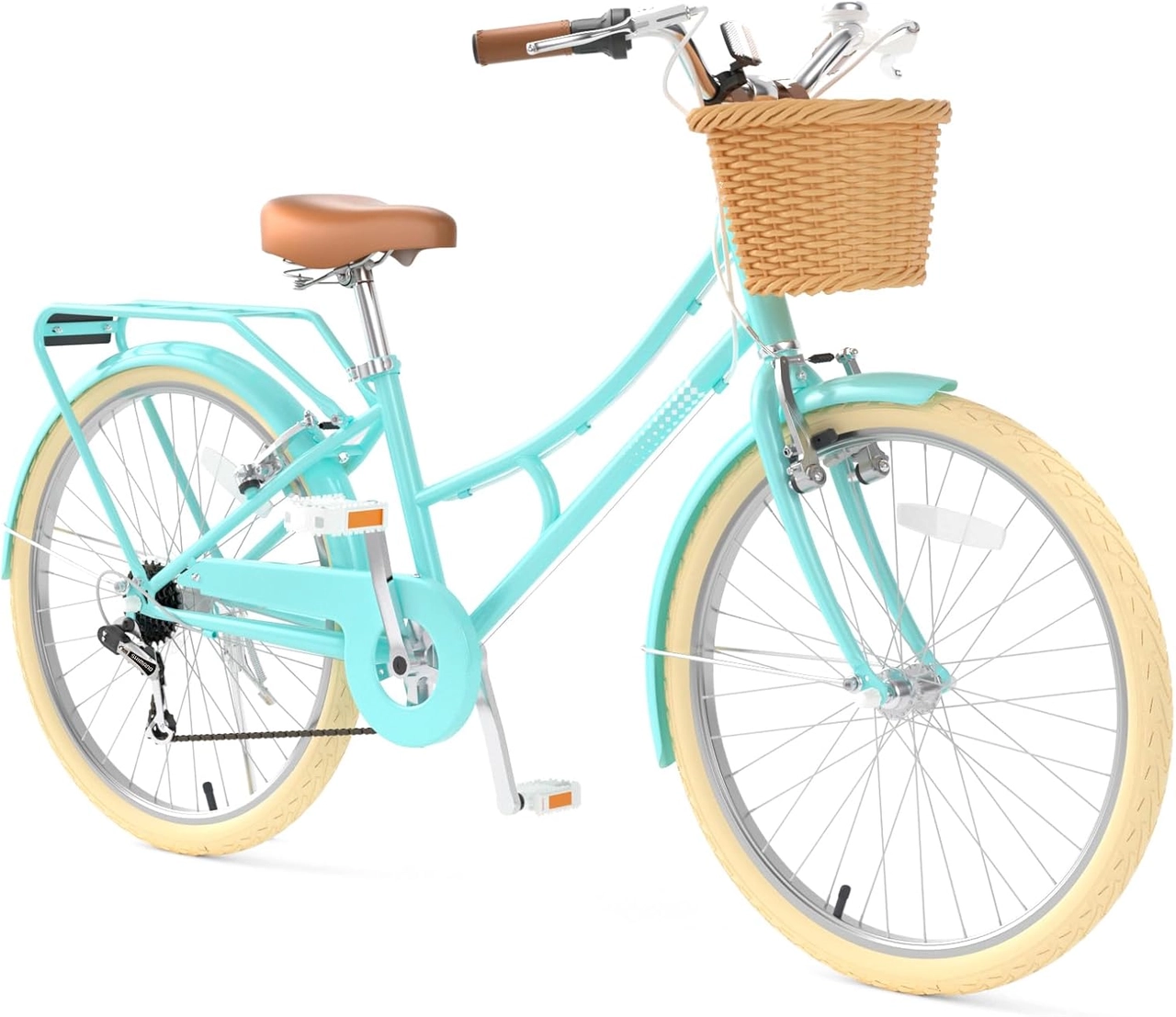 XJD 24-Inch Green Beach Cruiser Bike with U-Brake
A later-stage comparison option with Green / 24 Inch, Pink / 24 Inch and Pink / 26 Inch labels. Its fit must be checked against the rider’s measurements, reach, brake control and confidence.
 Pink XJD Beach Cruiser Bike, 24"/26", U-Brake
A pink beach cruiser offered in 24 Inch and 26 Inch labels. It is relevant only when the rider fits and controls one of those larger wheel sizes, rather than as a substitute for a smaller learning bike.
Compare the two products by required wheel size and available color label only: both provide 24- and 26-inch choices, while the first lists green and pink variants and the second is the pink model. Their catalog facts do not provide frame geometry, stand-over height or brake-lever reach, so the exact bicycle still needs an in-person fit and control check.
Make the decision today
Measure height and inseam, select the corresponding wheel-size starting point, and have the child try that size. Proceed when they are interested and can stand over, reach, steer and brake with control. Wait or change size when any of those checks fails. Consider the supplied 24- or 26-inch cruisers only for a rider whose measurements and present confidence genuinely support those larger sizes.
Bikes for your next adventure
-

Black XJD Kids Bike for Boys – 12, 14 & 16 Inch Sizes
For a son between roughly 3 and 8 years old, the XJD Kids Bike in Black covers t…$169
$199 -

XJD Kids Bike for Girls – Pink, 12/14/16/20 Inch with Training Wheels
The XJD Kids Bike for Girls in Pink is a training-wheel bike built to carry your…$139
$159 -

Blue XJD Girls Bike with Training Wheels – 12/14/16 Inch
If you're shopping for a first pedal bike for a daughter roughly 3 to 8 years ol…$149
$169