

When should child ride bike
A child should ride a bike when their measured height and inseam suit the bike, they can reach and control it, and they are confident enough to practise with close adult supervision.
Check readiness before using age as a guide
Age is only a starting point. Two children of the same age may differ in height, reach, coordination and confidence. A child is ready for a particular bike when they can mount and dismount without struggling, hold the handlebar comfortably, steer with control and operate the brakes reliably.
Do not buy an oversized bicycle simply to allow room for growth. Have the child try the bike whenever possible. While standing over it, check that the frame does not obstruct safe mounting or an unplanned stop. When seated, the child should not have to stretch excessively to steer or reach the brake controls.
Measure and compare the likely wheel sizes
Measure the child without shoes for rider height. For inseam, measure from the floor to the crotch while the child stands upright. Use height to identify possible wheel sizes, then use inseam, stand-over clearance, reach and brake control to decide whether an individual bicycle actually fits.
| Wheel size | Starting age | Rider height |
|---|---|---|
| 12 Inch | 3–4 | 34–40 in / 86–102 cm |
| 14 Inch | 3–6 | 37–45 in / 94–114 cm |
| 16 Inch | 4–7 | 40–48 in / 102–122 cm |
| 18 Inch | 5–9 | 43–52 in / 109–132 cm |
| 20 Inch | 7–12 | 48–60 in / 122–152 cm |
| 24 Inch | 10–14 | 54–64 in / 137–163 cm |
| 26 Inch | Youth and adults | Over 60 in / 153 cm |
Overlapping ranges are intentional starting points, not proof that either size fits. If the child falls between sizes, compare both in person rather than automatically choosing the larger one. The better match is the bike on which the child can stand over, reach, steer and brake with greater control.
Use a simple ride-readiness check
- Mount and stop: Ask the child to get on, get off and place their feet down without panic or assistance.
- Reach: Check for a comfortable, stable posture rather than locked arms or a pronounced forward stretch.
- Steer: Let the child walk or coast the bike in a clear practice area and make controlled turns.
- Brake: Confirm that the child can reach and operate the fitted brake controls consistently. Follow the exact product manual for their correct use and adjustment.
- Confidence: Watch for calm attention and a willingness to follow instructions. Hesitation means slowing the process down, not moving to a bigger bike.
A properly fitting bicycle helmet is required for every ride. It should sit level, fit properly and have its straps used according to the helmet manufacturer’s instructions. Begin in a traffic-free area with close adult supervision.
When the supplied XBikes options are relevant
The three catalog options are relevant when the child’s measured height points toward a 12, 14 or 16 Inch starting size and a training-wheel bicycle suits the current learning stage. They help compare the available size labels and color variants, but the final choice still depends on an individual fit and control check.
 XJD Pink Girls' Bike – Kids 12/14/16 Inch Training Wheel Bicycle
A Training Wheel Bikes option with 12 Inch, 14 Inch and 16 Inch size labels, relevant when measurements point to one of those starting sizes and an individual fit check confirms control.
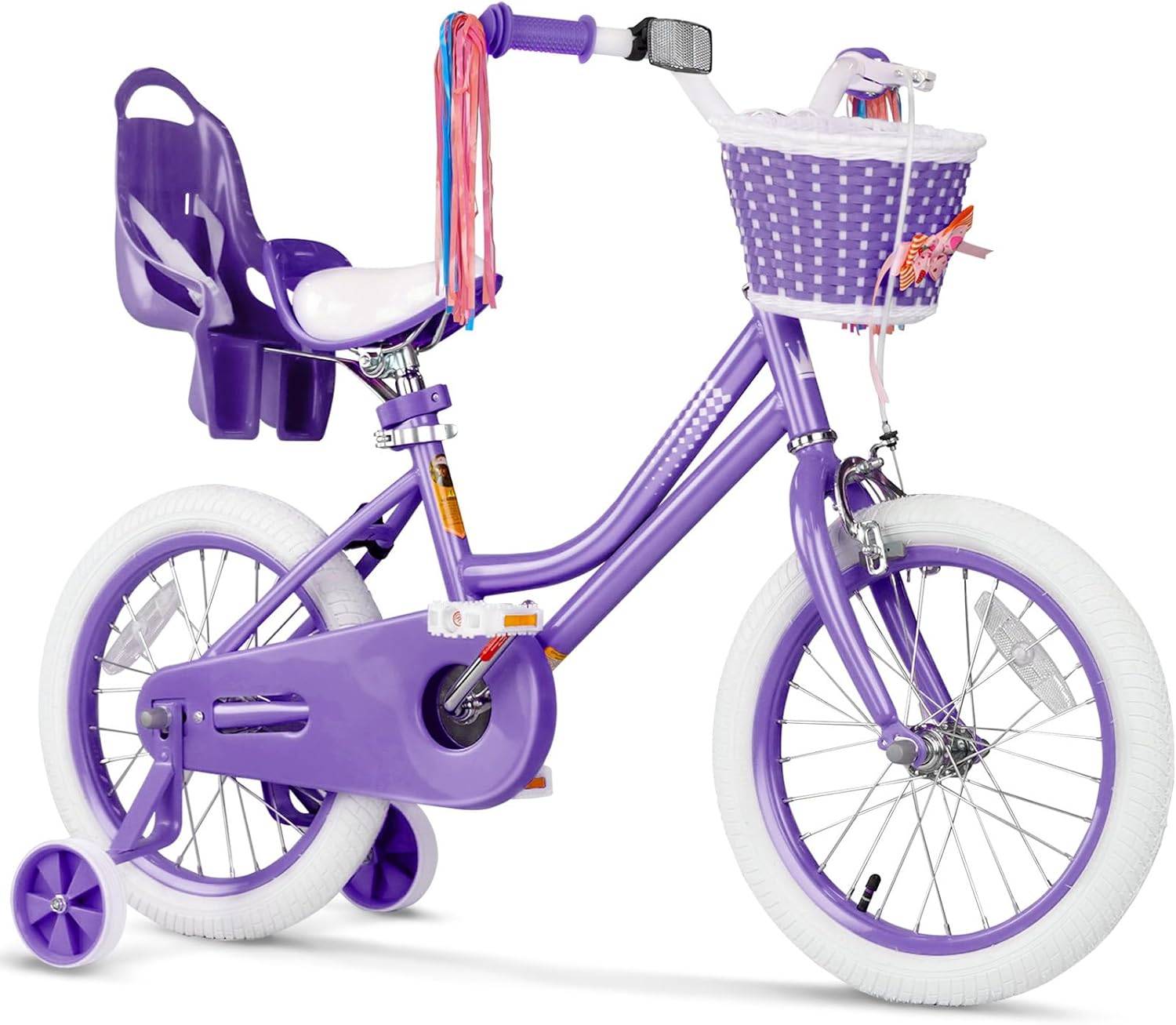 XJD Girls Bike for Kids Ages 3-8, 12/14/16 Inch with Training Wheels – Purple
This purple Training Wheel Bikes model has 12 Inch, 14 Inch and 16 Inch options. The age wording in its title is a catalog label; use measured height and an individual fit check instead.
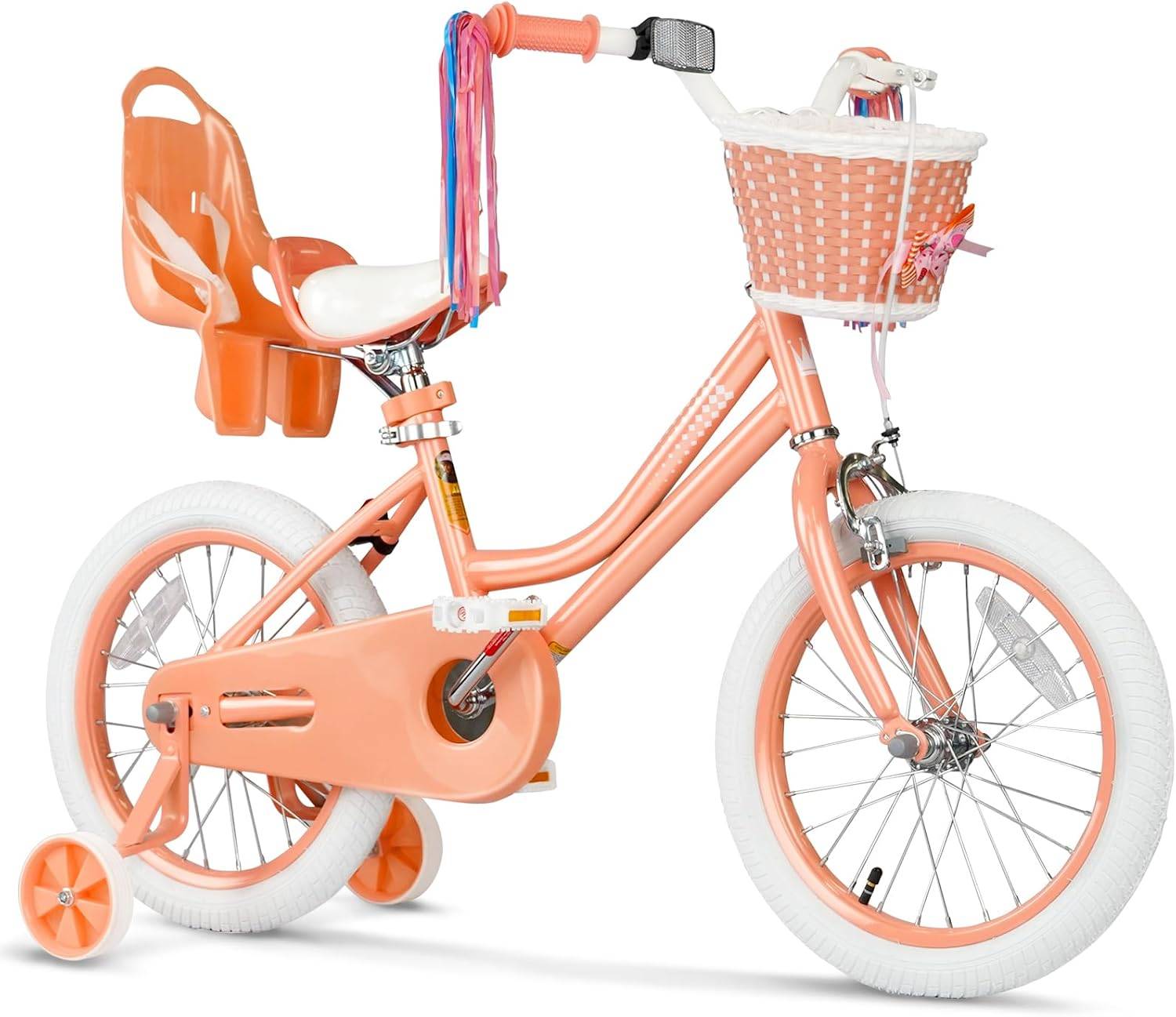 Girls 12/14/16 Inch Kids Bike by XJD with Training Wheels – Peach
This peach Training Wheel Bikes option is offered in 12 Inch, 14 Inch and 16 Inch labels, making it relevant for comparing those starting sizes after measuring the child.
XJD Pink Girls' Bike – Kids 12/14/16 Inch Training Wheel Bicycle is listed in the Training Wheel Bikes category with 12 Inch, 14 Inch and 16 Inch options. XJD Girls Bike for Kids Ages 3-8, 12/14/16 Inch with Training Wheels – Purple offers the same supplied size labels and category; “Ages 3-8” is part of its catalog title, not evidence that it fits every child in that span. Girls 12/14/16 Inch Kids Bike by XJD with Training Wheels – Peach is another Training Wheel Bikes option in those three sizes.
These products are not relevant if measurement and a fit check point to 18, 20, 24 or 26 Inch wheels. Their 12, 14 and 16 Inch versions are smaller-size comparison points, not substitutes for a required larger size. The supplied facts also do not establish assembly details, load limits, component compatibility or torque settings; consult the exact product manual or a qualified bicycle mechanic for those matters.
Make the decision today
Measure height and inseam, shortlist only the matching wheel-size range, and have the child try the bicycle. Proceed when they can stand over it, mount, steer, reach the brakes and stop with control while wearing a properly fitted helmet. If any check fails, adjust according to the manual, compare another appropriate size, or postpone riding rather than asking the child to grow into the bike.
Bikes for your next adventure
-

XJD Girls Bike for Kids Ages 3-8, 12/14/16 Inch with Training Wheels – Purple
The XJD Girls Bike in Purple is a training-wheel bicycle for kids ages 3 to 8, f…$149
$169 -

Black XJD Kids Bike for Boys – 12, 14 & 16 Inch Sizes
For a son between roughly 3 and 8 years old, the XJD Kids Bike in Black covers t…$169
$199 -
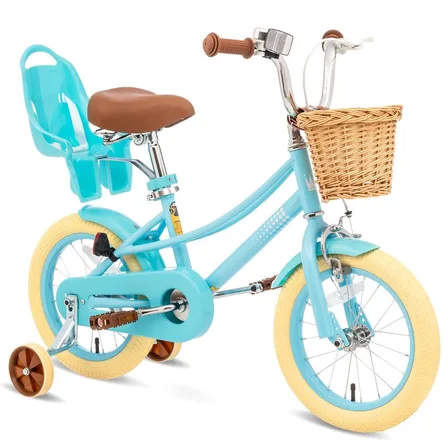
Girls' Training Wheel Bike by XJD, 12–20 Inch Wheels – Blue
This XJD girls' training wheel bike in Blue covers one of the widest fit ranges …$139
$159