

When to give toddler bicycle
Give a toddler a bicycle when they fit the smallest suitable size and can steer, stop, and stay in control—not simply when they reach a birthday.
Use readiness and fit together
Start by watching what your child can do. They should follow a simple instruction, hold the handlebar, look ahead, steer intentionally, and stop when asked. Their current confidence matters: a child who freezes, lets go, or cannot manage the bicycle’s controls needs more time or a different setup.
Age is only a starting point. Under the XBikes sizing guide, a 12 Inch bicycle starts at ages 3–4 and a rider height of 34–40 in / 86–102 cm. If your toddler is younger or shorter than that range, do not assume a listed 12 Inch bicycle will fit. Wait, seek an appropriately sized alternative, or have the child assessed in person.
Measure before choosing a bicycle
Measure the child’s standing height without shoes, then measure inseam from the floor to the crotch. Compare standing height with the XBikes starting points, but use inseam to check the actual bicycle rather than trying to calculate fit from a general formula.
Have the child try the exact bicycle. Check that they can stand over it with stable footing, get on and off without struggling, and sit without being stretched toward the handlebar. They must be able to turn the handlebar while remaining balanced and operate the brakes through their normal range of motion. If the model has hand controls, confirm that their fingers can reach and use them without releasing a secure grip.
Compare the relevant wheel sizes
| Wheel size | XBikes age starting point | Rider-height starting point | What it means here |
|---|---|---|---|
| 12 Inch | Ages 3–4 | 34–40 in / 86–102 cm | The first listed starting point to investigate for many young riders who also pass an individual fit check. |
| 14 Inch | Ages 3–6 | 37–45 in / 94–114 cm | A comparison for a taller child, never an automatic upgrade based on age. |
| 16 Inch | Ages 4–7 | 40–48 in / 102–122 cm | Relevant only if the measured rider fits and can comfortably control the exact bicycle. |
Where height ranges overlap, compare the bicycles in person. Choose according to stand-over clearance, reach, brake control, and confidence. Do not buy an oversized bicycle for future growth; difficult mounting or stretched controls can prevent the child from controlling it now.
How the supplied bicycle helps with the decision
The Black XJD Kids' BMX Bicycle with Training Wheels is offered in 12 Inch, 14 Inch, and 16 Inch SKU labels. Those options make it useful for comparing the three relevant XBikes starting points above, but the title and wheel-size label do not prove that any version fits your child. Select a version only after measuring and checking the actual bicycle.

Training wheels are part of this product’s supplied title, but their presence does not replace steering, stopping, reach, or stand-over checks. They also do not establish a suitable age. For adjustment, assembly, compatibility, maintenance, load limits, or torque details, follow the manual for the exact SKU or use a qualified bicycle mechanic.
Make the try-on a simple pass-or-wait test
- Measure: Record standing height and inseam without shoes.
- Shortlist: Use measured height to identify a starting wheel size; use age only as supporting context.
- Try: Check stable stand-over, easy mounting, comfortable handlebar reach, and an upright, controlled position.
- Control: Ask the child to steer and demonstrate stopping in a quiet, traffic-free area under close adult supervision.
- Decide: Proceed only when all checks pass. If the child is too small, cannot reach or operate the controls, or appears overwhelmed, wait and repeat the assessment later.
A properly fitted bicycle helmet is required each time. It should fit the child, sit level, and have its straps used according to the helmet manufacturer’s instructions. A helmet cannot correct a bicycle that is too large or difficult to control.
When to give the bicycle—and when to wait
Give the bicycle now if the child falls within the relevant measured-height starting point, fits the exact model, can mount and stand over it securely, reaches the handlebar and brakes, and demonstrates calm steering and stopping. Supervise every early ride and choose an appropriate practice area away from traffic.
Wait if even one essential check fails. In particular, do not move from 12 Inch to 14 Inch or 16 Inch merely to leave growing room. Measure your toddler today, compare the matching version of the Black XJD Kids' BMX Bicycle with Training Wheels in person, and make the decision from present fit and control—not the next birthday.
Bikes for your next adventure
-
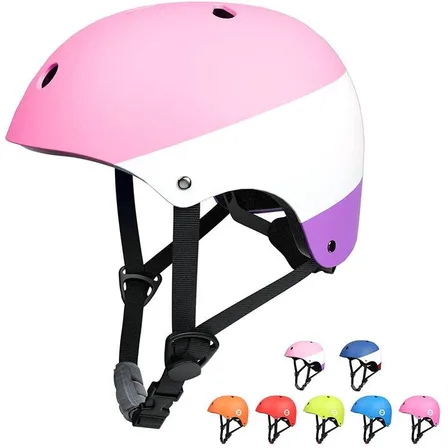
XJD Kids Bike Helmet for Boys & Girls, B White / Pink White
The XJD Kids Bike Helmet covers a wide age range — suggested for ages 2 through …$59.99
-

XJD Girls Bike for Kids Ages 3-8, 12/14/16 Inch with Training Wheels – Purple
The XJD Girls Bike in Purple is a training-wheel bicycle for kids ages 3 to 8, f…$149
$169 -

Blue XJD Girls Bike with Training Wheels – 12/14/16 Inch
If you're shopping for a first pedal bike for a daughter roughly 3 to 8 years ol…$149
$169