

When to teach child to ride bike
Teach a child to ride when they can follow simple directions, show interest, and control a correctly fitted bike—not at one fixed age.
Look for readiness before choosing a date
Age is only a starting point. A child is more likely to learn comfortably when they want to try, can listen and respond while moving, and can stay engaged for a short practice session. They should also have enough coordination to walk or scoot the bicycle, steer around a simple obstacle, and stop when asked.
Waiting is reasonable if the child is frightened, cannot reliably follow a stop instruction, or becomes overwhelmed as soon as the bike moves. Pressure rarely improves control. Pause, return to easier balance activities, and try again when curiosity outweighs reluctance.
Measure the child and check the actual bike
Measure standing height without shoes and compare it with the wheel-size starting points below. Then have the child try the exact bicycle. Do not choose an oversized bike merely to allow room for growth.
| Wheel size | Starting age | Rider height |
|---|---|---|
| 12 Inch | 3–4 | 34–40 in / 86–102 cm |
| 14 Inch | 3–6 | 37–45 in / 94–114 cm |
| 16 Inch | 4–7 | 40–48 in / 102–122 cm |
| 18 Inch | 5–9 | 43–52 in / 109–132 cm |
| 20 Inch | 7–12 | 48–60 in / 122–152 cm |
| 24 Inch | 10–14 | 54–64 in / 137–163 cm |
| 26 Inch | Youth and adults | Over 60 in / 153 cm |
These ranges overlap because children develop differently. Height should guide the initial comparison, but inseam, reach, brake control, and present confidence decide whether a particular bike fits. With the child on the bike, check that there is appropriate stand-over clearance, that the handlebar can be reached without stretching, and that steering remains controlled. The child must also be able to reach and operate the brakes. Follow the exact product manual for setup or ask a qualified bicycle mechanic when fit or assembly is uncertain.
What the supplied XBikes options clarify
The catalog choices help compare an early training-wheel path with larger bikes for taller, more experienced riders. Their wheel labels can be checked against the measured height ranges, but none replaces an individual fit test.
 Pink 12/14/16/20" XJD Girls Bike with Training Wheels & Basket
A training-wheel option with 12-, 14-, 16-, and 20-inch labels, relevant for comparing several early learning sizes after measuring height and checking individual fit.
 26-Inch XJD Beach Cruiser Bike for Girls – Purple, V-Brake
Offers 20-, 24-, and 26-inch labels. It is relevant mainly as a comparison for taller or more experienced riders whose height, reach, brake control, and confidence suit the selected size.
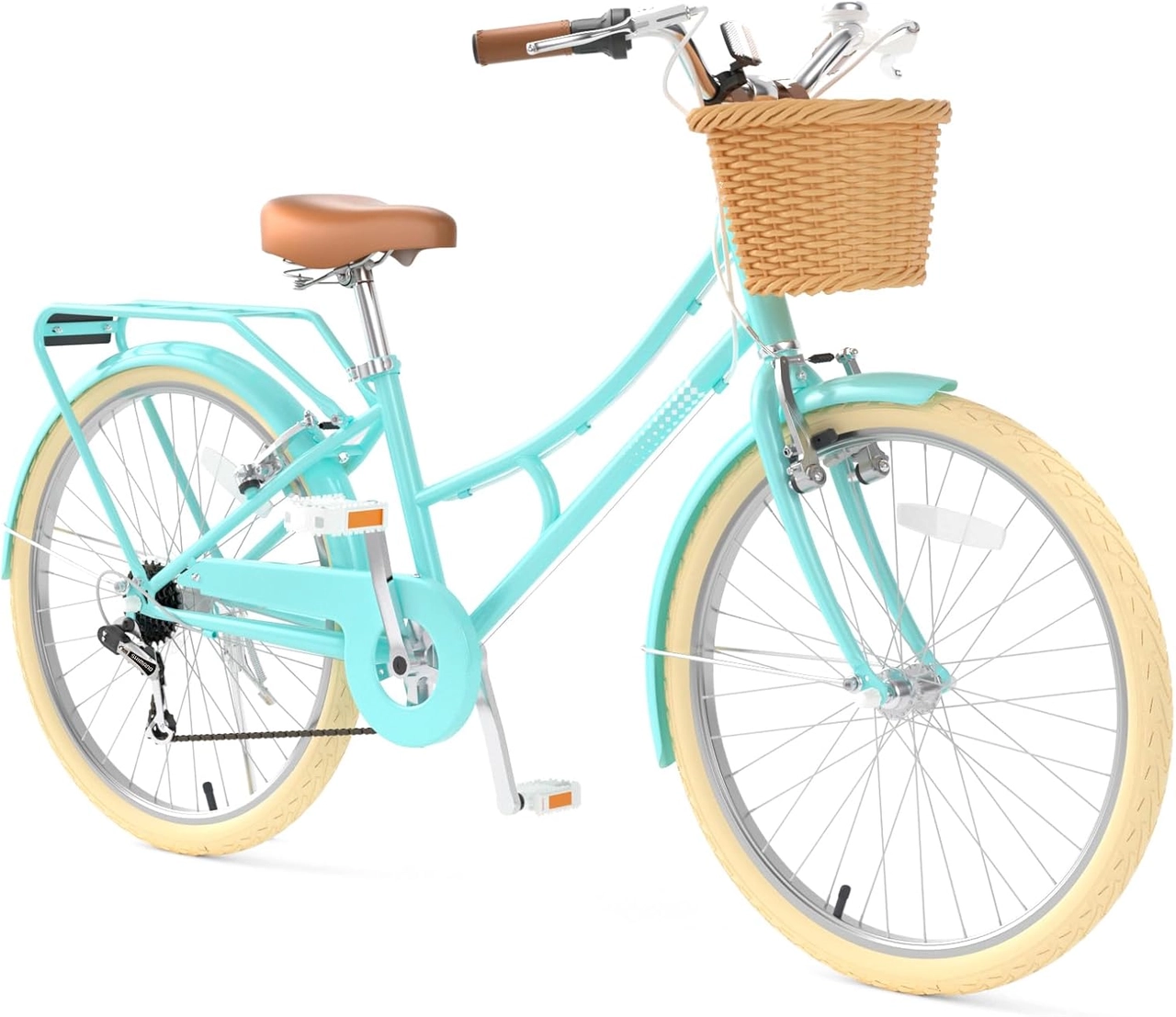 XJD 24-Inch Green Beach Cruiser Bike with U-Brake
Its 24- and 26-inch labels make it a comparison point for larger riders, not a substitute for a smaller learning bike. Confirm measured height and individual control before selection.
The Pink 12/14/16/20" XJD Girls Bike with Training Wheels & Basket is the directly relevant option when a child is beginning with training wheels. Its available labels are 12 Inch, 14 Inch, 16 Inch, and 20 Inch, spanning several starting ranges in the table. Select among them from measured height and actual control, not from the sequence of sizes or room to grow.
The 26-Inch XJD Beach Cruiser Bike for Girls – Purple, V-Brake has 20-, 24-, and 26-inch SKU labels in the listed colors. The 20- and 24-inch versions may provide comparison points for older or taller children within those height ranges; 26 Inch is a starting point only for youth and adults over 60 inches / 153 cm. Confirm reach and brake operation on the chosen variant.
The XJD 24-Inch Green Beach Cruiser Bike with U-Brake is offered in Green / 24 Inch, Pink / 24 Inch, and Pink / 26 Inch. It is relevant only when the rider’s measurement and control support those larger starting points. It is not a substitute for a smaller learning bike merely because a child may eventually grow into it.
Run a short readiness session
- Choose a flat, open area away from traffic and obstacles.
- Fit the bicycle helmet so it sits level, fits properly, and uses its straps according to the helmet manufacturer’s instructions.
- Ask the child to walk or scoot the fitted bike, turn both ways, and stop on request.
- Let the child practice looking ahead while maintaining a straight path.
- Keep the first session brief and finish before fatigue starts reducing attention or control.
Training wheels can provide support while a child learns pedaling and steering, but their presence does not make an unsuitable size fit. Whether using them or not, stay close enough to assist without pulling the handlebar away from the child.
Decide whether to teach now, wait, or change size
- Teach now: the child is interested, follows directions, fits the bike, reaches the controls, and can steer and stop with growing consistency.
- Wait and retry: fear, fatigue, or difficulty following stop instructions prevents useful practice even on a suitable bike.
- Change the bike or size: the child cannot obtain appropriate stand-over clearance, must stretch to steer, or cannot operate the brakes confidently.
Measure the child today, compare that height with the table, and arrange an actual fit check. Start teaching only when both readiness and fit agree; if either one does not, address it before the next riding session.
Bikes for your next adventure
-

Kids Bike Helmet by XJD for Boys & Girls – Black, Blue, Green, Pink, Purple
The XJD Kids Bike Helmet covers a wide 2-to-8-year age range thanks to two head-…$59.99
-

Kids Bike Helmet by XJD for Girls – Pink
The XJD Kids Bike Helmet in Pink is a lightweight multi-sport helmet for girls r…$59.99
$99 -

XJD Kids Bike for Girls – Pink, 12/14/16/20 Inch with Training Wheels
The XJD Kids Bike for Girls in Pink is a training-wheel bike built to carry your…$139
$159